
Plant Care
Hypoestes (Polka Dot Plant) Care Guide: Light, Water & The Pink-Spotted Tropical
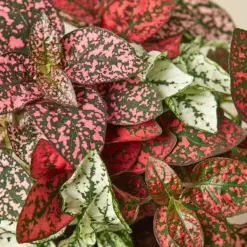
Hypoestes — Polka Dot Plant — is the colorful spotted houseplant with leaves splattered in pink, white, or red dots on a green background. Native to Madagascar, it’s a small bushy plant perfect for terrariums, mixed containers, and bright windowsills. Care is straightforward but Hypoestes is famously short-lived as a houseplant — most plants decline after blooming. Propagate cuttings regularly to maintain a steady supply.
Quick Care Card
☀️ Light
Bright indirect (no direct sun)
💧 Water
Keep evenly moist
💨 Humidity
50%+ (60% ideal)
🌡️ Temp
65–75°F
🪴 Soil
Rich, well-draining mix
🐾 Cat/Dog Safe
✅ Safe for cats & dogs
🎯 Difficulty
🟢 Beginner
📏 Size
12–18 inches tall
🌎 Zone
10–11 outdoors
🏞️ Origin
Madagascar
In this guide
About Hypoestes (Polka Dot Plant)
Hypoestes phyllostachya is native to Madagascar — a small bushy plant growing in tropical forest conditions. The genus has about 150 species, but only this one is widely sold as a houseplant.
Modern cultivars come in pink, white, red, and rose dotted patterns: ‘Pink Dot’ (classic), ‘White Splash’ (white-and-green), ‘Red Splash’ (red-and-green), ‘Confetti’ series (multi-color), ‘Splash Select’ (intense variegation). Some cultivars have more dots than green; others have subtle speckles.
Hypoestes is famously short-lived as a houseplant — after blooming (small lavender flowers), the plant typically declines and dies within months. The honest care strategy: take cuttings regularly to replace the parent. Cuttings root easily in water within 1–2 weeks. Most growers maintain a rotating supply rather than trying to keep one parent plant alive long-term.
Care Guide
Light
Bright indirect light. Direct sun bleaches the spots.
- Bright indirect light — within 3–5 feet of an east window.
- Direct sun bleaches the colorful spots.
- Low light fades patterns and causes legginess.
Water
Keep evenly moist. Don’t let dry completely.
- Water when top half-inch is dry.
- Every 3–5 days in summer, every 5–7 days in winter.
- Yellow leaves = overwatering. Wilting = underwatered (recoverable).
Humidity
50%+ ideal.
- Ideal: 50–60%.
- Tolerable: 40%.
- Terrariums are great Hypoestes habitats.
Temperature
Warm temperatures.
- Ideal: 65–75°F.
- Below 55°F damages leaves.
- Avoid drafts.
Soil
Rich, well-draining.
- Easy mix: 60% potting soil + 30% perlite + 10% peat moss.
- Pot with drainage holes essential.
Pro tip — accept short life and propagate cuttings
Hypoestes naturally blooms and declines as a houseplant — most plants die within a year regardless of care. The honest strategy: take 4–6 stem cuttings monthly while the parent is healthy, root them in water (takes 1–2 weeks), and maintain a rotating supply. As the parent declines, the cuttings are taking off. This way you always have fresh young plants. Pinching flower buds delays decline somewhat but doesn’t prevent it indefinitely.
Fertilizer
Light feeders.
- Balanced liquid fertilizer at half strength every 4 weeks April–September.
- Skip fertilizing October–March.
Seasonal Care
🌱 Spring & Summer
- Active growth and bushy form
- Pinch growing tips and flower buds for bushiness
- Water every 3–5 days
❄️ Fall & Winter
- Reduce watering
- Plant may decline naturally — replace from cuttings
Common Problems & Fixes
| Symptom | Likely Cause | Fix |
|---|---|---|
| Fading spots/colors | Insufficient light | Move to brighter indirect light |
| Leggy growth | Insufficient light or no pinching | Brighter spot; pinch growing tips |
| Wilting plant | Thirsty | Water; recovers in hours |
| Yellow leaves | Overwatering or natural decline | Reduce watering; take cuttings before plant dies |
| Flowering / decline | Natural life cycle | Pinch flower buds; propagate cuttings |
| Crispy edges | Low humidity | Raise humidity to 50%+ |
| Stems flopping over | Legginess from low light | Brighter spot; pinch back hard |
| Aphids on stems | Common pest | Spray with water; insecticidal soap |
| Plant just dying despite all care | Natural short life cycle | Accept and maintain via cuttings |
Hypoestes is short-lived but easy to replace. Treat it like the cut-and-come-again plant it is — propagate cuttings monthly and you’ll always have fresh polka dots.
Propagation
Stem cuttings in water (easiest)
Cut 3–4 inch stem with at least 2–3 leaves.
Strip lower leaves; place in water with nodes submerged.
Roots emerge in 1–2 weeks.
Pot up in well-draining soil.
Seed
- Sow seeds in seedling mix.
- Bright light, 70°F.
- Germination 1–2 weeks.
- Plants reach mature size in 3–4 months.
Featured Hypoestes (Polka Dot Plant) Species
| Species | Common Name | Notable Trait | Difficulty |
|---|---|---|---|
| Hypoestes phyllostachya ‘Pink Dot’ | Pink Polka Dot Plant | Classic pink-and-green spotted leaves | 🟢 Beginner |
| H. phyllostachya ‘White Splash’ | White Polka Dot | White-and-green dots | 🟢 Beginner |
| H. phyllostachya ‘Red Splash’ | Red Polka Dot | Red-and-green splashes | 🟢 Beginner |
| H. phyllostachya ‘Confetti’ | Confetti Series | Multi-color speckled patterns | 🟢 Beginner |
| H. phyllostachya ‘Splash Select’ | Splash Select | Intense variegation with more color than green | 🟢 Beginner |
Shop Our Hypoestes (Polka Dot Plant) Collection
Every Hypoestes (Polka Dot Plant) we ship is greenhouse-grown, climate-acclimated, and packed with care for transit. Sold-out species? Use the Notify Me button on any product page — we’ll email you the moment it’s restocked.
Frequently Asked Questions
Are polka dot plants safe for cats and dogs?
Yes — Hypoestes phyllostachya is non-toxic to cats and dogs per ASPCA listings.
Why is my Polka Dot Plant dying?
Hypoestes is naturally short-lived as a houseplant — most plants decline and die within 1 year, especially after flowering. This isn’t a care failure; it’s the plant’s natural life cycle. The fix is to propagate cuttings regularly so you always have fresh plants ready to take over.
How do I keep my Polka Dot Plant bushy?
Two things: (1) bright indirect light — legginess is mostly a light issue; (2) regular pinching — pinch growing tips every 2 weeks to force branching. Also pinch flower buds aggressively — flowering accelerates the plant’s decline.
Why are my Polka Dot leaves losing their spots?
Insufficient light. The pink/white/red spots are most vivid in bright indirect light. In low light, the plant produces more solid-green leaves to maximize photosynthesis. Move to a brighter spot.
How do I propagate Polka Dot Plant?
Easiest of any houseplant — stem cuttings root in water within 1–2 weeks. Cut a 3–4 inch piece with at least 2–3 leaves, strip lower leaves, place in water with nodes submerged. Pot up once roots are 1 inch long. Take cuttings monthly from your parent plant to maintain a steady supply.
Related Care Guides
