
Plant Care
Hydrangea Care Guide: Indoor Bloom Care & Why Yours Should Move Outside
Hydrangeas are not really houseplants — they’re outdoor garden shrubs that florists force into bloom for indoor sales. The gorgeous mophead hydrangea you bought at Trader Joe’s or got for Mother’s Day will look stunning for 4–6 weeks indoors, then needs to move outside (or to a cool bright spot) permanently if you want it to survive long-term. Here’s how to keep it gorgeous during its indoor phase, then transition it outside for years of garden blooms.
Quick Care Card
☀️ Light
Bright indirect indoors; partial sun outdoors
💧 Water
Soil consistently moist; never dry out
💨 Humidity
40–60% (average home)
🌡️ Temp
60–70°F indoors; cold-hardy outdoors (USDA 5–9)
🪴 Soil
Rich, moisture-retentive, slightly acidic
🐾 Cat/Dog Safe
❌ Toxic to cats & dogs (cyanogenic glycosides)
🎯 Difficulty
🟡 Intermediate (genuinely a temporary houseplant)
📏 Size
12–48 inches indoors; 3–8 ft outdoors
🌎 Zone
5–9 outdoors (most species)
🏞️ Origin
Asia & the Americas
In this guide
About Hydrangea
Hydrangea is a genus of about 75 species native to Asia and the Americas. The flagship indoor type is Hydrangea macrophylla — the "florist" or "mophead" hydrangea — bred specifically for big colorful blooms that ship well to grocery stores and gift shops. Outdoor garden hydrangeas are often the same species (or closely related H. paniculata, H. arborescens, H. quercifolia) but acclimated to outdoor conditions.
What people don’t realize: hydrangeas are deciduous shrubs. They drop leaves and go dormant in winter. They need a cold winter rest to bloom the following year. They want full sun to part shade. None of these match a typical heated indoor home year-round.
The flower color of mophead hydrangeas is one of the few houseplant phenomena that’s genuinely chemistry-driven: in acidic soil (pH 5.5 or lower), blooms turn blue (aluminum becomes available); in alkaline soil (pH 6.5+), they turn pink (aluminum becomes locked up). Florists use specific potting mixes to produce vivid blue or pink at sale time. Once you transition to outdoor garden soil, color may shift over time.
Care Guide
Light
Indoors: bright indirect. Outdoors (long-term): morning sun + afternoon shade.
- Indoor (gift-bloom phase): bright indirect light — within 2–4 feet of an east window, or behind sheer curtains on a south/west window. Direct afternoon sun fries the blooms.
- Outdoor (long-term): morning sun + afternoon shade. Most hydrangeas burn in full direct afternoon sun.
- Indoor light is rarely sufficient for reblooming — most florist hydrangeas don’t bloom again indoors after their first season.
- Move the indoor plant to its brightest available spot to extend bloom life — but accept that indoor blooms last 4–6 weeks regardless of light.
Water
Hydrangeas are thirsty. Never let the soil dry out completely.
- Water when the top half-inch of soil is dry — don’t wait for the inch test like other houseplants. Hydrangeas wilt dramatically when underwatered.
- Water thoroughly until water runs from drainage holes; empty saucer after 10 minutes.
- Most plants need water every 2–3 days indoors during blooming, more often in dry conditions.
- Critical: hydrangeas are notoriously thirsty during blooming — large flower heads transpire heavily. Indoor florist hydrangeas often need water every other day.
- Wilted droopy plant = thirsty (recoverable in hours of soaking). Yellow leaves with mushy stems = root rot from oversized pot or poor drainage.
- Use room-temperature water. Filtered water is ideal; tap water with high pH may shift color (alkaline → pink-shifted).
Humidity
Average humidity is fine. Hydrangeas are more concerned with soil moisture than air humidity.
- 40–60% humidity (typical home year-round) is plenty.
- Below 30% (winter heating) blooms wilt faster — focus on watering rather than misting.
- Skip humidifiers — hydrangeas are outdoor plants and don’t need pampering on humidity.
- Misting blooms can cause spotting on petals — water at the soil only.
Temperature
Cool indoor temperatures extend bloom life dramatically.
- Indoor bloom phase: 60–70°F (15–21°C). Cooler conditions = longer-lasting blooms.
- Outdoor long-term: hardy in USDA zones 5–9. Most florist hydrangeas (H. macrophylla) need a cold winter dormancy to rebloom the next year.
- Above 75°F indoors causes blooms to wilt and decline rapidly.
- Avoid AC vents in summer and heating vents in winter — hot dry air dries blooms within days.
- Outdoor planting: zone-appropriate placement; the plant will go dormant in winter and re-emerge in spring.
Soil
Rich, moisture-retentive, slightly acidic.
- Indoor (gift-bloom phase): stay in the original potting mix unless the plant is severely root-bound. Florists use specialized mixes designed to maintain bloom color.
- Outdoor planting: rich loamy soil amended with compost. Hydrangeas like organic-matter-rich soil that retains moisture.
- Color management: for blue blooms, use acidic soil (pH 5.5 or lower) with aluminum sulfate. For pink blooms, use neutral to alkaline soil (pH 6.5+). White cultivars stay white regardless.
- Avoid: dry sandy soil (hydrangeas dry out fast), highly alkaline limestone soil (locks up nutrients).
- Repot indoor florist hydrangea once after blooming if you’re transitioning it to long-term care; otherwise plan to plant outdoors in spring.
Pro tip — these are gift-bloom plants, not long-term houseplants
The honest truth most florist guides won’t tell you: a Trader Joe’s florist hydrangea is essentially a long-lasting bouquet, not a houseplant. Indoors it’ll look spectacular for 4–6 weeks, then decline regardless of care. To get years of blooms, transition it outside as soon as the danger of frost has passed in spring (after the indoor blooms fade). Plant it in a partly shaded garden spot with rich moist soil. It’ll re-bloom outdoors the following summer and for decades after. Trying to keep one as an indoor plant year-round usually fails by the second year.
Fertilizer
Light feeders during indoor bloom phase; more during outdoor growing season.
- Indoor bloom phase: skip fertilizer entirely — the plant has been pre-fed by the grower and is focused on blooming.
- Outdoor (long-term): balanced fertilizer (10-10-10) once in early spring; high-phosphorus bloom booster optional in late spring before flowering.
- Color-specific: aluminum sulfate (sold as "hydrangea bluing") twice yearly for blue blooms; garden lime for pink blooms.
- Yellowing leaves with green veins (interveinal chlorosis) outdoors = iron deficiency from too-alkaline soil; supplement with iron sulfate or sulfur.
Seasonal Care
🌱 Spring & Summer
- Indoor: blooms last 4–6 weeks; water every 2–3 days; trim spent blooms
- Outdoor: new growth emerges from old wood and ground in spring; flowers form on previous year’s wood (most varieties)
- Water deeply outdoors during dry spells
- Mulch outdoor plants 2–3 inches with bark or straw to retain moisture
- Prune in late summer immediately after blooming (most varieties — H. macrophylla bloom on old wood)
❄️ Fall & Winter
- Outdoor: leaves drop in fall; plant goes fully dormant in winter (this is normal — not death)
- Indoor florist hydrangea: blooms fade after 4–6 weeks; transition outside in spring
- Don’t fertilize during dormancy
- Cold winter chill is required for next year’s blooms — outdoor zone 5–9 plants get this naturally
- Indoor-only kept hydrangeas almost never rebloom because they don’t get a proper cold dormancy
Common Problems & Fixes
| Symptom | Likely Cause | Fix |
|---|---|---|
| Wilting / drooping leaves | Underwatered (most common — hydrangeas are thirsty) | Water thoroughly; leaves recover within hours; consider watering more frequently |
| Yellowing leaves | Overwatering, poor drainage, or natural seasonal yellowing in fall (outdoor plants) | Check drainage; reduce watering; outdoor yellowing in fall is normal pre-dormancy |
| Brown crispy bloom edges | Low humidity, high temperature, or end of bloom life | Move to cooler spot; raise humidity slightly; accept blooms last 4–6 weeks regardless of care |
| No reblooming after first year | No cold dormancy provided; blooms only on old wood (depending on variety) | Transition plant outdoors permanently for proper winter chill |
| Bloom color shifted (blue to pink, etc.) | Soil pH or aluminum availability changed | For blue: acidic soil (pH 5.5) + aluminum sulfate. For pink: neutral/alkaline soil (pH 6.5+) + lime |
| Black spots on leaves outdoors | Cercospora leaf spot (fungal) | Improve air circulation; remove infected leaves; treat with copper fungicide |
| Powdery white coating on leaves | Powdery mildew | Improve air circulation; treat with neem or potassium bicarbonate spray |
| Whole plant collapsing in heat | Hot direct afternoon sun | Move to morning sun + afternoon shade; mulch heavily; water deeply |
| Tiny green insects on buds | Aphids | Spray off with water; insecticidal soap weekly until clear |
A florist hydrangea isn’t a houseplant — it’s a 6-week bouquet that happens to come with roots. The honest recommendation is always the same: plant it outside.
Propagation
Stem cuttings (best done from outdoor plants in late spring)
In late spring or early summer, take 4–6 inch cuttings from new growth (not old woody stems).
Cuttings should have 2–3 leaf nodes; remove the lowest pair of leaves.
Cut the remaining leaves in half horizontally to reduce moisture loss.
Dip cut end in rooting hormone.
Insert into damp seedling mix or 50/50 perlite-peat. Keep evenly moist.
Cover loosely with a clear bag or dome for humidity. Place in bright indirect light (no direct sun).
Roots form in 4–8 weeks. Remove cover and transition to normal care.
Plant outdoors the following spring after one year of nursery growth.
Division (outdoor established plants, late winter / early spring)
- On a mature outdoor hydrangea before spring growth resumes, dig up the entire plant or one side of it.
- Use a sharp spade or knife to cut the rootball into 2–3 sections, each with healthy roots and at least 3–4 stems.
- Replant each division in a partly shaded spot with amended garden soil.
- Water deeply for the first month while roots establish.
- Resume normal outdoor hydrangea care; new divisions usually bloom the following year.
Layering (easiest method — outdoor plants)
- Bend a flexible low branch of an established hydrangea down to the ground.
- Make a small notch on the underside of the branch where it touches soil.
- Pin the notched section into the soil with a wire or stake; cover lightly.
- Roots form at the notched section over 6–12 months.
- The following year, cut the branch from the parent and dig up the new rooted plant.
- Transplant to its new spot and water deeply for the first month.
Featured Hydrangea Species
| Species | Common Name | Notable Trait | Difficulty |
|---|---|---|---|
| H. macrophylla (mophead) | Florist Hydrangea / Mophead | Big rounded clusters of pink/blue/purple/white flowers; the gift-shop bloomer | 🟡 Intermediate |
| H. macrophylla (lacecap) | Lacecap Hydrangea | Flat clusters with delicate central buds and outer ring of showy florets | 🟡 Intermediate |
| H. paniculata ‘Limelight’ | Limelight Hydrangea | Tall conical chartreuse flower clusters that age to pink; sun-tolerant | 🟢 Beginner (outdoor) |
| H. paniculata ‘Bobo’ | Bobo Hydrangea | Compact paniculata; abundant white blooms; perfect for small gardens | 🟢 Beginner (outdoor) |
| H. arborescens ‘Annabelle’ | Annabelle Hydrangea | Massive white snowball blooms; native to North America | 🟢 Beginner (outdoor) |
| H. quercifolia | Oakleaf Hydrangea | Oak-shaped leaves with brilliant fall color; cone-shaped white blooms | 🟢 Beginner (outdoor) |
| H. macrophylla ‘Endless Summer’ | Endless Summer Hydrangea | Reblooms on new wood — flowers reliably even after harsh winters | 🟢 Beginner (outdoor) |
Shop Our Hydrangea Collection
Every Hydrangea we ship is greenhouse-grown, climate-acclimated, and packed with care for transit. Sold-out species? Use the Notify Me button on any product page — we’ll email you the moment it’s restocked.

Hypoestes Plant ‘Polka Dot’
$22.99Begonia Plant ‘Maculata’
Price range: $36.99 through $68.99Peace Lily (Spathiphyllum)
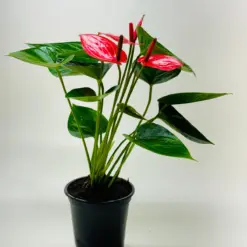
Price range: $22.99 through $54.99Anthurium Plant ‘Red’
Price range: $42.99 through $65.99Curly Lipstick Plant
Price range: $25.99 through $74.99Lipstick Plant ‘Black Pagoda’
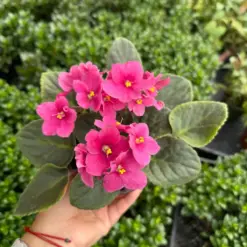
Price range: $25.99 through $50.99African Violet – Pink
$23.99Anthurium Plant ‘Livium’
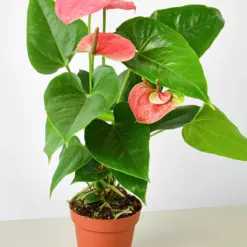
$41.99Anthurium Plant ‘Pink’
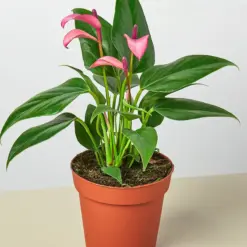
Price range: $44.99 through $53.99Anthurium Plant ‘Purple’
Price range: $44.99 through $68.99
Frequently Asked Questions
Are hydrangeas safe for cats and dogs?
No — hydrangeas contain cyanogenic glycosides that are toxic to cats, dogs, and humans if ingested in large quantities. Causes vomiting, diarrhea, and lethargy in pets that chew leaves or buds. Most pets dislike the bitter taste and won’t eat much, but symptoms in cases of significant ingestion include depression, weakness, and gastrointestinal distress. Keep out of reach of pets and kids.
Why did my florist hydrangea die after a few weeks?
Florist hydrangeas are essentially long-lasting bouquets — they’re bred for spectacular indoor blooms that last 4–6 weeks, not for indoor longevity. After the blooms fade, the plant declines indoors regardless of care. The honest fix: transition it outdoors permanently in spring after the danger of frost has passed. It’ll re-bloom outdoors the following summer and for decades. Trying to keep it as an indoor plant year-round usually fails.
How do I change my hydrangea from pink to blue (or vice versa)?
H. macrophylla mophead hydrangea bloom color is determined by soil pH and aluminum availability: blue blooms need acidic soil (pH 5.5 or lower) with available aluminum — apply aluminum sulfate (sold as "hydrangea bluing") per package directions. Pink blooms need neutral to alkaline soil (pH 6.5+) — apply garden lime to raise pH. Color shifts gradually over weeks of treatment. White cultivars cannot be color-changed — they stay white. Hydrangea paniculata and H. arborescens don’t change color regardless of pH.
Why won’t my indoor hydrangea bloom again?
Indoor hydrangeas almost never rebloom — they need a cold winter dormancy (40–50°F for 6–8 weeks) to set flower buds for the next year, and most homes don’t provide it. Either transition the plant outdoors permanently (where it’ll get natural winter chill), or accept that the gift-bloom is one-time. Some growers stage indoor hydrangeas in an unheated garage for winter chill, then return them to a warm bright spot in spring — works occasionally but is finicky.
When should I plant my indoor hydrangea outside?
After the danger of last frost in spring (typically May in zone 5–6, April in zone 7+). Once the indoor blooms have faded, dig up the rootball, plant in a partly shaded spot with rich moist soil, water deeply, and keep evenly watered for the first 4–6 weeks while it establishes. The plant may not bloom the first year as it adjusts to outdoor conditions, but should bloom reliably starting the second year.
Why are my hydrangea’s leaves wilting even though I just watered?
Two possibilities: (1) still under-watered — hydrangeas are notoriously thirsty during blooming and may need water every 1–2 days indoors; check soil deeper than just the surface; (2) root rot from previous overwatering — soil is wet but roots can’t absorb water. Lift the pot to check drainage; if water is pooling, repot in fresh well-draining mix and trim any black mushy roots.
Can I prune my hydrangea?
Outdoors yes, but timing depends on the variety. H. macrophylla (mophead, lacecap) blooms on old wood — prune only immediately after blooming (late summer); pruning in fall or spring removes next year’s flower buds. H. paniculata and H. arborescens bloom on new wood — prune in late winter or early spring; they’ll regrow and bloom on the new growth. When in doubt, less pruning is better than more.
Related Care Guides
- Orchid Care Guide — another long-bloom gift plant
- Poinsettia Care Guide
- Begonia Care Guide
- Gerbera Daisy Care Guide
