
Plant Care
Nettle Care Guide: Light, Water & Indoor Pilea Cousins (Stinging Nettle Lookalikes)
"Nettle" as a houseplant is confusing terminology, because the stinging nettle (Urtica dioica) is NOT a houseplant. What’s sold as "indoor nettle" is actually a group of non-stinging tropical relatives in the same family (Urticaceae): Pilea cadierei (Aluminum Plant), Pilea involucrata (Friendship Plant), and similar species. These look like nettles but don’t sting and are easy houseplants. If your local nursery sells "nettle plant," they almost always mean one of these Pilea cousins.
Quick Care Card
☀️ Light
Bright indirect (medium tolerated)
💧 Water
Top inch dry; consistent moisture
💨 Humidity
50%+ (60% ideal)
🌡️ Temp
65–80°F
🪴 Soil
Well-draining standard mix
🐾 Cat/Dog Safe
✅ Safe for cats & dogs
🎯 Difficulty
🟢 Beginner
📏 Size
6–12 inches tall, spreading
🌎 Zone
10–11 outdoors
🏞️ Origin
Tropical Asia & Americas
In this guide
About Nettle
The Urticaceae (nettle family) includes both the famous stinging nettle (Urtica dioica, an outdoor weed that’s not grown as a houseplant) and dozens of non-stinging tropical relatives in genera like Pilea, Soleirolia, Pellionia, and Boehmeria. The non-stinging members are popular houseplants for their attractive foliage.
What’s commonly sold as "indoor nettle" in the houseplant trade includes Pilea cadierei (Aluminum Plant, with silver-painted leaves on green), Pilea involucrata (Friendship Plant, with quilted bronze foliage), Soleirolia soleirolii (Baby’s Tears, with tiny carpet-forming leaves), and Pellionia repens (Trailing Watermelon Begonia, with pink-and-green trailing growth).
Care is similar across all the houseplant-suitable Urticaceae members: bright indirect light, evenly moist soil, 50%+ humidity, regular pinching for bushy growth. None of them sting. The terminology "nettle" in the houseplant trade is generally a misnomer based on family relationship, not actual nettle-like properties.
Care Guide
Light
Bright indirect light.
- Best: bright indirect light within 3–5 feet of an east window.
- Direct sun bleaches the silver/colored patterns.
- Medium light tolerated; patterns may fade slightly.
- Low light leads to legginess.
Water
Keep evenly moist.
- Water when top inch is dry.
- Every 5–7 days in summer, every 7–10 days in winter.
- Yellow leaves = overwatering. Wilting = thirsty.
Humidity
50%+ ideal.
- Ideal: 50–60%.
- Tolerable: 40%.
- Terrariums are great for Pilea/Soleirolia cousins.
Temperature
Warm temperatures.
- Ideal: 65–80°F.
- Below 55°F damages leaves.
- Avoid drafts.
Soil
Well-draining standard mix.
- Easy mix: 70% potting soil + 30% perlite.
- Repot annually, since these plants grow fast.
Pro tip: these aren’t really nettles
Don’t be intimidated by the "nettle" name. Indoor nettles are non-stinging Pilea cousins, perfectly safe to handle. The aluminum plant (P. cadierei), friendship plant (P. involucrata), and baby’s tears (Soleirolia) are all charming small houseplants with no relation to the stinging garden weed except for sharing a plant family. They’re some of the easiest small foliage plants you can grow.
Fertilizer
Light feeders.
- Balanced liquid fertilizer at half strength every 4–6 weeks April–September.
- Skip fertilizing October–March.
- Brown leaf edges = salt buildup. Flush soil.
Seasonal Care
🌱 Spring & Summer
- New leaves emerge from growing tips every 1–3 weeks
- Pinch growing tips regularly for bushy growth
- Water every 5–7 days
- Best time to take cuttings (any time)
❄️ Fall & Winter
- Reduce watering
- Stop fertilizing
- Move from drafts
Common Problems & Fixes
| Symptom | Likely Cause | Fix |
|---|---|---|
| Fading patterns/colors | Insufficient light | Move to brighter indirect light |
| Leggy growth | Insufficient light or no pinching | Brighter spot; pinch tips |
| Yellow leaves | Overwatering or natural shedding | Reduce watering |
| Crispy edges | Low humidity | Raise humidity |
| Wilting | Underwatered | Water; recovers in hours |
| Stems rotting at base | Overwatering | Cut healthy stems for cuttings |
| Spider mites | Low humidity | Rinse; raise humidity |
| Aphids | Common pest | Spray with water; insecticidal soap |
| Plant getting too large | Vigorous growth (typical for these species) | Pinch back hard; propagate cuttings; replace parent |
Indoor "nettles" are actually friendly Pilea cousins with no sting, easy care, and perfect terrarium habits. Don’t let the name scare you off.
Propagation
Stem cuttings in water (easiest)
Cut 3–4 inch stem with 2–3 leaves.
Strip lower leaves; place in water with nodes submerged.
Roots form in 1–3 weeks.
Pot up; multiple cuttings together for full plant.
Division
- Mature plants can be divided in spring.
- Separate clumps with their own roots.
- Pot each section separately.
Layering (Soleirolia/Baby’s Tears)
- These spread by stems touching soil.
- Pin trailing stems to damp soil; they root in 1–2 weeks.
- Cut from parent once rooted.
Featured Nettle Species
| Species | Common Name | Notable Trait | Difficulty |
|---|---|---|---|
| Pilea cadierei | Aluminum Plant | Silver-painted markings on green leaves | 🟢 Beginner |
| Pilea involucrata | Friendship Plant | Quilted bronze foliage; terrarium classic | 🟢 Beginner |
| Soleirolia soleirolii | Baby’s Tears | Tiny round carpet-forming leaves | 🟢 Beginner |
| Pellionia repens | Trailing Watermelon Begonia | Pink-and-green trailing leaves | 🟢 Beginner |
| Pilea mollis ‘Moon Valley’ | Moon Valley Pilea | Deeply textured chartreuse leaves | 🟢 Beginner |
Shop Our Nettle Collection
Every Nettle we ship is greenhouse-grown, climate-acclimated, and packed with care for transit. Sold-out species? Use the Notify Me button on any product page and we’ll email you the moment it’s restocked.

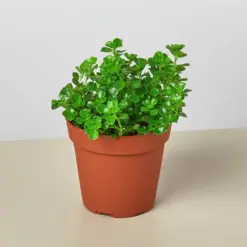
Nettle ‘Baby’s Tear’
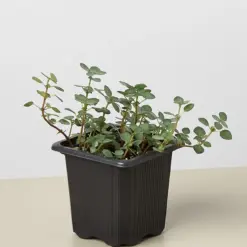
Price range: $22.99 through $39.99Nettle Plant ‘Silver Sparkle’
Price range: $22.99 through $39.99
Frequently Asked Questions
Are indoor "nettle" plants safe for cats and dogs?
Yes. The houseplant species commonly sold as nettles (Pilea, Soleirolia, Pellionia) are non-toxic to cats and dogs per ASPCA listings. Pet-safe choices. The stinging nettle (Urtica dioica) is an outdoor weed and is not sold as a houseplant.
Do indoor nettles actually sting?
No. The houseplant species sold as "nettle" (Pilea, Soleirolia) are non-stinging relatives of true nettles. They’re safe to handle. The stinging nettle (Urtica dioica) that does sting is an outdoor weed, not a houseplant. The shared family name causes confusion.
How do I propagate indoor nettles?
Stem cuttings root very quickly in water, typically in 1–3 weeks. Cut a 3–4 inch piece, strip lower leaves, then place in water with nodes submerged. Pot up once roots are 1 inch long. Plant 5+ cuttings together for an instantly full plant. Some species also propagate by layering (pinning trailing stems to soil).
Can I grow indoor nettles in a terrarium?
Yes. Pilea cousins and Soleirolia are excellent terrarium plants. The high humidity and consistent moisture inside closed glass containers suit them perfectly. They also work well in dish gardens and mixed containers with other small foliage plants.
Why is my indoor nettle leggy?
Two causes: (1) insufficient light, which you fix by moving to a brighter spot; (2) no pinching, which you fix by pinching growing tips every 2–3 weeks to force branching. Regular pinching is the key to a bushy compact plant.
Related Care Guides
