
Plant Care
Succulent Care Guide: Light, Water & Why Yours Are Stretching
Succulents are sold as "easy houseplants" but most people kill them, not from neglect, but from love and shade. Succulents evolved in deserts and rocky outcrops with intense direct sunlight and almost no water. Indoors, the opposite is usually true: low light and frequent watering. The result is stretched, pale, leggy plants that rot from the base. Get the light right and water sparingly, and succulents are some of the most rewarding plants you’ll grow.
Quick Care Card
☀️ Light
Bright direct or very bright indirect (6+ hours)
💧 Water
Drench, then let dry completely
💨 Humidity
30%+ (lower is fine)
🌡️ Temp
60–80°F
🪴 Soil
Cactus / succulent mix (gritty, fast-draining)
🐾 Cat/Dog Safe
❌ Varies (some safe, many toxic; verify your specific succulent)
🎯 Difficulty
🟢 Beginner (with enough light)
📏 Size
2–24 inches (varies wildly)
🌎 Zone
9–11 outdoors (most indoor succulents)
🏞️ Origin
Deserts, rocky regions worldwide
In this guide
About Succulent
"Succulent" isn’t a botanical family. It’s a description of any plant that stores water in thick fleshy leaves, stems, or roots. The term covers thousands of species across dozens of unrelated plant families: Echeveria, Crassula (jade), Sedum, Haworthia, Aloe, Sempervivum (hens and chicks), Euphorbia (some types), and many others. Cacti are technically succulents but they get their own guide because they’re spiny.
Almost all popular indoor succulents come from arid or semi-arid regions: rocky outcrops in Mexico (echeveria), the cape regions of South Africa (haworthia, jade), Mediterranean coasts (sempervivum), and various dry regions worldwide. They share an evolutionary toolkit: thick water-storing leaves, fast-draining root systems, slow growth in summer heat, dormant winters, and an intolerance for soggy soil.
What makes them tricky indoors: they evolved with 8–12 hours of direct sun daily, and indoor conditions usually provide a fraction of that. The classic symptom is "etiolation," a stretched leggy plant with widely spaced leaves reaching for light. The fix is always more light: a bright south-facing window, a grow light, or a summer outside on a porch.
Care Guide
Light
Light is the single biggest factor in succulent success. Most indoor failure comes from too little light.
- Best: 6+ hours of direct or very bright indirect light daily at a south or west-facing window with no obstructions.
- Tolerable: 4–6 hours of bright indirect light. Plants survive but stretch and lose color.
- Insufficient: less than 4 hours of bright light. Plants etiolate (stretch), get leggy, lose color, and eventually weaken to the point of collapse.
- Grow lights are the most reliable solution for indoor succulents, with a basic full-spectrum LED at 6–12 inches above the plants for 10–12 hours daily.
- Outdoor summer break (porch or balcony) helps reset succulents that have stretched indoors. Gradually acclimate to outdoor sun over 2–3 weeks to avoid scorch.
- Color check: healthy succulents have vibrant pinks, reds, blues, or silvers. Pale green, washed-out plants need more light.
Water
Drench, then ignore. Most succulents die from overwatering far more often than from drought.
- Wait until the soil is completely dry, and then wait another few days before watering. Lift the pot; if it feels light, water.
- Water thoroughly when you do water (soak until it runs from the drainage holes), but then ignore the plant for 2–3 weeks.
- Most plants need water every 14–21 days in summer (active growth) and every 21–45 days in winter (semi-dormant).
- Key signal: wrinkled, slightly soft leaves = thirsty (recoverable in 1–3 days). Yellow, mushy, translucent leaves = overwatered/rotting (often terminal).
- Use room-temperature water. Tap water is fine, since succulents aren’t picky.
- Water at the soil, not on top of the plant, because water sitting in the rosette of echeveria-type succulents causes crown rot.
Humidity
Succulents tolerate low humidity. Don’t fuss.
- 30–50% humidity (typical home year-round) is fine.
- Below 25% is tolerated by most species, since many succulents prefer dry air.
- Skip humidifiers, because it’s wasted effort and may encourage rot.
- High humidity (70%+) can cause issues with rosette types like echeveria, because water sits in the crown and rots the plant.
Temperature
Most succulents like warm days and cool nights.
- Ideal: 60–80°F days, 50–60°F nights.
- Below 40°F is lethal to most tropical/subtropical succulents (echeveria, haworthia, jade).
- Sempervivum (hens and chicks) is cold-hardy and prefers cool conditions, and tolerates frost.
- Avoid drafty windows in winter and AC vents in summer.
- Cool nights (50–60°F) help intensify color in echeveria and similar species, since outdoor fall conditions often bring out the best red/pink coloring.
Soil
Drainage is everything. Use a gritty cactus/succulent mix.
- Best: commercial cactus/succulent mix, a fast-draining gritty composition that mimics native rocky habitats.
- DIY: 50% potting soil + 30% coarse sand or pumice + 20% perlite or fine gravel.
- Avoid: standard potting soil (holds too much moisture), peat-heavy mixes, anything that stays wet for more than 5–7 days.
- Pot: terra cotta is ideal because it’s porous and wicks moisture from the soil. Glazed ceramic and plastic work but require longer dry-downs.
- Always use a pot with drainage holes. Saucer-bottom or cachepot setups without drainage rot succulents fast.
- Repot every 2–3 years when roots fill the pot. Most succulents prefer being slightly pot-bound.
Pro tip: terra cotta plus grit-on-top is the long-game succulent setup
If you keep killing succulents with rot, change the setup, not the watering schedule. Use an unglazed terra cotta pot (wicks moisture from soil), a 70% mineral grit mix (perlite/pumice/sand) instead of standard potting soil, and a thin top layer of fine gravel or aquarium sand. The combination dries out fast enough that you literally cannot overwater. You can soak the pot weekly and it’ll be dry by the end of the week. This setup turns succulents from "sensitive" to "forgiving."
Fertilizer
Light feeders. Easy to over-fertilize succulents.
- Diluted balanced liquid fertilizer (or specific cactus/succulent fertilizer) at quarter strength every 6–8 weeks April–September.
- Skip fertilizing October–March entirely.
- Many growers don’t fertilize at all, since fresh soil at repotting provides enough nutrients for years.
- Brown leaf tips after fertilizing = salt buildup. Flush soil with plain water; skip feeding for 6+ months.
Seasonal Care
🌱 Spring & Summer
- Most growth happens spring through fall on healthy plants
- New leaves emerge from the rosette/stem every 2–4 weeks
- Some species (echeveria, sedum) push up tall flower spikes in summer
- Water every 14–21 days when soil is completely dry
- Best time to repot, divide, or take cuttings
❄️ Fall & Winter
- Reduce watering to every 21–45 days
- Stop fertilizing entirely
- Move from cold drafts; below 40°F damages most species
- Don’t repot until spring
- Cooler nights intensify color (echeveria, sedum)
Common Problems & Fixes
| Symptom | Likely Cause | Fix |
|---|---|---|
| Stretched leggy plant with widely spaced leaves | Insufficient light (etiolation) | Move to brighter direct light or add a grow light; etiolated growth doesn’t reverse but new growth is normal |
| Yellow, soft, translucent leaves at the base | Overwatering / root rot | Stop watering immediately; unpot to check roots; cut rotted sections; replant in dry mix |
| Wrinkled, soft leaves | Thirsty | Water thoroughly; leaves rehydrate within 1–3 days |
| Pale washed-out color | Insufficient light | Move to brighter direct light; color intensifies over weeks of new growth |
| Brown burn marks on leaves | Sunburn (often after sudden move from indoor to direct outdoor sun) | Move to shadier spot; affected leaves don’t recover; acclimate gradually next time |
| Mushy black spot on rosette crown | Crown rot from water sitting in the rosette | Cut healthy top, let callus, replant; original plant lost |
| White cottony spots in leaf joints | Mealybugs (the #1 succulent pest) | Wipe with isopropyl alcohol on a cotton swab; insecticidal soap weekly until clear |
| Tiny black fungus gnats around the soil | Fungus gnats (soil too wet) | Let soil dry out completely; reduce watering frequency; sticky traps to catch adults |
| Lower leaves browning and dropping | Natural shedding OR overwatering | Slow gradual shedding of oldest leaves is normal; rapid yellowing suggests overwatering |
If your succulent is stretching, it doesn’t need more water; it needs more light. The fix is always brighter, not wetter. Move it to the sunniest window or get a grow light.
Propagation
Leaf propagation (easiest with most echeveria, sedum, jade)
Gently twist and pull a healthy plump leaf off the parent plant. The leaf must come off cleanly with the entire base and no broken stem stub.
Let the leaf callus over for 2–4 days in a dry shaded spot, since this prevents rot when planted.
Place the leaf flat on top of dry cactus mix; do not bury it.
Mist the soil lightly every 4–7 days. Don’t overwater, because the leaf will rot.
Within 2–4 weeks, tiny pink roots emerge from the cut end and a small new rosette forms.
Once the new plant is 1/2 inch across, gently transplant into a small pot of cactus mix.
The original leaf eventually withers, which is normal. The new plant continues growing.
Stem cuttings (jade, sedum, kalanchoe, sempervivum)
- Cut a 2–4 inch piece of stem with several leaves attached, using sterilized scissors.
- Let the cut end callus over for 2–4 days in a dry shaded spot.
- Insert the cut end into dry cactus mix, just deep enough to support the cutting.
- Water lightly only after 1–2 weeks. Resume normal succulent watering after 4–6 weeks once roots have formed.
- Place in bright indirect light away from direct sun while rooting; move to brighter light once established.
Offsets / pups (easiest of all with haworthia, sempervivum, aloe)
- Many succulents produce offsets (small babies) at their base or between leaves.
- Wait until the offset is at least 1 inch across with visible roots.
- Unpot the plant, gently separate the offset from the parent by pulling or cutting where they connect.
- Pot the offset in dry cactus mix; don’t water for the first week.
- Resume normal care after a week. New offsets often produce more offsets within months, giving you endless free plants.
Featured Succulent Species
| Species | Common Name | Notable Trait | Difficulty |
|---|---|---|---|
| Echeveria spp. | Echeveria | Classic rosette-shaped succulents in dozens of colors and forms | 🟢 Beginner |
| Crassula ovata | Jade Plant | Tree-like with thick oval leaves; lives for decades | 🟢 Beginner |
| Haworthia spp. | Haworthia | Small clustering rosettes; tolerates lower light than most succulents | 🟢 Beginner |
| Sedum spp. | Sedum / Stonecrop | Wide variety of trailing and clumping forms; very forgiving | 🟢 Beginner |
| Sempervivum spp. | Hens and Chicks | Cold-hardy rosettes that produce many offsets; great for outdoor pots | 🟢 Beginner |
| Kalanchoe blossfeldiana | Florist Kalanchoe | Showy clusters of small flowers; easy and rebloomable | 🟢 Beginner |
| Senecio rowleyanus | String of Pearls | Trailing strands of tiny pea-like leaves; needs bright light | 🟡 Intermediate |
| Aeonium arboreum | Aeonium | Tree-like rosettes on tall stems; striking architectural plant | 🟡 Intermediate |
| Graptopetalum paraguayense | Ghost Plant | Trailing pale silver-pink rosettes; drought-extreme tolerant | 🟢 Beginner |
Shop Our Succulent Collection
Every Succulent we ship is greenhouse-grown, climate-acclimated, and packed with care for transit. Sold-out species? Use the Notify Me button on any product page and we’ll email you the moment it’s restocked.

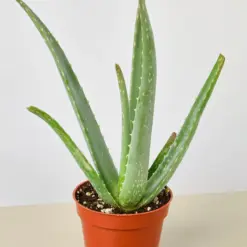
Aloe Vera Plant
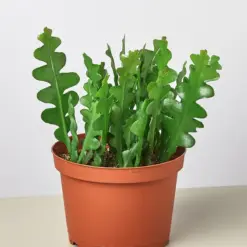
Price range: $22.99 through $39.99Epiphyllum ‘Ric Rac’ Cactus Plant
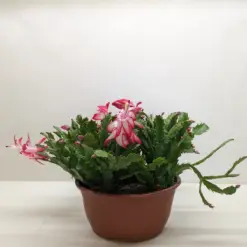
Price range: $27.99 through $59.99Christmas Cactus ‘White’ (Zygocactus)
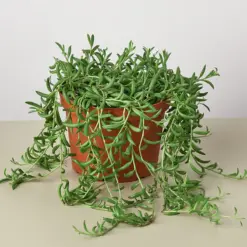
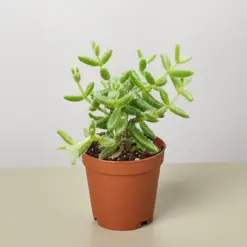
Price range: $27.99 through $84.99Succulent ‘String of Bananas’ Plant
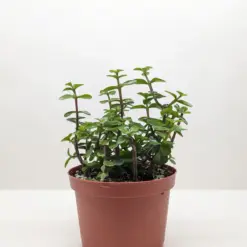
Price range: $25.99 through $50.99Succulent ‘Elephant Bush’
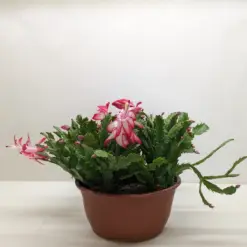
Price range: $22.99 through $158.99Christmas Cactus ‘Red’ (Zygocactus)
Price range: $27.99 through $84.99Delosperma Echinatum ‘Pickle Plant’
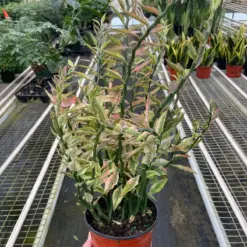
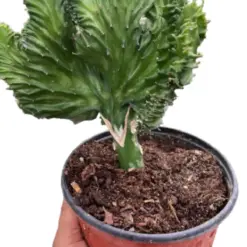
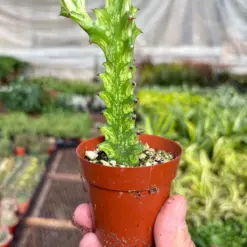
Price range: $22.99 through $43.99Euphorbia ‘Devil’s Backbone’ Variegated
Price range: $25.99 through $118.99Euphorbia Plant ‘Mint Cream’
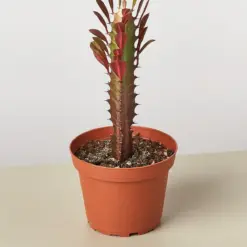
Price range: $30.99 through $46.99Euphorbia Plant ‘Trigona Rubra’
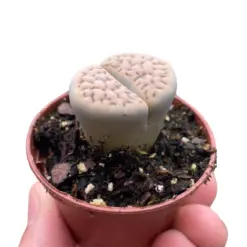
Price range: $23.99 through $66.99Lithop Living Stone Plant
$18.99
Frequently Asked Questions
Are succulents safe for cats and dogs?
It depends on the species, since there’s no single answer for "succulents." Pet-safe: echeveria, haworthia, sedum (most), sempervivum, ghost plant. Toxic: jade plant (Crassula ovata), kalanchoe (potentially fatal because it contains cardiac glycosides), aloe vera (mild toxicity), euphorbia species (toxic sap). Always verify the botanical name of your specific plant before assuming it’s safe. (For confirmed pet-safe non-succulent options, see Spider plant, Calathea, and Peperomia.)
Why is my succulent stretching?
Insufficient light, the most common succulent problem indoors. The plant is stretching to reach more light (called "etiolation"). The fix is always brighter conditions: move to a south or west-facing window, set up a grow light, or move outdoors during summer. Etiolated growth doesn’t reverse, but new growth from the top will be tight and properly colored. You can also behead a leggy succulent and propagate the top; see the propagation section.
How often should I water my succulent?
Far less than you think. Most indoor succulents need water every 2–3 weeks in summer and every 3–6 weeks in winter, only when the soil is completely dry. Lift the pot to check; if it feels light, water. If still heavy, wait. Always use a fast-draining cactus mix and a pot with drainage holes. The succulent kill rate from overwatering vastly exceeds the death rate from drought.
Why are my succulent’s lower leaves yellow and mushy?
Overwatering and root rot. The roots are rotting in soggy soil and the lower leaves yellow, soften, and fall off. Stop watering immediately. Unpot, check the roots, cut all brown mushy roots back to firm white tissue with a sterilized blade, let the cuts callus 24 hours, then replant in dry cactus mix. Don’t water for at least a week. If rot has reached the stem, cut healthy top tissue and propagate as a stem cutting.
Can I grow succulents under a regular lamp?
Not effectively. Standard household bulbs don’t produce enough useful light spectrum for succulents to thrive. A basic full-spectrum LED grow light (look for ~6500K full-spectrum or red/blue diodes) at 6–12 inches above the plants for 10–12 hours daily works well. They’re cheap on Amazon and dramatically improve indoor succulent health.
How do I propagate a succulent from a single leaf?
Pluck a healthy plump leaf off the parent by twisting gently, and the entire leaf base must come away cleanly. Let the leaf callus over (dry out at the cut end) for 2–4 days. Place the leaf flat on top of dry cactus mix; mist lightly every 4–7 days. Within 2–4 weeks, tiny roots and a baby rosette emerge from the cut end. The original leaf withers; the new plant grows. Best species for leaf propagation: echeveria, jade, sedum.
Why is my echeveria opening up and flat instead of tight rosette?
Insufficient light. Healthy echeveria forms a tight, compact rosette in bright direct light. In low light, the rosette opens up flat as the leaves stretch to gather more photons. Move to your brightest window or supplement with a grow light. Existing leaves don’t tighten back, but new growth from the center comes in compact once the plant has enough light.
Related Care Guides
