
Plant Care
Cordyline (Ti Plant) Care Guide: Light, Water & The Colorful Sword-Leaved Tropical
Cordyline (also called Ti Plant or Hawaiian Good Luck Plant) is the dramatic upright tropical with sword-shaped leaves in pink, red, burgundy, cream, and green combinations. Native to Hawaii and the Pacific Islands, it’s a cultural symbol of good luck and is widely planted around homes and businesses across Polynesia. Indoors, it’s a colorful statement plant that needs bright light and humidity to thrive, and pampered specimens grow into 4–6 foot indoor trees.
Quick Care Card
☀️ Light
Bright indirect to some direct sun
💧 Water
Top inch dry; never bone-dry
💨 Humidity
50%+ (60% ideal)
🌡️ Temp
65–85°F
🪴 Soil
Rich, well-draining mix
🐾 Cat/Dog Safe
❌ Toxic to cats & dogs
🎯 Difficulty
🟡 Intermediate
📏 Size
3–6 ft indoors
🌎 Zone
10–12 outdoors
🏞️ Origin
Pacific Islands & tropical Asia
In this guide
About Cordyline (Ti Plant)
Cordyline is a genus of about 15 species of woody monocots native to the Pacific Islands, New Zealand, parts of Australia, and tropical Asia. The most common houseplant is C. fruticosa (Ti Plant, formerly C. terminalis), with hundreds of named cultivars in different leaf colors and patterns.
Ti Plant has been culturally important in Hawaii and across Polynesia for over 1,500 years, with leaves used for hula skirts, food wrapping, religious ceremonies, and as a symbol of good fortune. The plant was deliberately spread by Polynesian voyagers as part of their canoe culture, ending up on virtually every Pacific island.
Popular cultivars: ‘Red Sister’ (deep magenta-pink), ‘Kiwi’ (cream, green, and pink stripes), ‘Black Magic’ (deep purple-black), ‘Auntie Lou’ (light pink), ‘Florica’ (multi-color variegated), ‘Hawaiian Boy’ (bright red). Care is essentially identical across cultivars, though colored varieties need slightly more light to maintain colors.
Care Guide
Light
Bright indirect light. Colorful cultivars need more light than green forms.
- Best: bright indirect light with some morning direct sun.
- Variegated/colored cultivars: need brighter light to maintain pink/red/purple colors.
- Direct afternoon sun can scorch some delicate cultivars.
- Low light leads to faded colors and leggy growth.
Water
Keep evenly moist. Don’t let bone-dry.
- Water when the top inch of soil is dry.
- Water thoroughly; empty saucer after 10 minutes.
- Most plants need water every 5–7 days in summer, every 7–10 days in winter.
- Critical: Cordyline is sensitive to fluoride and chlorine in tap water, so use filtered or distilled water to avoid brown leaf tips.
- Yellow leaves with mushy stems = overwatering. Brown crispy tips = tap water sensitivity (very common).
Humidity
Higher is better. 50%+ ideal.
- Ideal: 50–70% humidity.
- Tolerable: 40–50%.
- Below 30% causes crispy edges and increased spider mite pressure.
- Pebble trays or humidifier help.
Temperature
Warm tropical temperatures.
- Ideal: 65–85°F.
- Below 55°F damages leaves.
- Below 45°F is potentially fatal.
- Avoid AC and heating vents.
Soil
Rich, well-draining mix.
- Easy mix: 60% potting soil + 30% perlite + 10% orchid bark.
- Avoid: dense potting soil, pots without drainage.
- Repot every 1–2 years in spring.
Pro tip: switch to filtered water before adding humidity
If your Cordyline has brown crispy leaf tips, the cause is almost always tap water fluoride and chlorine, not low humidity. Cordyline is one of the most fluoride-sensitive houseplants. A Brita filter or distilled water usually fixes leaf-tip browning within a few months of new growth. Don’t bother with humidifiers until you’ve solved the water problem first.
Fertilizer
Moderate feeders.
- Balanced liquid fertilizer at half strength every 4 weeks April–September.
- Skip fertilizing October–March.
- Brown leaf tips after fertilizing = salt buildup. Flush soil.
Seasonal Care
🌱 Spring & Summer
- New leaves emerge from growing tips every 3–6 weeks
- Mature plants may produce small white-pink flower spikes (rare indoors)
- Water every 5–7 days when top inch is dry
- Fertilize every 4 weeks at half strength
- Best time to repot, take cuttings, or do pruning
❄️ Fall & Winter
- Reduce watering to every 7–10 days
- Stop fertilizing
- Move from cold drafts; below 55°F damages leaves
- Slower growth, with minimal new leaves being normal
Common Problems & Fixes
| Symptom | Likely Cause | Fix |
|---|---|---|
| Brown crispy leaf tips | Tap water fluoride/chlorine sensitivity | Switch to filtered or distilled water |
| Yellow lower leaves | Overwatering or natural shedding | Reduce watering frequency |
| Fading colors / reversion to green | Insufficient light | Move to brighter indirect light |
| Crispy curling leaves | Low humidity or dry soil | Raise humidity; check soil moisture |
| Bleached patches on leaves | Direct sun scorch | Move from direct afternoon sun |
| Stems rotting at base | Severe overwatering | Cut healthy stems for cuttings |
| Tiny webs on leaves | Spider mites (low humidity) | Rinse; raise humidity; insecticidal soap weekly |
| White cottony spots | Mealybugs | Wipe with alcohol; insecticidal soap weekly |
| Leggy with bare lower stem | Mature growth habit | Cut top for propagation; bare stem produces new shoots |
If your Cordyline has brown tips, switch your water before you switch your humidity. Tap water sensitivity is the #1 cause of every Cordyline complaint.
Propagation
Stem cuttings (top cuttings are easiest)
Cut the top 6–8 inches off a cane with sterilized scissors.
Strip the lowest leaves so the bottom of the cutting is bare.
Place in water or dip in rooting hormone and stick in damp soil.
Roots form in 4–8 weeks.
Bonus: the original bare cane produces 1–3 new shoots within 4–8 weeks.
Cane segments
- Cut cane into 3–4 inch segments.
- Lay horizontally on damp soil, half-buried.
- Cover with clear plastic; keep warm.
- New shoots emerge from nodes in 6–10 weeks.
Featured Cordyline (Ti Plant) Species
| Species | Common Name | Notable Trait | Difficulty |
|---|---|---|---|
| C. fruticosa ‘Red Sister’ | Red Sister Ti Plant | Deep magenta-pink leaves; the most popular | 🟡 Intermediate |
| C. fruticosa ‘Kiwi’ | Kiwi Ti Plant | Cream, green, and pink striped leaves | 🟡 Intermediate |
| C. fruticosa ‘Black Magic’ | Black Magic Ti Plant | Deep purple-black foliage | 🟡 Intermediate |
| C. fruticosa ‘Auntie Lou’ | Auntie Lou Ti Plant | Light pink and cream variegation | 🟡 Intermediate |
| C. fruticosa ‘Florica’ | Florica Ti Plant | Multi-color variegated with pink, green, cream | 🟡 Intermediate |
| C. australis | Cabbage Tree (cold-hardy) | Cold-hardy outdoor species from New Zealand | 🟢 Beginner (outdoor) |
| C. fruticosa ‘Hawaiian Boy’ | Hawaiian Boy Ti Plant | Bright red leaves | 🟡 Intermediate |
Shop Our Cordyline (Ti Plant) Collection
Every Cordyline (Ti Plant) we ship is greenhouse-grown, climate-acclimated, and packed with care for transit. Sold-out species? Use the Notify Me button on any product page and we’ll email you the moment it’s restocked.

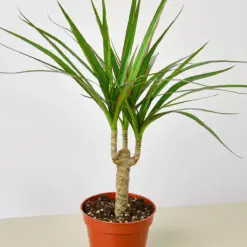
Dracaena Plant ‘Tornado’
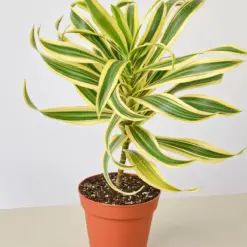
Price range: $25.99 through $47.99Dracaena Song of India Plant
Price range: $22.99 through $41.99Dracaena Plant ‘Janet Craig’
Price range: $22.99 through $70.99Dracaena Warneckii ‘White Jewel’
Price range: $25.99 through $39.99Dracaena Plant ‘Marginata Cane’
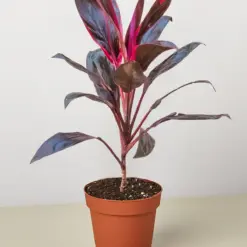
Price range: $22.99 through $150.99Cordyline Plant ‘Calypso Queen’
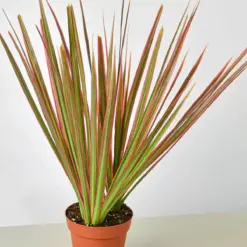
Price range: $22.99 through $39.99Dracaena Plant ‘Colorama’
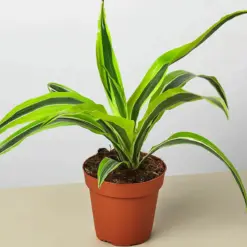
Price range: $22.99 through $46.99Dracaena Plant ‘Lemon Lime’
Price range: $23.99 through $191.99Dracaena Plant ‘Lime Light’
Price range: $30.99 through $50.99Dracaena Plant ‘Marginata Magenta’
Price range: $23.99 through $50.99Lucky Bamboo Heart Shape (Dracaena)
Price range: $28.99 through $249.99
Frequently Asked Questions
Are Cordyline plants safe for cats and dogs?
No. Cordyline species are toxic to cats and dogs per ASPCA listings. Contains saponins that cause vomiting (sometimes with blood), drooling, depression, and loss of appetite. Symptoms are usually mild but unpleasant. Keep out of reach. (For pet-safe alternatives, see Spider plant and Calathea.)
Why does my Cordyline have brown leaf tips?
Almost always tap water sensitivity. Cordyline is one of the most fluoride- and chlorine-sensitive houseplants. Switch to filtered, distilled, or rainwater. New leaves emerge clean within a few months. Existing brown tips don’t recover; trim with scissors at an angle to match the natural leaf taper.
Why is my Red Sister Cordyline turning green?
Insufficient light. The pink/red colors in Cordyline cultivars require bright light to maintain. Move to a brighter spot, such as close to an east window or behind sheer curtains on a south/west window. Cut back solid-green reverted growth to force colored regrowth.
How do I propagate Cordyline?
Easiest method: top cuttings. Cut the top 6–8 inches off the cane, strip lower leaves, and place in water or damp soil. Roots form in 4–8 weeks. The original bare cane usually produces 1–3 new shoots within 4–8 weeks, so one plant becomes multiple.
Why is my Cordyline leggy?
Cordyline naturally grows as a tall cane plant with leaves concentrated at the top. To fix legginess: cut the top off and propagate it as a new plant; the bottom cane produces new shoots, creating a fuller multi-stemmed appearance. Or accept the upright cane form as the plant’s natural look.
Can I grow Cordyline outdoors?
Yes in USDA zones 10–12 (frost-free climates). Most cultivars are tropical and won’t survive freezing. C. australis (cabbage tree) is cold-hardy and grows outdoors in cooler climates. For most homes, Cordyline is a year-round houseplant or summer outdoor plant brought inside before fall.
How fast does Cordyline grow?
Moderately. Healthy Cordyline produces 6–10 new leaves per year in good conditions. A 1-foot plant can reach 3–4 feet over 3–4 years. Insufficient light is the most common cause of slow or stalled growth, so move to brighter conditions if growth has paused for over a year.
Related Care Guides
