
Plant Care
Philodendron Care Guide: Light, Water, Soil, Propagation
Philodendrons are the houseplant world’s gentle giants, since they’re forgiving, fast-growing, and improbably diverse. From the heart-shaped P. hederaceum trailing off your bookshelf to the velvet-leaved P. gloriosum creeping across the soil surface, this single genus contains both unkillable starter plants and rare specimens that command four-figure prices. Here’s the care knowledge that actually matters.
Quick Care Card
☀️ Light
Bright indirect
💧 Water
Top inch dry
💨 Humidity
50%+
🌡️ Temp
65–80°F
🪴 Soil
Chunky aroid mix
🐾 Cat/Dog Safe
☠️ Toxic to cats & dogs
🎯 Difficulty
🟢 Beginner
📏 Size
3–8 ft indoor
🌎 Zone
9–11 outdoors
🏞️ Origin
Tropical Americas
In this guide
About Philodendron
Philodendron is the second-largest genus in the arum family (Araceae) with over 480 accepted species, and only Anthurium has more. The Greek root philo-dendron means “tree-loving,” a nod to the climbing habit most species share in their native rainforests of Mexico, Central America, the Caribbean, and tropical South America. They’re broadly split into two growth habits: climbers (vining species like P. hederaceum, P. micans, P. erubescens) and self-headers (upright, non-vining species like P. selloum, P. gloriosum, P. mamei).
What makes philodendrons such reliable houseplants is their tolerance: most species handle medium-light conditions, irregular watering, and average household humidity. Compared to their fussier aroid cousins (calathea, alocasia, anthurium), philodendrons forgive a lot. The trade-off is that a true mature display, with large fenestrated or split leaves like P. bipinnatifidum, requires bright light, climbing support, and consistent care for years.
If you’ve ever bought a “heart-leaf philodendron” at the grocery store, you’ve owned P. hederaceum. If your friend is bragging about a $500 “pink princess,” they have a variegated cultivar of P. erubescens. The genus spans the entire price spectrum, but the care needs are surprisingly consistent across them.
Care Guide
Light
Philodendrons handle a wider range of light than most aroids, but more light still equals bigger leaves and faster growth.
- Place 4–6 feet from a south or east-facing window with sheer curtains, or directly in front of a north-facing window.
- Most species tolerate medium light (low-intensity indirect light), but expect slow growth and smaller leaves than the plant’s mature form.
- Variegated cultivars (Pink Princess, White Princess, Birkin) need more light than green species, because variegated tissue has less chlorophyll and the plant compensates with photosynthesis from green sections only.
- Climbing species develop dramatically larger, more fenestrated leaves when given a moss pole and bright light. Without those, you’ll get the juvenile leaf form forever.
- Avoid more than 1–2 hours of direct sun. Velvet-leaved species (P. gloriosum, P. micans, P. melanochrysum) scorch fastest in direct light.
Water
Less is more. Philodendrons recover from a missed watering faster than from a soggy one.
- Check the top 1–2 inches of soil. If it’s dry, water thoroughly until water runs from the drainage holes.
- Empty the saucer within 15 minutes, because standing water rots roots faster than any other care mistake.
- Most species need watering every 7–10 days in summer, every 14–21 days in winter (the larger the pot, the longer between waterings).
- Use room-temperature filtered water. Tap water is acceptable but high-fluoride supply causes brown leaf tips over time, especially on velvet-leaved species.
- Yellowing lower leaves with multiple at once = overwatering. Drooping leaves that perk up after watering = you waited too long.
Humidity
Philodendrons handle dry air better than calathea or alocasia, but velvet-leaved and trailing species reward extra humidity with bigger, deeper-colored leaves.
- 50% relative humidity is the floor. Below 30%, expect crispy leaf edges, especially during winter heating.
- Velvet species (P. gloriosum, P. micans) prefer 60–70%. A small humidifier within 6 feet of the plant is the most reliable option.
- Group plants together to create a humidity microclimate.
- Skip frequent misting, because it does little for ambient humidity and can encourage fungal leaf spots.
Temperature
Stable warmth, no cold drafts.
- 65–80°F (18–27°C) is the sweet spot.
- Damage starts below 55°F. Below 40°F, leaves blacken and stems turn mushy.
- Avoid placing near AC vents, exterior doors in winter, or single-pane windows where the leaf touches the cold glass.
Soil
Chunky and well-draining. Roots need oxygen as much as water.
- DIY recipe: 40% potting mix, 30% perlite, 20% orchid bark, 10% horticultural charcoal.
- For self-heading creepers (P. gloriosum, P. mamei): use a wider, shallower pot since rhizomes grow horizontally across the soil surface, not down.
- Avoid: dense potting soil straight from the bag, peat-only mixes, terra cotta beds without amendments.
- Repot every 1–2 years or when roots circle the pot tightly. Use a pot 2 inches wider in diameter, because going much larger invites overwatering.
Pro tip: moss poles unlock mature growth
Climbing philodendrons remain in juvenile leaf form indefinitely without a vertical support. Once aerial roots latch onto a damp moss pole, the plant senses it’s climbing a host tree and triggers larger, more fenestrated mature leaves within a few growth cycles. Keep the moss damp by spritzing weekly or installing a self-watering pole. The same plant on a shelf vs. a moss pole produces leaves that look like different species.
Fertilizer
Heavy feeders during the growing season, and lighter feeders in winter.
- Balanced liquid fertilizer (e.g., 20-20-20) at half strength every 2–4 weeks April–September.
- Stop feeding October–March (most species pause growth in low light/cold).
- Variegated cultivars are especially sensitive to fertilizer salt buildup, so flush soil with plain water every 2 months to prevent leaf-tip burn.
Seasonal Care
🌱 Spring & Summer
- New leaves every 3–6 weeks on healthy plants
- Water more frequently, every 5–10 days
- Fertilize bi-weekly at half strength
- Best time to repot, propagate, or upgrade to a moss pole
- Watch for spider mites (warm + dry conditions favor them)
❄️ Fall & Winter
- Cut watering by 30–50% because soil dries slower in cooler temps
- Stop fertilizing entirely
- Move further from cold windows; ambient cold can shock leaves overnight
- Run a humidifier, since winter heating drops indoor humidity below 30%
- Don’t repot or do major pruning until spring
Common Problems & Fixes
| Symptom | Likely Cause | Fix |
|---|---|---|
| Yellow leaves (multiple at once) | Overwatering or root rot | Cut watering frequency in half; check drainage; repot if soil smells sour |
| Yellow lower leaf (one at a time) | Natural shedding | Normal, since plants drop the oldest leaf as new ones emerge |
| Brown crispy leaf edges | Low humidity or fluoride buildup | Add humidifier; flush soil with plain water; switch to filtered water |
| Brown patches in leaf middle | Cold damage or leaf-touching cold glass | Move away from window; warm room |
| Pale, leggy growth with small leaves | Insufficient light | Move closer to window or add a grow light |
| Leaves losing variegation (Pink Princess) | Not enough light | Variegated cultivars need brighter light than green species |
| Drooping despite damp soil | Root rot from overwatering | Unpot, trim black mushy roots, repot in fresh dry mix, hold off watering 5 days |
| Sticky residue on leaves or stems | Mealybugs or scale | Wipe with alcohol-soaked cotton; insecticidal soap weekly until clear |
| Tiny webs under leaves | Spider mites | Increase humidity; spray water + neem oil; isolate from other plants |
| Clear droplets on leaf edges | Guttation (normal) | Plant is healthy, since it’s expelling excess water through leaf glands |
If your philodendron is alive but not impressive, the answer is almost always more light + a moss pole. Same plant, different display.
Propagation
Stem cuttings (climbing species)
Identify a stem with at least one node, which is the bumpy joint where a leaf and aerial root emerge. No node means no roots.
Sterilize a sharp blade with isopropyl alcohol.
Cut just below a node, leaving 2–3 inches of stem with one or two leaves above.
(Optional) Dip the cut end in rooting hormone, which speeds rooting by 30–50%.
Place the node in a glass of water, in damp sphagnum moss, or directly in lightly moist perlite.
Keep in bright indirect light. Change water weekly to prevent rot.
Roots appear in 2–4 weeks. When roots are 2–3 inches long, transplant to soil and water in.
Expect a brief growth pause as the plant transitions from water roots to soil roots.
Rhizome division (self-heading species)
- Self-heading philodendrons (P. gloriosum, P. mamei, P. plowmanii) grow from a horizontal rhizome, which is a thick fleshy stem that creeps across the soil surface.
- When the rhizome has 4+ leaves and at least one new growth point at the tip, it’s ready to divide.
- Unpot the plant and gently brush soil from the rhizome.
- Identify a section with at least 2 leaves and visible roots. Use a sterilized sharp knife to cut the rhizome between leaf nodes.
- Pot each section separately in fresh aroid mix, with the rhizome resting on top of the soil (not buried, since burying rots them).
- Water lightly and keep humidity high for 2–3 weeks while new roots establish.
Featured Philodendron Species
| Species | Common Name | Notable Trait | Difficulty |
|---|---|---|---|
| P. hederaceum | Heart-Leaf Philodendron | Trailing, near-bulletproof, glossy heart leaves | 🟢 Beginner |
| P. hederaceum ‘Brasil’ | Brasil Philodendron | Lime-green variegation on heart leaves | 🟢 Beginner |
| P. micans | Velvet-Leaf Philodendron | Bronze-velvet leaves with a pink undertone | 🟢 Beginner |
| P. erubescens ‘Pink Princess’ | Pink Princess | Hot pink variegated leaves, internet-famous | 🟡 Intermediate |
| P. selloum | Tree Philodendron | Large self-heading, deeply lobed leaves | 🟢 Beginner |
| P. gloriosum | Gloriosum | Velvet heart-shaped leaves with white veining, crawls along soil | 🟡 Intermediate |
| P. melanochrysum | Black Gold | Long velvet near-black leaves; needs high humidity | 🟡 Intermediate |
| P. gigas | Giant Philodendron | Massive velvet leaves, can exceed 3 ft mature | 🔴 Expert |
| P. spiritus-sancti | Spiritus Sancti | Among the rarest aroids in cultivation | 🔴 Expert |
Shop Our Philodendron Collection
Every Philodendron we ship is greenhouse-grown, climate-acclimated, and packed with care for transit. Sold-out species? Use the Notify Me button on any product page and we’ll email you the moment it’s restocked.

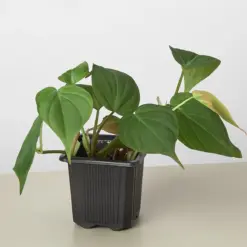
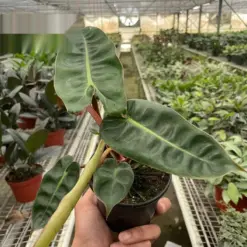
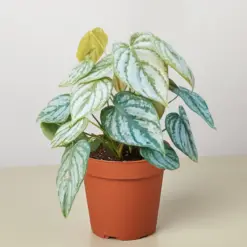
Philodendron Plant ‘Velvet’
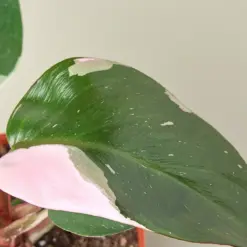
Price range: $22.99 through $81.99Philodendron Plant ‘Pink Princess’
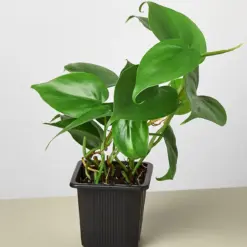
Price range: $51.99 through $235.99Philodendron Cordatum (Heartleaf)
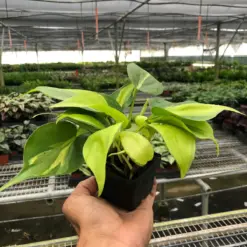
Price range: $22.99 through $54.99Philodendron Plant ‘Brasil’
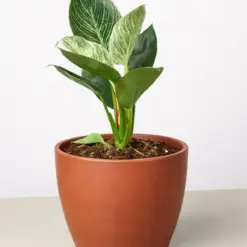
Price range: $22.99 through $66.99Philodendron Plant ‘Birkin’
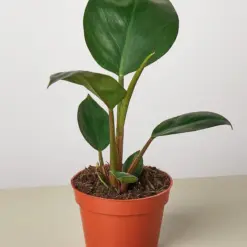
Price range: $22.99 through $44.99Philodendron Plant ‘Congo Rojo’
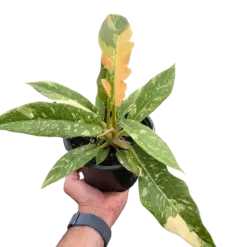
Price range: $25.99 through $158.99Philodendron Plant ‘Variegated Ring of Fire ‘
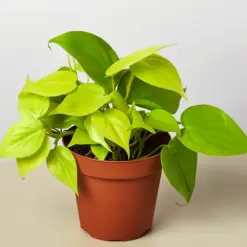
Price range: $33.99 through $80.99Philodendron Cordatum ‘Neon’
Price range: $20.99 through $89.99Philodendron Plant ‘Billietiae’
Price range: $23.99 through $84.99Philodendron Plant ‘Brandi’
Price range: $34.99 through $86.99Philodendron Plant ‘Choco Empress’
Price range: $56.99 through $84.99Philodendron Plant ‘Congo Green’
Price range: $26.99 through $56.99
Frequently Asked Questions
Related Care Guides
- Monstera Care Guide (philodendron’s closest aroid cousin)
- Pothos Care Guide (easier-care alternative)
- Anthurium Care Guide
- Watering Guide
- Light Requirements
