
Plant Care
Pothos Care Guide: Light, Water, Propagation & Varieties
If you’ve killed every plant you’ve owned, start with pothos. Officially classified as Epipremnum aureum (and a handful of close cousins), it’s the houseplant that thrives on neglect, propagates from a leaf in a glass of water, and tolerates conditions that would kill most aroids. But here’s what most beginners don’t realize: that small heart-shaped leaf on your bookshelf is actually a juvenile form. Mature pothos leaves can grow to 3 feet long with dramatic split fenestrations.
Quick Care Card
☀️ Light
Low to bright indirect
💧 Water
Top inch dry
💨 Humidity
40%+
🌡️ Temp
65–85°F
🪴 Soil
Standard potting mix
🐾 Cat/Dog Safe
☠️ Toxic to cats & dogs
🎯 Difficulty
🟢 Beginner
📏 Size
6–10 ft trailing
🌎 Zone
10–12 outdoors
🏞️ Origin
French Polynesia / SE Asia
In this guide
About Pothos
Pothos is technically a misnomer, because the houseplant most people call “pothos” is Epipremnum aureum, native to the Solomon Islands and naturalized across the tropics. Real Pothos is a different genus altogether (Pothos scandens), rarely seen in cultivation. The common name stuck because of an old taxonomic reclassification, and the houseplant industry has used “pothos” universally since.
What makes Epipremnum so beginner-friendly: it tolerates light from low to bright (though it grows much faster in bright indirect), recovers quickly from missed waterings, isn’t fussy about humidity, and roots from any node-bearing cutting in water within days. It’s also one of the only aroids you can keep in a glass of water permanently.
The catch: at home, you’ll almost always see the small juvenile leaf form. To see the mature 2–3 ft fenestrated leaves, the plant needs to climb a tree (or a very tall, damp moss pole) and reach high light. In their native rainforests, pothos vines climb 60+ feet and develop perforations that look completely unlike the houseplant version.
Care Guide
Light
Pothos handle low light better than almost any other houseplant, but bright indirect light unlocks the best foliage.
- Bright indirect light produces the fastest growth and best variegation. Place 3–6 ft from a south or east-facing window.
- Medium and low light are tolerated. Growth slows and variegation may fade or revert to solid green.
- Variegated cultivars (Marble Queen, Manjula, N’Joy, Pearls and Jade) need more light than solid green types, because without it, they revert.
- Direct sun for more than 1–2 hours scorches leaves. Indirect bright is the sweet spot.
- If a variegated pothos puts out solid green leaves, prune back to the last variegated node and provide more light to encourage variegated regrowth.
Water
Pothos forgive missed watering days. They don’t forgive constant wet feet.
- Water when the top 1–2 inches of soil are dry. Stick a finger in to check.
- Water thoroughly until water drains from the bottom, then empty the saucer within 15 minutes.
- Most pots need watering every 7–14 days in summer, every 14–21 days in winter.
- If leaves curl downward and feel limp, you waited too long, so water immediately and they’ll perk up within hours.
- Multiple yellow leaves dropping at once = overwatering. This kills more pothos than any other mistake.
Humidity
Pothos handles dry indoor air without complaint, though humidity above 50% produces larger leaves.
- 40% relative humidity is fine. Below 30% (winter heating) you may see crispy edges on variegated cultivars.
- If you want larger, glossier leaves, group with other plants or use a small humidifier.
- Skip frequent misting, because it doesn’t significantly raise ambient humidity and can encourage fungal spots.
Temperature
Stable warm temperatures, no cold drafts.
- 65–85°F (18–29°C) is ideal.
- Below 50°F slows growth and damages leaves. Below 40°F kills the plant.
- Avoid placing near AC vents in summer or single-pane windows in winter.
Soil
Standard well-draining potting mix is sufficient, since pothos aren’t fussy.
- Any general indoor potting mix works.
- For chunky upgrade: add 20–30% perlite for better drainage and root oxygen.
- Avoid: dense garden soil, peat-only mixes that compact, terra cotta beds without amendments.
- Repot every 1–2 years or when roots fill the pot.
Pro tip: give pothos a moss pole to unlock mature leaves
The familiar 4-inch heart leaves are the juvenile form. In nature, pothos climbs trees 60+ feet up and develops massive 2–3 ft leaves with split fenestrations that resemble Monstera. Give your plant a damp moss pole, keep it humid, and let aerial roots latch on. Within a year of climbing, leaves visibly enlarge. After 2–3 years of climbing, you may see your first split leaf, which is a milestone most pothos owners never witness.
Fertilizer
Light feeders. Easy to over-fertilize.
- Balanced liquid fertilizer at quarter strength every 4–6 weeks during growing season (April–September).
- Skip fertilizing October–March.
- Brown leaf tips after fertilizing = salt buildup. Flush soil with plain water until it runs clear from the drainage holes.
Seasonal Care
🌱 Spring & Summer
- New leaves every 2–4 weeks on healthy plants
- Water every 7–10 days
- Fertilize monthly at quarter strength
- Best time to propagate, repot, or train onto a pole
- Watch for spider mites and mealybugs
❄️ Fall & Winter
- Cut watering by 30–50%
- Stop fertilizing entirely
- Move from cold windows; ambient cold can stunt growth
- Variegated leaves may pale slightly in low winter light (normal, returns in spring)
- Don’t repot until spring
Common Problems & Fixes
| Symptom | Likely Cause | Fix |
|---|---|---|
| Yellow leaves (multiple) | Overwatering or root rot | Cut watering frequency in half; check drainage; repot if soil smells sour |
| Brown crispy tips | Underwatering, low humidity, or fluoride | Water more consistently; use filtered water; consider humidifier |
| Variegated leaves turning green | Insufficient light | Move closer to a window or add a grow light |
| Long stems with no leaves | Light-starved (plant is stretching toward light) | Move to brighter location; prune leggy stems back to encourage bushy growth |
| Limp drooping leaves | Underwatered | Water thoroughly; leaves recover within hours |
| Tiny webs under leaves | Spider mites | Increase humidity; spray with neem oil; isolate from other plants |
| White cottony spots on stems | Mealybugs | Wipe with isopropyl alcohol; insecticidal soap weekly until clear |
| Black spots on leaves | Fungal infection or cold damage | Reduce humidity around foliage; remove affected leaves; check for cold draft |
There’s no such thing as a pothos that won’t grow. There’s only a pothos that hasn’t been given enough light yet.
Propagation
Stem cuttings in water (easiest, near 100% success)
Identify a stem with healthy leaves and at least 1–3 nodes (the bumpy joints where aerial roots emerge).
Sterilize a sharp blade with isopropyl alcohol.
Cut just below a node, leaving 4–6 inches of stem with 2–3 leaves above.
Strip the bottom 1–2 leaves so only the upper leaves remain, because submerged leaves rot.
Place the bare nodes in a glass of clean water (room temperature).
Set in bright indirect light. Change water every 5–7 days to keep it oxygenated.
Roots emerge from nodes in 1–2 weeks. Once roots are 2+ inches long, transplant to soil and water in.
Keep soil consistently moist for the first 2 weeks while water roots adapt to soil.
Direct-to-soil propagation
- Take cuttings as above (stem with 1–3 nodes, leaves stripped from bottom).
- Skip the water step and insert cuttings directly into a small pot of damp aroid mix.
- Cover loosely with a clear plastic bag or dome to maintain humidity.
- Keep in bright indirect light, soil consistently damp (not wet).
- Roots develop in 3–5 weeks. New leaf growth confirms successful rooting.
- Skip the bag at that point and resume normal watering.
Featured Pothos Species
| Species | Common Name | Notable Trait | Difficulty |
|---|---|---|---|
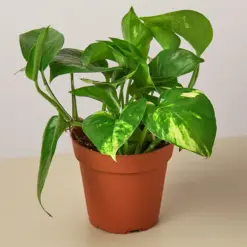
| E. aureum ‘Golden Pothos’ | Golden Pothos | Yellow-cream variegation on green; the original supermarket pothos | 🟢 Beginner |
| E. aureum ‘Marble Queen’ | Marble Queen | Heavy white-and-green marbling; grows slower than green pothos | 🟢 Beginner |
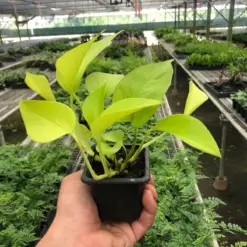
| E. aureum ‘Neon’ | Neon Pothos | Solid chartreuse-yellow foliage | 🟢 Beginner |
| E. aureum ‘Manjula’ | Manjula Pothos | Wavy leaves with white, green, and silver patterns | 🟢 Beginner |
| E. aureum ‘Pearls and Jade’ | Pearls and Jade | Compact growth with fine white speckling | 🟢 Beginner |
| E. aureum ‘N’Joy’ | N’Joy Pothos | Sharp white edges on small green leaves | 🟢 Beginner |
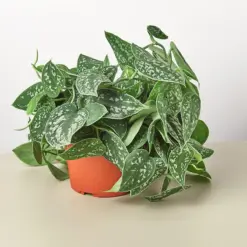
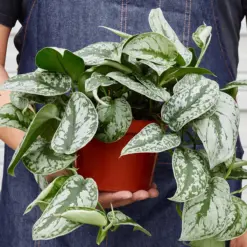
| Scindapsus pictus | Satin Pothos | Silvery scales on velvety green; technically a different genus | 🟢 Beginner |
| E. pinnatum ‘Cebu Blue’ | Cebu Blue Pothos | Lance-shaped silver-blue leaves; develops fenestrations climbing | 🟡 Intermediate |
Shop Our Pothos Collection
Every Pothos we ship is greenhouse-grown, climate-acclimated, and packed with care for transit. Sold-out species? Use the Notify Me button on any product page and we’ll email you the moment it’s restocked.

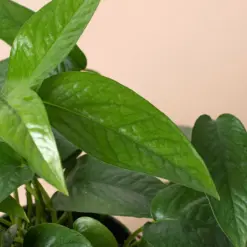
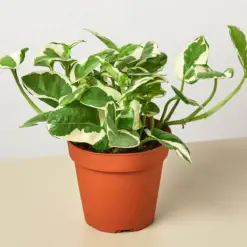
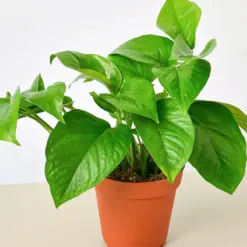
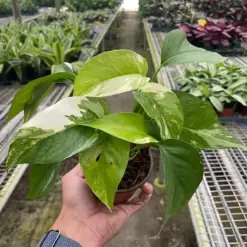
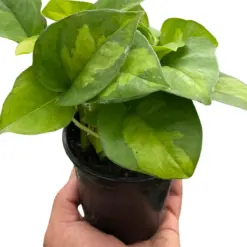
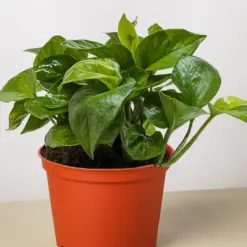
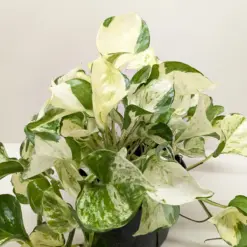
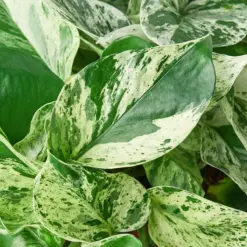
Pothos Plant ‘Golden’
Price range: $22.99 through $89.99Pothos Plant ‘Satin’
Price range: $22.99 through $73.99Pothos Plant ‘Neon’
Price range: $22.99 through $247.99Pothos Plant ‘Silver Splash’
Price range: $29.99 through $114.99Pothos Plant ‘Cebu Blue’
Price range: $22.99 through $109.99Pothos ‘N’joy’
Price range: $22.99 through $67.99Pothos Plant ‘Green Queen’
Price range: $22.99 through $44.99Pothos Plant ‘Albo Variegata’
Price range: $40.99 through $140.99Pothos Plant ‘Global Green’
Price range: $22.99 through $108.99Pothos Plant ‘Lemon Top’
$53.99Pothos Plant ‘Manjula’
Price range: $46.99 through $124.99Pothos Plant ‘Marble Queen’
Price range: $22.99 through $83.99
Frequently Asked Questions
Are pothos toxic to cats and dogs?
Yes. All pothos contain calcium oxalate crystals, which are toxic to cats, dogs, and humans. Causes oral irritation, drooling, and vomiting if chewed. Keep out of reach. (Pet-safe trailing alternatives: spider plant, peperomia, prayer plant.)
Can pothos grow in water permanently?
Yes. Pothos thrives in plain water indefinitely, so you can keep cuttings in a vase for years. Change water every 1–2 weeks and add a drop of liquid hydroponic fertilizer monthly. Growth is slower than in soil but the plant stays healthy.
Why is my pothos leggy with sparse leaves?
Two causes: insufficient light (the plant stretches toward any source it can find) and lack of pruning (untrimmed pothos focus all energy on the longest vine and stop branching). Fix both: move to brighter indirect light, then prune long stems back to a node. Each cut triggers new branching.
What’s the difference between pothos and philodendron?
They’re often confused. Pothos leaves are thicker, waxier, with a less pronounced point, and new leaves emerge directly from the existing leaf base. Philodendron leaves are smoother and emerge from a thin sheath called a cataphyll. Care is nearly identical.
How do I make my pothos bushier?
Prune. Cut stems just above a node, every 4–6 weeks during growing season. Each cut triggers two new shoots from the cut point. Stick the cuttings in soil at the base of the original pot to fill out the plant from the inside.
Why are my pothos leaves losing variegation?
Insufficient light. Variegated cultivars (Marble Queen, Manjula, N’Joy) need bright indirect light to maintain the white/cream patterns, because they can’t photosynthesize through non-green tissue. In low light, the plant prioritizes survival by producing more chlorophyll. Move to a brighter spot, prune back to the last fully variegated node.
Do I need to mist my pothos?
No. Pothos handles dry air fine and frequent misting can encourage fungal spots on leaves. If your home is below 30% humidity, run a small humidifier, which is much more effective than misting.
Related Care Guides
- Philodendron Care Guide (the close trailing-aroid cousin)
- Monstera Care Guide
- Scindapsus Care Guide (satin pothos, a different genus)
- Light Requirements
- Watering Guide
