
Plant Care
Stromanthe Care Guide: Light, Water & The Dramatic Pink-Backed Prayer Plant
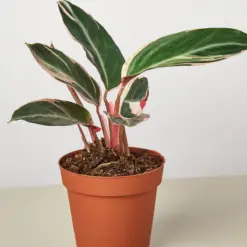
Stromanthe (pronounced "stro-MAN-thee") is the most dramatic of the prayer plants. The flagship cultivar ‘Triostar’ (also called ‘Tristar’ or ‘Magenta’) has leaves splashed with cream, pink, and green on top, and bright magenta-pink on the underside. When the leaves fold up at night (like all prayer plants), the magenta undersides display dramatically. Care is similar to other Marantaceae family members (Calathea, Maranta, Ctenanthe), with high humidity, bright indirect light, and filtered water.
Quick Care Card
☀️ Light
Bright indirect (no direct sun)
💧 Water
Keep evenly moist; never dry out
💨 Humidity
60%+ (higher = better)
🌡️ Temp
65–80°F
🪴 Soil
Rich, well-draining, peat-based mix
🐾 Cat/Dog Safe
✅ Safe for cats & dogs
🎯 Difficulty
🟡 Intermediate
📏 Size
12–24 inches tall, spreading
🌎 Zone
10–11 outdoors
🏞️ Origin
Brazilian rainforest
In this guide
About Stromanthe
Stromanthe is a small genus of about 15 species in the Marantaceae family, the same family as Calathea, Maranta, and Ctenanthe. All members share the prayer-plant leaf-folding behavior. Stromanthe species are native to Brazilian and Costa Rican rainforests.
Houseplant favorites include S. sanguinea ‘Triostar’ (also ‘Tristar’ or ‘Magenta’, the famous variegated form), S. sanguinea (solid green form with bright pink undersides), and S. thalia. ‘Triostar’ is by far the most common, with its dramatic cream-pink-green variegated tops and magenta undersides.
What makes Stromanthe more demanding than Maranta or Ctenanthe: it’s particularly fussy about humidity and tap water sensitivity. Below 50% humidity it crisps quickly; below filtered water it gets brown leaf tips fast. With the right conditions (humid bathroom or terrarium-like setup, filtered water), Stromanthe is stunning. Without them, it’s a constant fight against crispy edges.
Care Guide
Light
Bright indirect. No direct sun.
- Bright indirect light.
- Direct sun bleaches the dramatic variegation.
- Low light fades patterns; new growth loses pink.
- Variegated cultivars need brighter light than solid green.
Water
Keep evenly moist with filtered water.
- Water when top half-inch of soil is dry.
- Critical: use filtered, distilled, or rainwater. Stromanthe is highly fluoride-sensitive.
- Every 4–6 days in summer, every 6–8 days in winter.
- Yellow leaves with mushy stems = overwatering. Crispy curled leaves = low humidity or tap water.
Humidity
60%+ ideal. Critical for Stromanthe.
- Ideal: 60–80%.
- Tolerable: 50%.
- Below 40% causes rapid crispy edges and leaf drop.
- Humidifier essential in dry winter rooms.
Temperature
Warm tropical temperatures.
- Ideal: 65–80°F.
- Below 55°F damages leaves.
- Avoid AC and heating vents.
Soil
Rich, well-draining, peat-based.
- Easy mix: 50% potting soil + 30% perlite + 20% peat moss.
- Use wide shallow pot, since Stromanthe spreads.
- Repot every 1–2 years.
Pro tip: humidifier plus filtered water means a thriving Stromanthe
Stromanthe Triostar is famously crispy, and most owners struggle with brown edges and curled leaves. The two-step fix: (1) filtered water, since tap water fluoride is the primary cause of leaf-tip browning, so switch to filtered, distilled, or rainwater immediately; (2) humidifier, since Stromanthe wants 60%+ humidity which most dry indoor air can’t provide. Doing one without the other rarely solves the problem; doing both transforms the plant. Within 2–3 weeks of new growth, leaves emerge clean and the dramatic colors are vibrant.
Fertilizer
Light feeders.
- Balanced liquid fertilizer at half strength every 4 weeks April–September.
- Skip fertilizing October–March.
- Brown leaf edges after fertilizing = salt buildup. Flush soil with filtered water.
Seasonal Care
🌱 Spring & Summer
- New leaves emerge every 2–3 weeks on healthy plants
- Spreading habit that may need division annually
- Water every 4–6 days with filtered water
- Fertilize every 4 weeks at half strength
❄️ Fall & Winter
- Reduce watering slightly
- Stop fertilizing
- Maintain humidity (heaters dry air)
- Don’t repot until spring
Common Problems & Fixes
| Symptom | Likely Cause | Fix |
|---|---|---|
| Crispy brown leaf edges | Tap water sensitivity or low humidity (often both) | Switch to filtered water; raise humidity to 60%+ |
| Yellow leaves | Overwatering or natural shedding | Reduce watering frequency |
| Fading pink/cream variegation | Insufficient light | Move to brighter indirect light |
| Leaves curling and not unfurling | Low humidity, dehydration, or cold draft | Raise humidity; check soil moisture; eliminate drafts |
| Bleached patches | Direct sun scorch | Move from direct sun |
| Stems rotting at base | Severe overwatering | Cut healthy crowns for division |
| Spider mites | Low humidity | Rinse; raise humidity; insecticidal soap |
| Leaves staying folded all day | Cold draft or severe stress | Stabilize location; check temperature |
| Loss of magenta underside color | Light or stress | Bright indirect light; consistent care |
Stromanthe Triostar is what Calathea wishes it could be: same drama, more dramatic colors, equally fussy. The filtered water plus humidifier combo solves 90% of complaints.
Propagation
Division (only practical method)
In spring, unpot mature plant with multiple crowns.
Gently separate rhizome into sections with 2–3 leaves and roots each.
Pot each division in fresh well-draining mix.
Water lightly with filtered water; place in high humidity (50%+).
Resume normal care.
Variegated Stromanthe occasionally produces all-green or all-cream reverted divisions, so keep variegated sections for true-to-parent growth.
Featured Stromanthe Species
| Species | Common Name | Notable Trait | Difficulty |
|---|---|---|---|
| Stromanthe sanguinea ‘Triostar’ | Triostar Stromanthe | Cream, pink, and green variegated tops with magenta undersides | 🟡 Intermediate |
| S. sanguinea (solid green) | Magenta Stromanthe | Dark green tops with bright pink undersides | 🟡 Intermediate |
| S. thalia | Stromanthe Thalia | Smaller form; less common in trade | 🟡 Intermediate |
| S. sanguinea ‘Tristar’ | Tristar Stromanthe | Variant spelling of Triostar (same plant) | 🟡 Intermediate |
Shop Our Stromanthe Collection
Every Stromanthe we ship is greenhouse-grown, climate-acclimated, and packed with care for transit. Sold-out species? Use the Notify Me button on any product page and we’ll email you the moment it’s restocked.

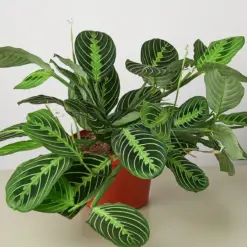
Maranta Plant ‘Lemon Lime’
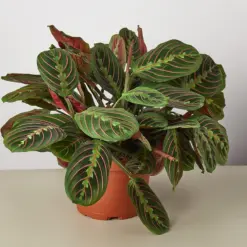
Price range: $24.99 through $39.99Maranta Plant ‘Red Prayer’
Price range: $22.99 through $60.99Stromanthe Plant ‘Triostar’
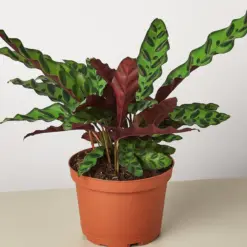
Price range: $25.99 through $57.99Calathea Lancifolia ‘Rattlesnake’ – Rattlesnake
Price range: $19.99 through $41.99Calathea Plant ‘Ornata’
Price range: $29.99 through $41.99Calathea Plant ‘White Fusion’
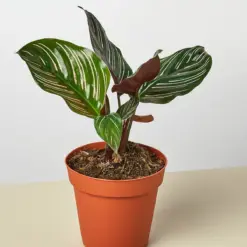
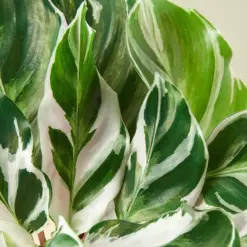
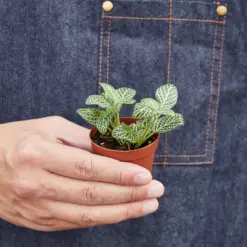
Price range: $27.99 through $59.99Fittonia Plant ‘White’
Price range: $22.99 through $88.99Calathea Plant ‘Dottie’
Price range: $33.99 through $39.99Calathea Concinna ‘Freddie’
Price range: $34.99 through $46.99Calathea Plant ‘Beauty Star’
Price range: $34.99 through $46.99Calathea Plant ‘Green Goddess’
Price range: $33.99 through $53.99Calathea Plant ‘Makoyana’
Price range: $22.99 through $50.99
Frequently Asked Questions
Are Stromanthe plants safe for cats and dogs?
Yes. Stromanthe (like other Marantaceae family members such as Calathea, Maranta, and Ctenanthe) is non-toxic to cats and dogs per ASPCA listings. Pet-safe colorful choice.
Why are my Stromanthe Triostar’s leaves crispy?
Almost always two combined factors: (1) tap water fluoride/chlorine, since Stromanthe is highly sensitive, so switch to filtered, distilled, or rainwater; (2) low humidity, since it needs 60%+ humidity. The Triostar variegation makes the plant particularly fussy. Address both factors for visible improvement within a few weeks of new growth.
What’s the difference between Stromanthe and Calathea?
Both are in the Marantaceae prayer plant family. Stromanthe has dramatic variegated tops (in Triostar) with magenta undersides; tends to be slightly more vigorous. Calathea includes many species with diverse patterns; can be similar or different in dramatic variegation. Both are humidity-loving and prayer-plant folders. Stromanthe Triostar is similar to Calathea in care but with the unique magenta underside display.
How do I propagate Stromanthe?
Division is the only practical method. Unpot a mature plant in spring, separate the rhizome into sections each with 2–3 leaves and roots. Pot each section separately and resume normal care. Stem cuttings don’t work, because Stromanthe grows from rhizomes, not vining stems.
Why is my Stromanthe’s variegation reverting?
Variegated cultivars occasionally produce all-green or all-cream reverted leaves due to genetic instability. Cut back reverted growth to force colored regrowth from healthy nodes. Insufficient light also encourages reversion, so move to brighter indirect light. Some reversion is normal for variegated Stromanthe.
Can Stromanthe live in a terrarium?
Yes. Terrariums and humid bathrooms are ideal Stromanthe habitats. The 60%+ humidity in closed glass containers eliminates most of the plant’s complaints. Stromanthe Triostar can outgrow small terrariums though, so it’s better suited to large terrariums or open glass containers with good airflow.
Related Care Guides
