
Plant Care
ZZ Plant Care Guide: Light, Water & The Other Indestructible Plant
ZZ plant — Zamioculcas zamiifolia — is the second name everyone says when asked "what’s an indestructible houseplant?" (snake plant being the first). It survives low light, weeks without water, dry air, and being completely forgotten about. It does this thanks to large underground rhizomes that store water like little potatoes — meaning the same trait that keeps it alive is exactly what kills it when you overwater. Here’s how to grow a ZZ that thrives, not just survives.
Quick Care Card
☀️ Light
Low to bright indirect (very flexible)
💧 Water
Soil completely dry between waterings
💨 Humidity
30%+ (not fussy)
🌡️ Temp
65–80°F
🪴 Soil
Cactus / succulent mix or aroid mix
🐾 Cat/Dog Safe
☠️ Toxic to cats & dogs
🎯 Difficulty
🟢 Beginner (easiest)
📏 Size
2–3 ft tall
🌎 Zone
10–12 outdoors
🏞️ Origin
East Africa (Kenya/Tanzania)
In this guide
About ZZ Plant
ZZ plant is native to the dry grasslands and rocky outcrops of eastern Africa — Kenya, Tanzania, Mozambique. Like snake plant, it evolved in conditions most houseplants would consider hostile: dry season droughts, scorching sun, infrequent rain. That origin explains everything about its care: it’s drought-adapted via large underground rhizomes (called "potato roots" by growers) that store water for months at a time.
ZZ plant didn’t enter the houseplant trade until the 1990s when Dutch nurseries scaled it for European garden centers — relatively recent for a plant that now feels ubiquitous. The name "ZZ" comes from the genus and species (Zamioculcas zamiifolia, often pronounced "zam-ee-oh-cul-cas zam-ee-fol-ee-ah").
Common cultivars: standard green ZZ (the original), ‘Raven’ (dramatic black-purple foliage that emerges green and darkens with age), ‘Zenzi’ (compact dwarf form), and ‘Variegata’ (rare cream-and-green variegation). All have the same care needs — Raven and variegated forms need slightly more light to maintain color.
Care Guide
Light
Tolerates a wide range. Bright indirect produces the fastest growth.
- Best: bright indirect light — within 4–8 feet of a window. Produces the fastest growth and thickest leaves.
- Medium light is fine. Growth slows but the plant stays healthy.
- Low light is tolerated — ZZ is famous for surviving in offices and dim corners. Growth nearly stops but the plant doesn’t sulk.
- Direct sun for more than 1–2 hours scorches leaves. Avoid south/west afternoon sun.
- Raven and variegated cultivars need brighter indirect light to maintain color — without it, Raven loses its dark coloring and reverts to green; variegated reverts to cream patches.
Water
Water less than you think. ZZ rots from soggy soil far more often than it suffers from drought.
- Wait until the soil is completely dry — not just the top inch. Lift the pot; if it feels light, water. If still heavy, wait.
- Water thoroughly when you do water — let water run from the drainage holes — but then ignore the plant for 2–4 weeks.
- Most plants need watering every 14–21 days in summer, every 21–45 days in winter.
- Yellow leaves at the base or mushy stems = overwatering / rhizome rot. Wrinkled, falling-over leaves = underwatered (recoverable).
- Use room-temperature water. Tap water is fine — ZZ isn’t picky about water quality.
- When in doubt, wait another week. ZZ tolerates drought far better than wet feet.
Humidity
ZZ doesn’t care about humidity.
- 30–50% humidity (typical home) is fine. Tolerates dry indoor air without complaint.
- Below 25% (very dry winter) you may see slight tip browning. Pebble tray or occasional shower if you want.
- Skip humidifiers — wasted effort for ZZ plants.
- Misting accomplishes nothing — water on glossy leaves can encourage spotting.
Temperature
Wide tolerance, but hates cold.
- Ideal: 65–80°F (18–27°C). Tolerates 55–90°F.
- Below 50°F slows growth dramatically and can damage leaves.
- Below 45°F kills the rhizome.
- Avoid drafty windows in winter and AC vents in summer.
Soil
Drainage > everything. Cactus mix or aroid mix.
- Best: commercial cactus / succulent mix — fast-draining gritty composition that matches its native habitat.
- Alternative: 60% standard houseplant potting soil + 30% perlite + 10% orchid bark.
- Avoid: dense potting soil, peat-heavy mixes, anything that stays wet for more than a week.
- Pot choice: ZZ plants prefer slightly snug pots. Excess soil holds water and rots the rhizome. The plant pushes out of an undersized pot when ready to be repotted.
- Repot every 2–3 years — only when the rhizome has filled the pot and is pushing the plant up out of the soil.
Pro tip — wash your hands after pruning
ZZ plant sap contains calcium oxalate crystals — the same irritant in dieffenbachia and many aroids. Brief skin contact is harmless for most people, but rubbing your eyes or touching your mouth after handling cut stems can cause stinging and burning. Wash your hands after pruning or repotting, and keep the plant out of reach of pets and kids who chew on leaves. Leaves are toxic if ingested — vomiting, drooling, mouth pain — but rarely fatal.
Fertilizer
Light feeders. Easy to over-fertilize.
- Optional: balanced liquid fertilizer at quarter strength every 6–8 weeks during growing season (April–September).
- Skip fertilizing entirely October–March.
- Many growers don’t fertilize at all — fresh soil at repotting provides enough nutrients for years.
- Brown leaf tips after fertilizing = salt buildup. Flush soil with plain water; skip feeding for 6+ months.
Seasonal Care
🌱 Spring & Summer
- New stems emerge from the rhizome every 4–8 weeks on healthy plants
- New stems start as bright lime-green spears and darken as they mature
- Water every 14–21 days when soil is completely dry
- Optional fertilizing every 6–8 weeks at quarter strength
- Best time to repot, divide, or take cuttings
❄️ Fall & Winter
- Reduce watering to every 21–45 days
- Stop fertilizing entirely
- Move from cold drafts; below 50°F damages rhizome
- Don’t repot until spring
- Plant looks unchanged — that’s normal for winter
Common Problems & Fixes
| Symptom | Likely Cause | Fix |
|---|---|---|
| Yellow soft stems at the base | Overwatering / rhizome rot | Cut watering immediately; unpot and check rhizome; cut away rotten sections; replant in dry cactus mix |
| Wrinkled, falling-over stems | Severely underwatered (rare — takes months) | Soak the entire pot in water for 30 minutes; stems rehydrate within days |
| Brown crispy leaf tips | Tap water sensitivity, fertilizer salt buildup, or low humidity | Switch to filtered water; flush soil with plain water; raise humidity slightly |
| Yellowing leaves on multiple stems | Overwatering — most common cause of yellowing | Stop watering; let soil dry completely; check rhizome for soft spots |
| Loss of dark color on Raven / variegation | Insufficient light | Move to brighter indirect light; new growth recolors |
| Translucent patches on leaves | Cold damage from window contact | Move plant from cold window; affected patches are permanent |
| Bleached / scorched leaves | Direct afternoon sun | Move from direct sun; affected leaves don’t recover |
| White cottony spots on stems | Mealybugs (uncommon on ZZ) | Wipe with isopropyl alcohol; insecticidal soap weekly until clear |
| No new growth in 6+ months | Low light, pot-bound, or winter dormancy | Move to brighter light if growing season; check rhizome — if pot-bound, repot in spring |
If your ZZ is dying, it’s not because you didn’t water it enough. It’s because you watered it too much. The plant survives months of drought; it can’t survive a week of soggy soil.
Propagation
Rhizome division (fastest, most reliable)
Wait until spring or when the rhizome has clearly filled the pot.
Water 1–2 days before division to ease the plant out.
Unpot and gently brush soil from the rhizome — the underground "potato" structure is what you’re working with.
Identify natural breaks in the rhizome where multiple stems cluster together.
Use a sterilized sharp knife to cleanly cut the rhizome between stem clusters, ensuring each division has at least 1–2 stems and a section of rhizome with roots.
Let the cut surfaces callus over for 24–48 hours in a dry shaded spot — this prevents rot.
Pot each division in a small pot of dry cactus mix. Don’t water for the first week.
After the first week, water lightly. Resume normal care. New growth emerges within 4–8 weeks.
Leaf cuttings (slow but works — 6–12 months for visible plant)
- Cut a healthy leaf with a small piece of stem at the base. Mark which end was "down."
- Let cut ends callus over for 24 hours in a dry shaded spot.
- Insert leaf base-down into damp cactus mix or perlite, about 1/2 inch deep.
- Place in bright indirect light. Water sparingly — once every 2–3 weeks; medium should be barely damp.
- A small rhizome forms underground over 3–6 months. New stems emerge from the rhizome 6–12 months after starting.
- Patience required — leaf cutting is the slowest propagation method by far. Most growers prefer division.
Stem cuttings (water-rooted)
- Cut a healthy whole stem at the base, where it emerges from the rhizome.
- Place stem cut-end-down in a glass of water in bright indirect light.
- Change water every 2 weeks. A small rhizome forms underwater within 3–6 months.
- Once the rhizome is the size of a pea or larger, pot up in dry cactus mix. Don’t water for a week.
- Slow but reliable — and you can watch the rhizome form, which is satisfying.
Featured ZZ Plant Species
| Species | Common Name | Notable Trait | Difficulty |
|---|---|---|---|
| Z. zamiifolia | ZZ Plant | The standard glossy green form — the original | 🟢 Beginner |
| Z. zamiifolia ‘Raven’ | Raven ZZ | Stems emerge bright lime-green and darken to near-black with age | 🟢 Beginner |
| Z. zamiifolia ‘Zenzi’ | Zenzi ZZ | Compact dwarf form — leaves clustered tighter, stays under 18 inches | 🟢 Beginner |
| Z. zamiifolia ‘Variegata’ | Variegated ZZ | Cream and green splashed variegation — rare and slow | 🟡 Intermediate |
| Z. zamiifolia ‘Lucky’ | Lucky ZZ | Cultivar with rounder leaves and a more compact habit than the standard | 🟢 Beginner |
| Z. zamiifolia ‘Akebono’ | Akebono ZZ | Chartreuse-yellow variegated form; needs bright light to hold color | 🟡 Intermediate |
Shop Our ZZ Plant Collection
Every ZZ Plant we ship is greenhouse-grown, climate-acclimated, and packed with care for transit. Sold-out species? Use the Notify Me button on any product page — we’ll email you the moment it’s restocked.

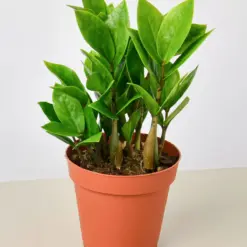
Zamioculcas Zamiifolia (ZZ Plant)
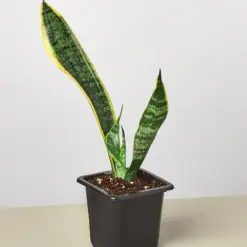
Price range: $22.99 through $97.99Snake Plant ‘Laurentii’
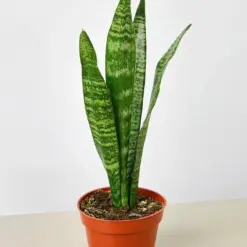
Price range: $22.99 through $93.99Snake Plant ‘Zeylanica’
Price range: $22.99 through $158.99Snake Plant Moonshine
Price range: $25.99 through $80.99Snake ‘Bantel’s Sensation’
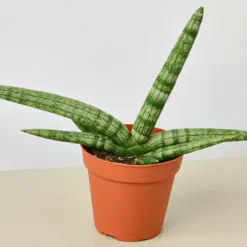
Price range: $23.99 through $121.99Snake Plant ‘Cylindrica’
Price range: $26.99 through $46.99Snake Plant ‘Fabi’
Price range: $26.99 through $46.99Snake Plant ‘Forest Star’
Price range: $22.99 through $43.99Snake Plant ‘Gold Hahnii’
Price range: $22.99 through $39.99Snake Plant ‘Lavranos’
Price range: $32.99 through $60.99Snake Plant ‘Starfish’
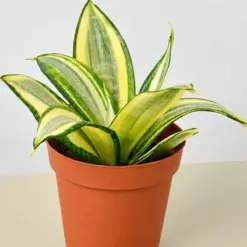
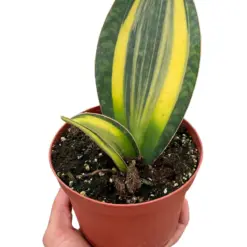
Price range: $22.99 through $50.99Variegated Shark Fin Snake Plant
Price range: $65.99 through $197.99
Frequently Asked Questions
Are ZZ plants toxic to cats and dogs?
Yes. ZZ plant contains calcium oxalate crystals — the same irritant in dieffenbachia, philodendron, and many aroids. Causes oral irritation, drooling, vomiting, and pawing at the mouth in cats and dogs that chew leaves. Rarely fatal but unpleasant. Keep out of reach of chewy pets. (Pet-safe alternatives with similarly tough care: Spider plant, Peperomia, Pilea.)
How often should I water my ZZ plant?
Far less than you think. Most ZZ plants only need water every 2–4 weeks in summer and every 4–6 weeks in winter. Always wait until the soil is completely dry — lift the pot to check (light = dry, heavy = still wet). When in doubt, wait another week. The rhizomes (potato-like underground structures) store enough water to survive months of drought, but soggy soil rots them within days.
Why are my ZZ plant’s stems yellow and falling over?
Almost always overwatering and rhizome rot. The rhizome — the underground structure that stores water — has rotted from soggy soil, so the stems can’t get water and start to yellow and collapse. Stop watering immediately. Unpot, check the rhizome for soft mushy spots, cut away rotten sections with a sterilized knife, let the cuts callus 24–48 hours, and replant in fresh dry cactus mix. Don’t water for at least a week.
Why isn’t my ZZ growing?
ZZ plants grow slowly under any conditions and basically pause in winter. Realistic growth: 1–4 new stems per year, each unfurling over 6–8 weeks. If your plant hasn’t grown in over a year: (1) move to brighter indirect light; (2) check if it’s pot-bound — repot if the rhizome is bursting; (3) make sure you’re letting the soil dry between waterings (over-watered ZZs stop growing because the rhizome is in survival mode). Patience required either way.
Can ZZ plants live in low light?
Yes — ZZ is one of the most low-light-tolerant houseplants available, alongside snake plant. They survive in dim corners, hallways, and offices where most plants would die. Growth nearly stops in low light but the plant stays alive for years. For best appearance and active growth, move to bright indirect light. Raven and variegated cultivars need more light to hold their color — they revert in low light.
What’s the difference between regular ZZ and Raven ZZ?
Same plant, different cultivar. Standard ZZ has glossy green leaves throughout. Raven ZZ emerges with bright lime-green new growth that darkens to a deep purple-black with age — the contrast between new and old growth is the look. Raven needs brighter light than standard ZZ to maintain its dark color; in low light it reverts toward green. Care is otherwise identical.
Why do my ZZ leaves have brown crispy tips?
Three usual culprits: (1) tap water sensitivity — switch to filtered or distilled; (2) fertilizer salt buildup — flush soil with plain water until it runs clear; (3) physical or cold damage from past contact with a window or vent — leaves don’t heal once damaged but new growth is unaffected. ZZ is less sensitive than calathea or spider plant but still reacts to bad water.
When should I repot my ZZ plant?
Every 2–3 years, or when the rhizome has visibly filled the pot and is pushing the plant up out of the soil. ZZ prefers being slightly pot-bound — don’t repot unless the plant is clearly outgrowing its container. Use fresh cactus mix and go up only 1–2 inches in diameter. Spring or early summer is the best time.
Related Care Guides
- Snake Plant Care Guide — the other near-indestructible plant — same drought-tolerant rhizome strategy
- Pothos Care Guide
- Cactus Care Guide
- Succulent Care Guide
