
Plant Care
Snake Plant Care Guide: Light, Water & The One Thing That Will Kill Yours
Snake plant (botanically Dracaena trifasciata, formerly Sansevieria) is the houseplant most people “successfully” grow without realizing the plant is just refusing to die. They tolerate dim corners, weeks without water, and conditions that kill almost anything else. The catch: that same toughness is exactly why so many people overwater them. Here’s how to actually grow a snake plant that thrives instead of just survives.
Quick Care Card
☀️ Light
Low to bright indirect (very flexible)
💧 Water
Let soil dry completely
💨 Humidity
30%+ (not fussy)
🌡️ Temp
60–85°F
🪴 Soil
Cactus / succulent mix
🐾 Cat/Dog Safe
☠️ Toxic to cats & dogs
🎯 Difficulty
🟢 Beginner (easiest)
📏 Size
1–4 ft (varies)
🌎 Zone
9–11 outdoors
🏞️ Origin
West Africa
In this guide
About Snake Plant
Snake plant is native to the rocky, semi-arid lands of tropical West Africa, where it grows in conditions most houseplants would consider hostile, including full sun, scorching heat, and infrequent rain. That origin explains everything about its care: it’s drought-adapted, sun-tolerant, and stores water in its thick succulent leaves. In 2017 botanists reclassified the entire Sansevieria genus into Dracaena, but the houseplant industry still uses the old name. The most common species is Dracaena trifasciata (snake plant) and Dracaena angolensis (formerly Sansevieria cylindrica, the cylindrical-leaved variant).
What makes snake plants the gateway houseplant: they’re nearly impossible to kill from neglect. They tolerate low light, dry air, dry soil, and being completely forgotten about. They’re also famous for filtering household toxins (formaldehyde, benzene, xylene), per a NASA Clean Air Study from 1989, though the practical air-quality benefit at indoor scales is debated.
What kills snake plants: overwatering. The thick succulent leaves and rhizome are designed to store water for drought; sitting in damp soil causes the rhizome to rot from the inside out. By the time you see yellowing leaves, the rot is usually advanced. Underwatering, on the other hand, is recoverable, since leaves wrinkle but rehydrate within days of a thorough soak.
Care Guide
Light
Snake plants are the most light-flexible houseplant. They survive low light and thrive in bright.
- Bright indirect light produces the fastest, fullest growth and the most colorful variegation.
- Medium and low light are tolerated. Growth slows but the plant doesn’t sulk like calathea or alocasia.
- Direct sun (a few hours/day) is fine for most species, since they’re sun-adapted in nature. Just transition gradually if moving from a low-light spot.
- Variegated cultivars (Laurentii, Moonshine, Bantel’s Sensation) need brighter light than solid green types, because without it, variegation fades.
- If you want the plant in a near-dark corner, it’ll survive but won’t grow much. Rotate it to a brighter spot for a few weeks every few months to keep it healthy.
Water
Water less than you think. Snake plants rot from soggy soil far more often than they suffer from drought.
- Wait until the soil is completely dry, not just the top inch. Lift the pot; if it feels light, water. If still heavy, wait.
- Water thoroughly when you do water (let water run from the drainage holes), but then ignore the plant for 2–4 weeks.
- Most plants need watering every 14–21 days in summer, every 21–45 days in winter.
- Yellowing leaves at the base or mushy leaves = overwatering and root rot. Wrinkled, soft, leaning leaves = underwatered (recoverable).
- Use room-temperature water. Tap water is fine, since snake plants aren’t picky about water quality.
- Better to under-water than over-water. Snake plants prefer dry roots over wet roots, always.
Humidity
Snake plants don’t care about humidity.
- 30% humidity is fine. They tolerate dry indoor air without complaint, and most homes never need adjustment.
- If your home is below 25% (very dry winter), occasional misting on dusty leaves is purely cosmetic.
- Skip humidifiers, since they’re wasted effort for snake plants.
Temperature
Wide tolerance. Just avoid cold.
- 60–85°F (15–29°C) is fine for all species.
- Below 50°F slows growth and can cause leaf damage (translucent patches).
- Below 40°F kills the rhizome.
- Avoid drafty windows in winter and AC vents in summer.
Soil
Drainage > everything. Use a cactus or succulent mix.
- Best: commercial cactus / succulent mix. The fast-draining gritty composition matches their natural rocky habitat.
- DIY: 50% potting soil + 30% perlite + 20% coarse sand or pumice.
- Avoid: dense potting soil, peat-heavy mixes, anything that stays wet for more than a few days.
- Pot choice: snake plants prefer slightly snug pots. Excess soil holds water and rots roots. Many growers leave snake plants in their nursery pots for years.
- Repot every 2–4 years or when the rhizome has filled the pot and is pushing the plant up.
Pro tip: choose a terra cotta pot to outsmart yourself
If you’re a chronic over-waterer (the #1 way snake plants die), use an unglazed terra cotta pot instead of plastic or ceramic. Terra cotta wicks moisture from the soil through its walls, so it dries faster and is much harder to overwater. Combine with a cactus mix and you’d have to actively try to kill the plant.
Fertilizer
Light feeders. Easy to over-fertilize, and most snake plants need almost none.
- Optional: balanced liquid fertilizer at quarter strength every 6–8 weeks during growing season (April–September).
- Skip fertilizing entirely October–March.
- Many growers don’t fertilize at all and their snake plants thrive, since fresh soil at repotting provides enough nutrients for years.
- Brown leaf tips after fertilizing = salt buildup. Flush soil with plain water until it runs clear, then skip fertilizer for 6+ months.
Seasonal Care
🌱 Spring & Summer
- New leaves emerge from the rhizome every 4–8 weeks on healthy plants
- Water every 14–21 days when soil is completely dry
- Optional fertilizing every 6–8 weeks at quarter strength
- Best time to repot, divide, or take leaf cuttings
- Watch for mealybugs and (rarely) spider mites
❄️ Fall & Winter
- Reduce watering to every 21–45 days
- Stop fertilizing entirely
- Move from very cold windows; ambient cold can damage leaves
- Don’t repot or divide until spring
- Plant looks unchanged (that’s normal)
Common Problems & Fixes
| Symptom | Likely Cause | Fix |
|---|---|---|
| Yellow soft leaves at the base | Overwatering / rhizome rot | Cut watering immediately; unpot and check rhizome; cut away rotten sections; replant in dry cactus mix |
| Wrinkled, leaning, soft leaves | Severely underwatered | Soak the entire pot in water for 30 minutes; leaves rehydrate within days |
| Brown crispy leaf tips | Fluoride/chlorine in tap water OR fertilizer salt buildup | Switch to filtered water; flush soil with plain water; reduce or stop fertilizing |
| Leaves splitting / cracked | Cold damage or rapid temperature swing | Move from cold draft; keep stable warm temps; affected leaves don’t heal but new growth is normal |
| Variegation fading on variegated types | Insufficient light | Move to brighter indirect light; cut back any solid-green reverted leaves |
| Translucent patches on leaves | Cold damage from window contact | Move plant away from cold window; affected patches are permanent |
| White cottony spots on leaves | Mealybugs (uncommon on snake plants but possible) | Wipe with isopropyl alcohol; insecticidal soap weekly until clear |
| Plant slowly leaning sideways | Top-heavy from weak roots, or rhizome fully filled the pot | Repot in slightly larger pot; check rhizome health |
| No new growth in 6+ months | Low light or pot-bound | Move to brighter light; check if rhizome has filled the pot and repot if needed |
The number one cause of snake plant death is love. Stop watering. Walk away. The plant doesn’t need your attention; it needs your absence.
Propagation
Rhizome division (fastest, keeps variegation)
Wait until spring or when the rhizome has clearly filled the pot.
Water 1–2 days before division to ease the plant out.
Unpot and gently brush soil from the rhizome.
Identify natural breaks in the rhizome where multiple shoots cluster together.
Use a sterilized sharp knife to cleanly cut the rhizome between shoot clusters, ensuring each division has at least 2–3 leaves and visible roots.
Let the cut surfaces callus over for 24 hours in a dry shaded spot, since this prevents rot.
Pot each division in a small pot of dry cactus mix. Don’t water for the first week.
After the first week, water lightly. Resume normal care. New growth emerges within 2–4 weeks.
Leaf cuttings (slow, but works; loses variegation)
- Cut a healthy leaf into 3–4 inch sections. Mark which end was “up” with a small notch, because sections must be planted right-side up.
- Let cut ends callus over for 24–48 hours in a dry shaded spot.
- Insert sections cut-end-down into damp cactus mix, about 1 inch deep.
- Place in bright indirect light. Water sparingly, about once every 2–3 weeks.
- Roots and new shoots emerge in 6–12 weeks. Be patient, because leaf cutting propagation is much slower than rhizome division.
- Important: variegated cultivars revert to all-green when propagated by leaf cutting. Use rhizome division to preserve variegation.
Featured Snake Plant Species
| Species | Common Name | Notable Trait | Difficulty |
|---|---|---|---|
| D. trifasciata ‘Laurentii’ | Variegated Snake Plant | The most common, with green leaves and yellow edges | 🟢 Beginner |
| D. trifasciata ‘Moonshine’ | Moonshine Snake Plant | Pale silver-green leaves; needs brighter light to maintain color | 🟢 Beginner |
| D. trifasciata ‘Bantel’s Sensation’ | Bantel’s Sensation | White-and-green vertical striping | 🟢 Beginner |
| D. angolensis | Cylindrical Snake Plant | Round cylindrical leaves; often braided in nurseries | 🟢 Beginner |
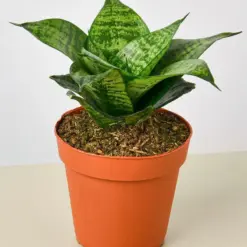
| D. trifasciata ‘Hahnii’ | Bird’s Nest Snake Plant | Compact rosette form, stays under 8 inches | 🟢 Beginner |
| D. masoniana | Whale Fin | Single broad paddle-like leaf; extremely slow grower | 🟢 Beginner |
| D. trifasciata ‘Black Coral’ | Black Coral | Dark green-black leaves with subtle silver banding | 🟢 Beginner |
| D. pearsonii ‘Sayuri’ | Sayuri | Pale silvery-green with subtle striping | 🟢 Beginner |
Shop Our Snake Plant Collection
Every Snake Plant we ship is greenhouse-grown, climate-acclimated, and packed with care for transit. Sold-out species? Use the Notify Me button on any product page and we’ll email you the moment it’s restocked.

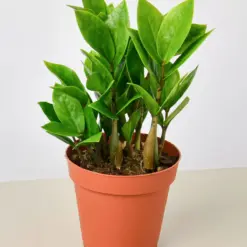
Zamioculcas Zamiifolia (ZZ Plant)
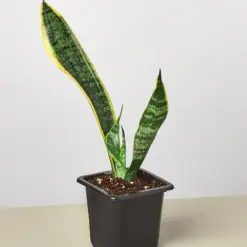
Price range: $22.99 through $97.99Snake Plant ‘Laurentii’
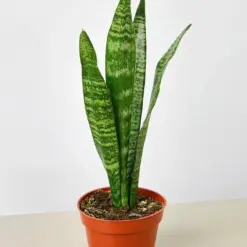
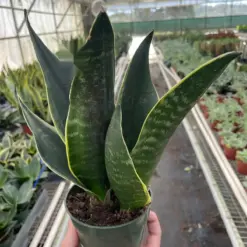
Price range: $22.99 through $93.99Snake Plant ‘Zeylanica’
Price range: $22.99 through $158.99Snake Plant Moonshine
Price range: $25.99 through $80.99Snake ‘Bantel’s Sensation’
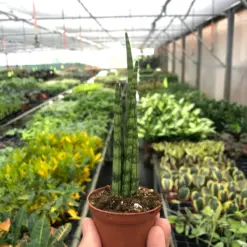
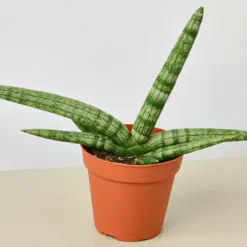
Price range: $23.99 through $121.99Snake Plant ‘Cylindrica’
Price range: $26.99 through $46.99Snake Plant ‘Fabi’
Price range: $26.99 through $46.99Snake Plant ‘Forest Star’
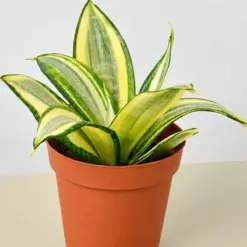
Price range: $22.99 through $43.99Snake Plant ‘Gold Hahnii’
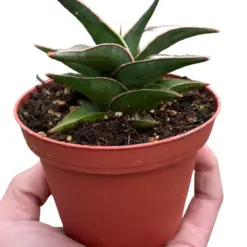
Price range: $22.99 through $39.99Snake Plant ‘Lavranos’
Price range: $32.99 through $60.99Snake Plant ‘Starfish’
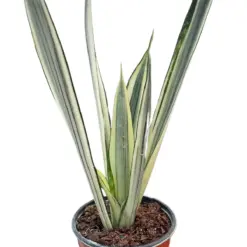
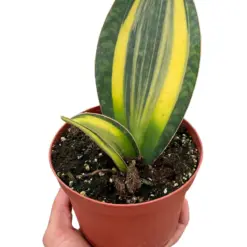
Price range: $22.99 through $50.99Variegated Shark Fin Snake Plant
Price range: $65.99 through $197.99
Frequently Asked Questions
Are snake plants toxic to cats and dogs?
Yes. Snake plants contain saponins that are mildly toxic to cats and dogs. Causes drooling, vomiting, and diarrhea if chewed. Not life-threatening in small amounts but unpleasant. Keep out of reach of pets that like to chew. (Pet-safe alternatives with similar tough-as-nails care: Spider plant, Calathea, Peperomia.)
Why are my snake plant leaves falling over?
Two usual causes. The first is overwatering, since soggy soil weakens the rhizome and leaves can’t stay upright; check rhizome for rot. The second is insufficient light, because leaves grown in low light are weaker and may flop; move to brighter indirect light. If only one or two leaves are leaning while the rest stand tall, that’s normal, since old leaves eventually flop and can be trimmed at the base.
How often should I water my snake plant?
Far less than you think. Most snake plants only need water every 2–4 weeks in summer and every 4–6 weeks in winter. Always wait until the soil is completely dry; lift the pot to check (light = dry, heavy = still wet). When in doubt, wait another week. Snake plants tolerate drought far better than wet feet.
Why do my snake plant leaves have brown crispy tips?
Three usual culprits. The first is tap water with chlorine/fluoride, so switch to filtered or distilled. The second is fertilizer salt buildup, so flush soil with plain water until it runs clear. The third is past damage from cold or physical contact, since leaves don’t heal once damaged but new growth is unaffected.
Can snake plants live in low light?
Yes. Snake plants are the most low-light-tolerant houseplant available. They survive in dim corners and hallways where most plants would die. Growth slows dramatically and variegated cultivars may fade, but the plant stays alive for years. For best results, rotate every few months to a brighter spot to refresh growth.
How do I know if I’m overwatering?
The leaves at the soil line yellow, soften, and may fall over. Push gently on the leaf base, and if it feels mushy or wiggles loosely, the rhizome is rotting. Stop watering immediately, unpot the plant, cut away any rotten rhizome and roots with a sterilized blade, let the cuts callus over for 24 hours, and replant in fresh dry cactus mix. Don’t water for at least a week after replanting.
When should I repot my snake plant?
Every 2–4 years, or when the rhizome has visibly filled the pot and is pushing the plant up out of the soil. Snake plants prefer being slightly pot-bound, so don’t repot just for the sake of repotting. Use fresh cactus mix and go up only 1–2 inches in diameter.
Related Care Guides
- ZZ Plant Care Guide (the other near-indestructible plant)
- Pothos Care Guide
- Cactus Care Guide
- Succulent Care Guide
- Watering Guide
