
Plant Care
Alocasia Care Guide: Light, Water, Dormancy & Bringing Back from Bulbs
Alocasias are the divas of the houseplant world. Stunning leaves, dramatic veining, and a tendency to lose every leaf the moment temperatures drop, which leaves panicked owners convinced they killed the plant. They didn’t. Alocasias hide underground as corms through winter and explode back to life in spring. Here’s how to keep them happy year-round, and how to recover from the inevitable winter strip-down.
Quick Care Card
☀️ Light
Bright indirect
💧 Water
Top inch dry, never soggy
💨 Humidity
60%+
🌡️ Temp
65–80°F
🪴 Soil
Chunky aroid mix
🐾 Cat/Dog Safe
☠️ Toxic to cats & dogs
🎯 Difficulty
🟡 Intermediate
📏 Size
1–6 ft (varies wildly by species)
🌎 Zone
10–12 outdoors
🏞️ Origin
Tropical Asia / Pacific
In this guide
About Alocasia
Alocasia is a genus of about 90 species in the arum family (Araceae), the same family as monstera, philodendron, and pothos. They’re native to subtropical Asia and the Pacific, where they grow in the rainforest understory along streams and humid clearings. The common name “Elephant Ear” applies to many species but is most often used for the largest types (A. macrorrhizos) that develop 3+ ft leaves. “African Mask” is another common name, despite the genus being entirely Asian.
What sets alocasias apart from their easier aroid cousins is their seasonal rhythm. They actively grow in spring and summer, slow down in fall, and many species drop most or all of their leaves in winter, retreating into underground corms to survive cold and drought. New owners often think they’ve killed the plant; in reality, the plant is just dormant and will resprout when conditions warm.
The other reality of alocasias: they’re spider mite magnets. The combination of large leaves, indoor air, and slightly stressed growth from imperfect humidity creates ideal mite conditions. Catching infestations early, with regular leaf inspection and preemptive humidity, is half of alocasia care.
Care Guide
Light
Bright indirect light. Direct sun scorches the often-dark, light-absorbing leaves.
- Place 3–6 ft from a south or east-facing window with sheer curtains, or directly in front of a north-facing window.
- Most species cannot tolerate more than 1 hour of direct sun without leaf damage.
- Insufficient light shows as leggy stems, smaller new leaves, and slower growth, but alocasias don’t dramatically reject low light the way calatheas do.
- If you’re using a grow light, 12 hours/day at 12–18 inches above the plant is the sweet spot.
Water
The most overwatered houseplant by far. Alocasias rot from soggy soil, not from missed waterings.
- Wait until the top 1–2 inches of soil are dry. Stick a finger in to confirm.
- Water thoroughly until water runs from the drainage holes, then empty the saucer within 15 minutes.
- Most plants need watering every 7–14 days in summer, every 14–21 days in winter (and sometimes longer if dormant).
- Use room-temperature filtered water. Cold water shocks roots and tap-water fluoride causes brown leaf tips on sensitive species (A. polly, A. zebrina).
- Yellowing lower leaves with multiple at once = overwatering. Drooping that perks up after watering = underwatered.
- If the entire plant declines and feels mushy at the soil line, the corm has rotted. Unpot, salvage any healthy corm or roots, and restart in fresh chunky mix.
Humidity
60% is the floor. Anything less and spider mites start.
- Run a small humidifier within 6 feet of the plant, since it’s non-negotiable in dry homes (winter heating, AC).
- Group plants together to create a humidity microclimate.
- Below 50% humidity, expect crispy edges and rapid spider mite invasion.
- Skip frequent misting, because it does little for ambient humidity and wet leaves can spot fungal issues.
Temperature
Stable warmth. Alocasias hate cold, and “cold” for them starts at 60°F.
- 65–80°F (18–27°C) is ideal.
- Below 60°F slows growth dramatically. Below 50°F triggers leaf drop and dormancy.
- Below 40°F kills the corms.
- Avoid drafts from AC vents, exterior doors, and single-pane windows in winter.
Soil
Chunky and well-draining is non-negotiable. Most alocasia deaths trace back to dense soggy soil.
- DIY recipe: 30% potting mix, 30% perlite, 25% orchid bark, 15% horticultural charcoal.
- Or buy: any chunky aroid mix.
- Avoid: dense potting soil, peat-only mixes, terra cotta beds without amendments.
- Repot every 1–2 years or when corms fill the pot (check by tipping the plant out).
- Pot choice: a slightly under-sized pot is better than over-sized. Excess soil holds water and rots corms.
Pro tip: how to handle winter dormancy
If your alocasia drops all its leaves in winter, don’t panic and don’t dig it up. The corm is alive underground. Reduce watering to once every 3–4 weeks (just enough to keep the corm from desiccating), keep it in bright indirect light, and stop fertilizing entirely. New leaves emerge from the corm in spring when temperatures climb back above 65°F. Most healthy alocasias return larger and bushier than before.
Fertilizer
Heavy feeders during active growth, zero feeding during dormancy.
- Balanced liquid fertilizer at half strength every 2–3 weeks April–September.
- Stop fertilizing entirely October–March (or whenever the plant goes dormant).
- Brown leaf tips after fertilizing = salt buildup. Flush soil with plain water until it drains clear.
Seasonal Care
🌱 Spring & Summer
- New leaves every 2–4 weeks on healthy plants
- Water every 7–10 days
- Fertilize every 2–3 weeks at half strength
- Best time to repot, divide, or pot up corm offsets
- Watch obsessively for spider mites, and inspect leaf undersides weekly
❄️ Fall & Winter
- Plant may drop most or all leaves (this is normal, not death)
- Cut watering to once every 3–4 weeks (just keep the corm hydrated)
- Stop fertilizing entirely
- Move to brightest possible indirect light
- Run humidifier, since winter dryness still affects the corm
- Don’t repot or disturb until new growth appears in spring
Common Problems & Fixes
| Symptom | Likely Cause | Fix |
|---|---|---|
| Yellow leaves (multiple at once) | Overwatering or root/corm rot | Cut watering frequency drastically; check corm; repot in dry chunky mix |
| Yellow lower leaf only (one at a time) | Natural shedding | Normal, since plants drop oldest leaves as new ones emerge |
| All leaves dropped in fall/winter | Dormancy (normal) | Reduce watering; keep corm cool but not cold; resumes growth in spring |
| Brown crispy leaf edges | Low humidity or fluoride buildup | Add humidifier; flush soil with plain water; switch to filtered water |
| Tiny webs on leaf undersides | Spider mites (extremely common on alocasia) | Increase humidity immediately; spray with neem oil or insecticidal soap weekly until clear |
| Drooping despite damp soil | Root rot from overwatering | Unpot, trim mushy roots/corm, repot in fresh dry mix, hold off watering |
| Stunted, pale new leaves | Low light, cold draft, or nutrient deficiency | Move to brighter indirect light; check for cold; resume light fertilizing in spring |
| White cottony spots on stems | Mealybugs | Wipe with isopropyl alcohol; insecticidal soap weekly until clear |
| Leaves drip water from edges | Guttation (normal) | Healthy, since plant is expelling excess water through specialized glands |
| Corm soft, mushy, foul smell | Corm rot (terminal) | Salvage any firm corm sections, dust with cinnamon, replant in fresh dry chunky mix |
Don’t panic when winter dormancy hits. Your alocasia isn’t dead, just resting. Cut watering, wait for spring, and it’ll come back larger.
Propagation
Corm offsets / division (most reliable)
Wait until spring repot or when you find small bulb-like offsets while repotting.
Unpot the parent plant and gently brush soil away from the corm.
Identify firm white or beige corms, which are dormant offsets that can sprout new plants.
Use clean hands or a sterilized blade to gently separate offsets from the parent corm.
Plant each offset in a small pot of damp chunky aroid mix, with the corm pointing up.
Cover loosely with a clear plastic bag or dome to maintain humidity.
Keep at 70°F+ in bright indirect light. New leaves emerge in 4–8 weeks.
Once the plant has 2–3 leaves, transition to normal care.
Water-rooting corms (alternative)
- Found a small loose corm during repotting? Place it in a shallow dish of room-temperature water.
- Submerge only the bottom half, leaving the pointed end (where leaves emerge) above water.
- Set in bright indirect light. Refresh water weekly.
- Roots and a green shoot emerge in 2–4 weeks.
- Once a leaf has unfurled and roots are 2+ inches, plant in chunky aroid mix and water in.
Featured Alocasia Species
| Species | Common Name | Notable Trait | Difficulty |
|---|---|---|---|
| A. amazonica ‘Polly’ | African Mask Plant | Dark glossy leaves with white veining | 🟡 Intermediate |
| A. zebrina | Zebra Alocasia | Striking zebra-striped stems supporting arrowhead leaves | 🟡 Intermediate |
| A. macrorrhizos | Giant Taro / Elephant Ear | Massive leaves up to 3+ ft on outdoor specimens | 🟡 Intermediate |
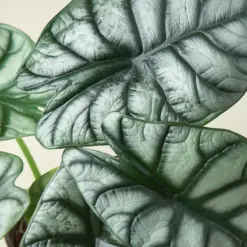
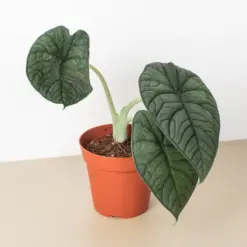
| A. baginda ‘Silver Dragon’ | Silver Dragon | Pale silver leaves with deep green veining | 🟡 Intermediate |
| A. baginda ‘Dragon Scale’ | Dragon Scale | Textured silver-green leaves resembling lizard skin | 🟡 Intermediate |
| A. cuprea ‘Red Secret’ | Red Secret / Mirror Plant | Iridescent copper-red leaves with metallic sheen | 🔴 Expert |
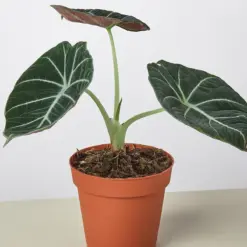
| A. reginula ‘Black Velvet’ | Black Velvet | Compact velvet-black leaves with white veins | 🟡 Intermediate |
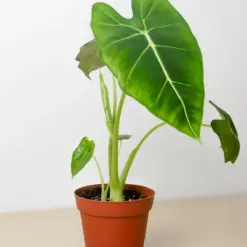
| A. frydek | Green Velvet | Velvet green arrow leaves with white veins | 🟡 Intermediate |
| A. odora | Asian Taro | Large green elephant-ear leaves, edible corm | 🟢 Beginner |
Shop Our Alocasia Collection
Every Alocasia we ship is greenhouse-grown, climate-acclimated, and packed with care for transit. Sold-out species? Use the Notify Me button on any product page and we’ll email you the moment it’s restocked.

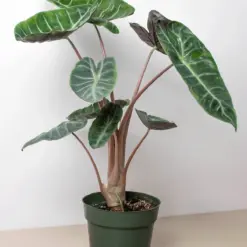
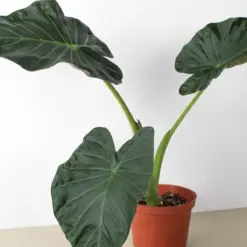
Alocasia Reginula ‘Black Velvet’
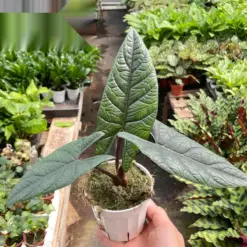
Price range: $31.99 through $44.99Alocasia Plant ‘Silver Dragon’
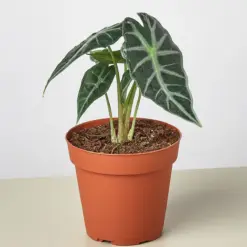
Price range: $47.99 through $59.99Alocasia Amazonica ‘Bambino’
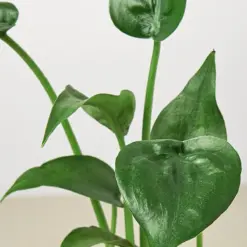
Price range: $36.99 through $57.99Alocasia Micholitziana ‘Frydek’
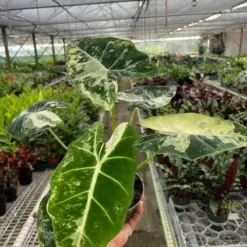
Price range: $26.99 through $56.99Alocasia Micholitziana ‘Frydek’ Variegated
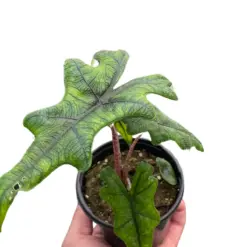
Price range: $100.99 through $135.99Alocasia Plant ‘Jacklyn’
Price range: $42.99 through $62.99Alocasia Plant ‘Melo’
$57.99Alocasia Plant ‘Pink Dragon’
Price range: $30.99 through $46.99Alocasia Plant ‘Regal Shield’
Price range: $30.99 through $46.99Alocasia Plant ‘Scalprum’
Price range: $46.99 through $56.99Alocasia Plant ‘Tiny Dancer’
Price range: $34.99 through $39.99
Frequently Asked Questions
Are alocasias toxic to cats and dogs?
Yes. Like all aroids, alocasia contains calcium oxalate crystals that are toxic to cats, dogs, and humans. Causes oral irritation, drooling, vomiting, and difficulty swallowing if chewed. Keep out of reach of pets and kids. (Pet-safe alternative with similar dramatic foliage: Calathea.)
Why did my alocasia drop all its leaves?
Almost always dormancy triggered by cold or short days, and not death. Alocasias retreat into underground corms in winter. Reduce watering to once every 3–4 weeks, keep the corm in bright indirect light, stop fertilizing, and wait. New leaves emerge in spring when temperatures consistently exceed 65°F. The plant often returns larger than before.
How do I get rid of spider mites on alocasia?
Spider mites love alocasia. Increase humidity to 60%+ immediately (humidifier within 6 ft of plant), spray leaf undersides with water + insecticidal soap weekly, and isolate from other plants until clear. Predatory mites (Phytoseiulus persimilis) released into the plant work well for stubborn infestations. For severe cases, defoliate completely; the plant will regrow clean.
Why does my alocasia have brown crispy edges?
Two causes. The first is tap water with fluoride/chlorine, so switch to filtered or distilled. The second is low humidity, so run a humidifier. If fertilizer salt buildup is suspected, flush soil with plain water until it runs clear from the drainage holes.
Can I grow alocasia in water permanently?
Some species adapt to permanent water culture (semi-hydro/LECA), especially smaller types like A. polly and A. zebrina. Transition gradually: rinse soil from roots, sit in plain water for 1–2 weeks to grow water roots, then move to LECA + dilute hydroponic nutrient solution. Larger species generally fare better in chunky soil with good drainage.
How fast do alocasias grow?
Healthy alocasias produce a new leaf every 2–4 weeks during the growing season. Each new leaf is typically larger than the last. Growth slows or stops in winter, since many species enter full dormancy. Expect a season-long pause and return larger in spring.
When should I repot my alocasia?
Every 1–2 years or when corms have filled the pot (tip the plant out to check). Best done in spring as new growth resumes. Choose a pot only 1–2 inches larger in diameter, because alocasias prefer slightly snug roots and rot in oversized pots. Use fresh chunky aroid mix.
Related Care Guides
- Calathea Care Guide (pet-safe alternative with similar drama)
- Anthurium Care Guide
- Colocasia Care Guide (the closest aroid cousin, true elephant ears)
- Pest ID & Treatment (spider mites and how to beat them)
- Humidity & Misting
