
Plant Care
Aloe Care Guide: Light, Water & The Medicine-Cabinet Succulent
Aloe is the medicine-cabinet houseplant. Aloe vera — the most common species — is grown in millions of homes for its succulent leaves filled with cooling gel that treats minor burns and skin irritation. It’s also one of the easiest succulents to grow indoors: it tolerates direct sun, infrequent watering, and the occasional missed feeding. The genus has hundreds of species — from the medicinal A. vera to spiral aloes, tiger aloes, and tree-like Aloe arborescens — but they all share the same drought-adapted, sun-loving care.
Quick Care Card
☀️ Light
Bright direct sun (6+ hours daily ideal)
💧 Water
Soil completely dry between waterings
💨 Humidity
30%+ (lower is fine)
🌡️ Temp
55–80°F
🪴 Soil
Cactus / succulent mix
🐾 Cat/Dog Safe
❌ Mildly toxic to cats & dogs
🎯 Difficulty
🟢 Beginner
📏 Size
12–24 inches indoors (varies)
🌎 Zone
9–11 outdoors
🏞️ Origin
Arabian Peninsula & Africa
In this guide
About Aloe
Aloe is a genus of about 600 succulent species native primarily to Africa, Madagascar, and the Arabian Peninsula. The most famous member, Aloe vera, originated in the Arabian Peninsula and has been cultivated for over 6,000 years for medicinal use — Egyptian texts from 1550 BCE describe using aloe gel for skin treatment.
The clear gel inside aloe leaves contains polysaccharides, glycoproteins, and antioxidants that have genuine wound-healing and anti-inflammatory effects on minor burns, sunburn, and skin abrasions. (Aloin, the yellow latex just under the leaf skin, is irritating and laxative — only use the inner clear gel topically.) Modern medical research backs the topical use; oral consumption of significant aloe is not safe and not recommended.
Beyond A. vera, the houseplant trade includes: A. aristata (Lace Aloe — small dark green clusters with white spots), A. polyphylla (Spiral Aloe — perfect five-pointed spirals, hard to grow indoors), A. arborescens (Tree Aloe — tall branching form), A. nobilis (Gold Tooth Aloe — bright green with reddish edges), and A. brevifolia (Short-Leafed Aloe — small clustering). Care is basically identical across species.
Care Guide
Light
Bright direct sun. As much as possible.
- Best: 6+ hours of direct sun daily — south or west-facing window. Aloe thrives in maximum light.
- Tolerable: 4–6 hours of bright indirect light. Plants survive but may stretch.
- Insufficient: less than 4 hours of bright light. Plants etiolate (stretch upward), turn pale, and become weak.
- Outdoor summer break (porch or balcony) helps — gradually acclimate to outdoor sun over 2–3 weeks to avoid scorch on leaves that have been indoors.
- Color check: healthy aloe in good light often shows pinkish or reddish tones at the leaf edges. Pure pale green growth means insufficient light.
Water
Drench thoroughly, then let dry completely. Aloe rots from soggy soil far more often than from drought.
- Wait until the soil is completely bone dry. Lift the pot — if it feels light, water. If still heavy, wait.
- Water thoroughly when you do water — soak until water runs from the drainage holes. Drain completely.
- Most plants need water every 14–21 days in summer, every 21–45 days in winter.
- Critical: water at the soil only, never on the rosette crown. Water sitting in the rosette causes crown rot.
- Wrinkled, soft leaves = thirsty (recoverable in 1–3 days). Yellow, mushy, translucent leaves = overwatered/rotting (often terminal).
- Use room-temperature water. Tap water is fine — aloe isn’t picky.
Humidity
Aloe prefers dry air. Don’t fuss.
- 30–50% humidity (typical home year-round) is fine.
- Below 25% is tolerated — aloe evolved in dry climates.
- Skip humidifiers — wasted effort and may encourage rot.
- High humidity (70%+) can cause issues — water sits in the rosette and rots the plant. Keep aloe out of bathrooms.
Temperature
Warm days, cool nights — but not cold.
- Ideal: 55–80°F (13–27°C).
- Below 40°F damages most aloe species; sustained cold is fatal.
- Above 90°F in direct sun without ventilation can cause leaf scorch — provide some afternoon shade in extreme summer heat.
- Cool nights (50–60°F) intensify leaf color in many species — outdoor fall conditions often bring out pink/red edges.
- Avoid AC vents in summer — sudden cold drops shock aloes.
Soil
Drainage is everything. Use a gritty cactus/succulent mix.
- Best: commercial cactus/succulent mix — fast-draining gritty composition.
- DIY: 50% potting soil + 30% coarse sand or pumice + 20% perlite or fine gravel.
- Avoid: standard potting soil, peat-heavy mixes, anything that stays wet for more than 5–7 days.
- Pot: terra cotta is ideal — porous, wicks moisture, and dries the soil faster than ceramic or plastic.
- Always use a pot with drainage holes. Saucer-bottom or cachepot setups without drainage rot aloe fast.
- Repot every 3–4 years — aloe is slow-growing and prefers being slightly pot-bound. Wear gloves; some species have spiny leaf edges.
Pro tip — break off a leaf for first-aid use
When you have a minor burn or sunburn: cut off a healthy outer leaf with a clean knife, slit it open lengthwise, and squeeze or scrape out the clear inner gel. Apply directly to the affected skin — the gel is genuinely cooling and contains anti-inflammatory compounds. Avoid the yellow latex layer just under the green skin (called aloin) — it’s a skin and gut irritant. Use only the clear central gel. The plant continues growing fine after losing one leaf; mature aloes can spare an outer leaf monthly without harm.
Fertilizer
Light feeders. Easy to over-fertilize.
- Diluted balanced or specific cactus/succulent fertilizer at quarter strength every 8–12 weeks April–September.
- Skip fertilizing October–March entirely.
- Many growers don’t fertilize at all — fresh soil at repotting provides enough nutrients for years.
- Brown leaf tips after fertilizing = salt buildup. Flush soil with plain water; skip feeding for 6+ months.
Seasonal Care
🌱 Spring & Summer
- New leaves emerge from the center of the rosette every 4–8 weeks on healthy plants
- Mature plants may push up tall flower spikes in summer with tubular yellow/orange/red flowers
- Pups (offsets) emerge from the base — separate when 3+ inches tall
- Water every 14–21 days when soil is completely dry
- Best time to repot, divide, or take pups
❄️ Fall & Winter
- Reduce watering to every 21–45 days
- Stop fertilizing entirely
- Move from cold drafts; below 40°F damages plants
- Cool nights intensify color
- Don’t repot until spring
Common Problems & Fixes
| Symptom | Likely Cause | Fix |
|---|---|---|
| Stretched / leggy aloe with widely spaced leaves | Insufficient light (etiolation) | Move to brighter direct sun or add a grow light; etiolated growth doesn’t reverse |
| Yellow / mushy leaves at the base | Overwatering / root rot | Stop watering; unpot, check roots, cut rotted sections, let callus, replant in dry mix |
| Wrinkled, soft leaves | Thirsty (rare on aloe — leaves store lots of water) | Water thoroughly; leaves rehydrate within 1–3 days |
| Pale washed-out color | Insufficient light | Move to brighter direct sun; pinks/reds intensify with more light |
| Brown burn marks on leaves | Sunburn (often after sudden move from indoor to outdoor sun) | Move to shadier spot; affected leaves don’t recover; acclimate gradually next time |
| Mushy black spot in rosette center | Crown rot from water sitting in rosette | Cut off healthy leaves to propagate; original plant is lost |
| White cottony spots between leaves | Mealybugs | Wipe with isopropyl alcohol; insecticidal soap weekly until clear |
| Brown sticky scales on leaves | Scale insects | Scrape off with fingernail; insecticidal soap or systemic neem |
| Tall flower spike emerging | Normal — mature aloes bloom in summer | Leave for novelty; cut at base after flowering completes |
Aloe is the only houseplant that’s also a medicine cabinet. Cut off an outer leaf, squeeze out the clear gel, apply to a sunburn — instant relief.
Propagation
Pups / offsets (easiest method)
Many aloes produce pups (offsets) at their base — small babies that emerge from the soil around the parent.
Wait until the pup is at least 3 inches tall with several leaves and visible roots.
Unpot the parent plant or carefully dig down with a sterilized knife to access the pup’s connection.
Cut the pup off the parent — pups have their own roots already.
Let the cut surface callus over for 2–3 days in a dry shaded spot.
Pot the pup in a small pot of dry cactus mix; don’t water for the first week.
Resume normal care after a week. New pups often appear at the base of the new plant within months — endless free aloes.
Leaf cuttings (works for aloe — slower than succulents)
- Cut a healthy leaf off the parent at its base with a sterilized knife.
- Let the cut end callus over for 5–7 days in a dry shaded spot until the cut is fully dry and hard.
- Insert the cut end into dry cactus mix, just deep enough to support the leaf.
- Don’t water for 2 weeks. After 2 weeks, water lightly.
- Roots and small new growth emerge in 4–8 weeks. Aloe leaf cuttings have a lower success rate than offsets — most growers prefer pup separation.
- Place in bright indirect light while rooting; move to brighter light once established.
Stem cuttings (tree-type aloes — A. arborescens)
- Cut a section of stem with several leaves with sterilized scissors.
- Let the cut end callus over for 5–7 days.
- Insert into dry cactus mix; don’t water for the first 2 weeks.
- Resume normal aloe care after 2 weeks — roots form in 4–8 weeks.
Featured Aloe Species
| Species | Common Name | Notable Trait | Difficulty |
|---|---|---|---|
| A. vera | Aloe Vera | The classic medicinal aloe; grey-green spiky leaves; gel is wound-healing | 🟢 Beginner |
| A. aristata | Lace Aloe / Torch Plant | Small clustering rosettes with white spots and toothy edges | 🟢 Beginner |
| A. polyphylla | Spiral Aloe | Perfect five-pointed spiral pattern; hard to grow indoors (cold-hardy) | 🔴 Advanced |
| A. arborescens | Tree Aloe / Krantz Aloe | Tall branching tree-like form with cascading orange-red flower spikes | 🟢 Beginner |
| A. nobilis | Gold Tooth Aloe | Bright green leaves with reddish-orange spiny edges | 🟢 Beginner |
| A. brevifolia | Short-Leafed Aloe | Small clustering with chubby blue-green leaves; pink in good light | 🟢 Beginner |
| A. juvenna | Tiger Tooth Aloe | Small clustering with bright white teeth on dark green leaves | 🟢 Beginner |
| A. variegata (Gonialoe variegata) | Tiger Aloe / Partridge Breast | Striking white-banded leaves; striped "tiger" appearance | 🟢 Beginner |
Shop Our Aloe Collection
Every Aloe we ship is greenhouse-grown, climate-acclimated, and packed with care for transit. Sold-out species? Use the Notify Me button on any product page — we’ll email you the moment it’s restocked.

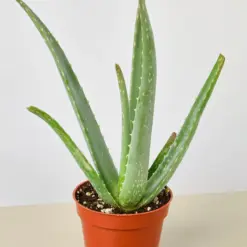
Aloe Vera Plant
Price range: $22.99 through $39.99Epiphyllum ‘Ric Rac’ Cactus Plant
Price range: $27.99 through $59.99Christmas Cactus ‘White’ (Zygocactus)
Price range: $27.99 through $84.99Succulent ‘String of Bananas’ Plant
Price range: $25.99 through $50.99Succulent ‘Elephant Bush’
Price range: $22.99 through $158.99Christmas Cactus ‘Red’ (Zygocactus)
Price range: $27.99 through $84.99Delosperma Echinatum ‘Pickle Plant’
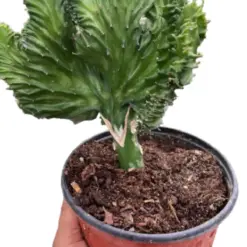
Price range: $22.99 through $43.99Euphorbia ‘Devil’s Backbone’ Variegated
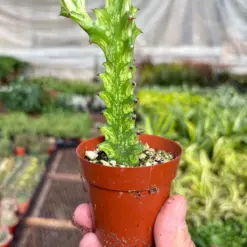
Price range: $25.99 through $118.99Euphorbia Plant ‘Mint Cream’
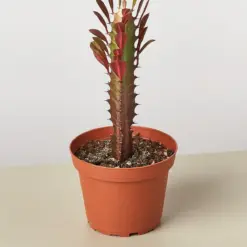
Price range: $30.99 through $46.99Euphorbia Plant ‘Trigona Rubra’
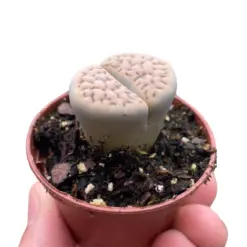
Price range: $23.99 through $66.99Lithop Living Stone Plant
$18.99
Frequently Asked Questions
Are aloe plants safe for cats and dogs?
No — aloe is mildly toxic to cats and dogs per ASPCA listings. The aloin (yellow latex layer just under the leaf skin) and the saponins in the leaves cause vomiting, diarrhea, lethargy, and tremors when ingested. Symptoms are usually mild but persistent. Keep out of reach of pets that chew on leaves. The clear inner gel applied topically is considered safe; ingestion is the issue.
Can I use aloe gel from my plant for sunburn?
Yes — the clear inner gel of Aloe vera (and most aloe species) has genuine wound-healing and anti-inflammatory effects on minor burns, sunburn, and skin irritation. Cut off a mature outer leaf with a clean knife, slit it open lengthwise, and scrape or squeeze out the clear central gel. Avoid the yellow latex layer (aloin) just under the green skin — it’s irritating to skin and a strong laxative if ingested. Use only the clear inner gel topically.
Why is my aloe stretched and pale?
Insufficient light — etiolation. Aloe needs 6+ hours of bright direct sun daily to stay tight and compact. Move to your sunniest window or set up a grow light. Existing stretched growth doesn’t tighten back, but new growth from the center comes in compact once light is sufficient. You can also "behead" a stretched aloe — cut off the top, let it callus, and replant; the bottom often produces multiple new pups.
Why is my aloe leaf yellow and soft?
Almost always overwatering and root rot. Aloe stores water in its thick leaves and rots fast in soggy soil. Stop watering immediately. Unpot, cut all yellow/mushy leaves and roots back to firm tissue with a sterilized knife, let the cuts callus 2–3 days, and replant in fresh dry cactus mix. Don’t water for at least a week. Use a terra cotta pot with drainage holes and only water when the soil is completely bone dry.
How often should I water my aloe?
Every 2–3 weeks in summer and every 3–6 weeks in winter — but always wait until the soil is completely dry. Lift the pot to check; light = dry, heavy = still wet. When in doubt, wait another week. Aloe stores water in its leaves and survives drought far better than soggy soil. Always use a fast-draining cactus mix and a pot with drainage holes.
How do I propagate aloe?
Easiest method: separate pups (offsets) at the base of the parent plant. Wait until pups are 3+ inches tall with their own roots, then carefully dig down with a knife and cut the pup off the parent. Let the cut callus 2–3 days, pot in dry cactus mix, and don’t water for a week. Resume normal care. Aloe also propagates from leaf and stem cuttings, but pup separation is the most reliable method.
Why is my aloe turning red/pink?
Usually a good sign — aloe in bright direct sun develops pink, red, or purple tints at the leaf edges as a protective response to high light. Healthy outdoor aloes often look quite colorful. However, if the entire plant is reddish-purple and the leaves are flat and shriveled, it may be sunstressed — provide some afternoon shade. If just edges are pinkish on a healthy upright plant, leave it alone — it’s thriving.
Related Care Guides
