
Plant Care
Dracaena Care Guide: Light, Water & The Family That Includes Snake Plants
Dracaena is the genus of forgotten houseplant heroes. Most people know Dracaena trifasciata as "snake plant" (it was reclassified from Sansevieria in 2017), but the genus also includes Dracaena marginata (Dragon Tree), D. fragrans (Corn Plant, including Mass Cane), D. sanderiana (Lucky Bamboo), and D. surculosa (Gold Dust Dracaena). All share the same core care: bright indirect light, infrequent watering, sensitivity to tap water, and decade-plus lifespans indoors.
Quick Care Card
☀️ Light
Bright indirect (medium tolerated)
💧 Water
Top inch dry; never bone dry
💨 Humidity
40–60% (average home)
🌡️ Temp
65–80°F
🪴 Soil
Well-draining standard mix
🐾 Cat/Dog Safe
❌ Toxic to cats & dogs
🎯 Difficulty
🟢 Beginner
📏 Size
3–6+ ft indoors
🌎 Zone
10–12 outdoors
🏞️ Origin
Africa, Asia, Central America
In this guide
About Dracaena
Dracaena is a genus of about 120 species, with native ranges spanning Africa (most species), tropical Asia, and Central America. The genus was massively reorganized in 2017, when botanists merged Sansevieria (snake plants) into Dracaena after DNA evidence showed they’re the same genus. So the houseplant trade still calls snake plants "Sansevieria" but technically they’re Dracaena trifasciata now.
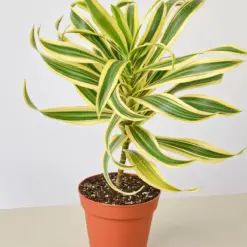
Beyond snake plants, the popular indoor dracaenas: D. marginata (Dragon Tree, with narrow sword leaves on slender canes, often braided), D. fragrans (Corn Plant, including ‘Massangeana’ or Mass Cane, with wide green-and-yellow striped leaves on thick canes), D. reflexa ‘Song of India’ (variegated cream-and-green leaves on twisted stems), D. surculosa (Gold Dust, with small leaves and yellow speckles), and D. sanderiana (Lucky Bamboo, sold in water vases and not actually bamboo).
What unites the dracaena family for indoor growers: they tolerate moderate light, recover well from missed waterings, live for decades (some specimens 50+ years), and have minimal pest issues. The catch: they’re sensitive to fluoride and chlorine in tap water, which is the primary cause of the crispy brown leaf tips that plague almost every indoor dracaena.
Care Guide
Light
Bright indirect light is best. Most dracaenas tolerate medium light.
- Best: bright indirect light within 3–6 feet of an east, north, or filtered south/west window.
- Direct afternoon sun bleaches and crisps the leaves, especially on variegated cultivars (Mass Cane, Song of India).
- Medium light is tolerated. Growth slows; variegated cultivars may lose pattern intensity.
- Low light is survivable for solid-green dracaenas and snake plants but growth nearly stops.
- Rotate the pot a quarter-turn weekly so the plant grows evenly, since dracaenas lean toward light.
Water
Top inch dry between waterings. Dracaena is forgiving, so when in doubt, wait.
- Water when the top 1–2 inches of soil are dry. Stick your finger in, and if dry to the second knuckle, water thoroughly.
- Water until water runs from the drainage holes; empty the saucer after 10 minutes.
- Most plants need water every 10–14 days in summer, every 14–21 days in winter.
- Critical: dracaenas are highly sensitive to fluoride and chlorine in tap water, which is the #1 cause of brown leaf tips. Switch to filtered, distilled, or rainwater.
- Yellow leaves with mushy stems = overwatering. Brown crispy tips = tap water sensitivity or salt buildup.
- When in doubt, wait, because dracaenas tolerate drought far better than soggy soil.
Humidity
Average home humidity is fine.
- 40–60% humidity (typical home year-round) is plenty.
- Below 30% (winter heating) you may see crispy edges, but this is usually water-quality related, not humidity-related on dracaenas.
- Pebble trays or humidifiers help slightly but don’t fix tap water issues.
- Skip aggressive misting because Dracaena gets fungal issues from water sitting on leaves.
Temperature
Standard household temperatures.
- Ideal: 65–80°F (18–27°C). Tolerates 60–85°F.
- Below 55°F damages leaves and slows growth.
- Below 50°F is potentially fatal to tropical dracaenas (less of an issue for snake plants).
- Avoid AC vents in summer and cold windows in winter.
Soil
Standard well-draining mix.
- Easy mix: 70% standard houseplant potting soil + 30% perlite.
- Better: 60% potting soil + 30% perlite + 10% orchid bark for drainage.
- For snake plants (D. trifasciata): use cactus/succulent mix, since they want drier conditions than tropical dracaenas.
- Avoid: dense potting soil, peat-heavy mixes, anything that stays wet for more than 7 days.
- Use a slightly deeper pot for tall cane-form dracaenas (Mass Cane, Dragon Tree).
- Repot every 2–3 years in spring, since dracaenas prefer being slightly pot-bound. Go up only 1–2 inches in diameter.
Pro tip: switch to filtered water before adjusting anything else
If your dracaena has crispy brown leaf tips (and the vast majority do), the cause is almost always fluoride and chlorine in your tap water, not low humidity or watering frequency. Dracaenas are particularly sensitive among houseplants. A simple Brita pitcher or letting tap water sit 24 hours in an open container (helps chlorine but not fluoride) usually fixes it within a few months of new growth. Distilled or rainwater is the gold standard. Don’t waste money on humidifiers for tip browning, since you should solve the water problem first.
Fertilizer
Light feeders. Easy to over-fertilize.
- Balanced liquid fertilizer at half strength every 4–6 weeks April–September.
- Skip fertilizing October–March entirely.
- Brown leaf tips after fertilizing = salt buildup. Flush soil with filtered water until it runs clear; reduce fertilizer.
- Many dracaenas thrive on no fertilizer at all, since fresh soil at repotting provides nutrients for years.
Seasonal Care
🌱 Spring & Summer
- New leaves emerge from the growing tips every 3–6 weeks on healthy plants
- Mature plants may produce small inconspicuous flower clusters
- Water every 10–14 days when top inch is dry
- Fertilize every 4–6 weeks at half strength
- Best time to repot, divide, or take cuttings
❄️ Fall & Winter
- Reduce watering to every 14–21 days
- Stop fertilizing entirely
- Move from cold drafts; below 55°F damages tropical dracaenas
- Don’t repot until spring
- Slower growth, with minimal new leaves being normal
Common Problems & Fixes
| Symptom | Likely Cause | Fix |
|---|---|---|
| Brown crispy leaf tips | Tap water fluoride/chlorine sensitivity (most common) or salt buildup | Switch to filtered/distilled/rainwater; flush soil periodically |
| Yellow lower leaves | Overwatering or natural shedding of oldest leaves | Reduce watering frequency; old leaves shedding occasionally is normal |
| Loss of variegation (Mass Cane, Song of India) | Insufficient light | Move to brighter indirect light; cut back any solid-green reverted growth |
| Drooping leaves | Underwatered, root rot, or cold draft | Check soil and water if dry; if soggy, let dry and reduce frequency |
| Leggy stem with leaves only at top | Mature growth habit | Cut top for propagation; remaining stem produces new shoots within weeks |
| Bleached patches on leaves | Direct sun scorch | Move from direct sun; affected leaves don’t recover |
| White cottony spots between leaves | Mealybugs | Wipe with isopropyl alcohol; insecticidal soap weekly until clear |
| Soft black spot at the base / crown | Crown rot from severe overwatering | Cut healthy top sections for propagation; rotted base unrecoverable |
| Tiny webs on leaves | Spider mites (low humidity) | Rinse under shower; raise humidity; insecticidal soap weekly until clear |
If your dracaena has brown tips, your tap water is the problem, not your watering schedule. Switch to filtered and the next leaves come in clean.
Propagation
Top cuttings in water or soil (easiest)
Cut the top 6–8 inches off the cane with sterilized sharp scissors.
Strip the lowest 1–2 leaves so the bottom of the cutting is bare.
Option A (water): place in a glass of water with the bare nodes submerged. Change water every 5 days. Roots emerge in 3–6 weeks.
Option B (soil): dip cut end in rooting hormone and insert into damp well-draining soil. Cover loosely with a clear bag for humidity. Roots in 4–8 weeks.
Bonus: the original bare stem in the pot produces 2–3 new shoots within 4–8 weeks. One plant becomes two.
Cane segments (multiple plants from one stem)
- From a long cane, cut 3–4 inch segments, and each segment must contain at least one node.
- Mark which end was "up" on each segment.
- Lay segments horizontally on damp seedling mix, half-buried in the soil.
- Cover with clear plastic for humidity. Keep moist and warm (70–80°F).
- New shoots emerge from the buried nodes within 6–10 weeks.
- Once shoots have 3–4 leaves, pot up individually.
Division (snake plants and clumping dracaenas)
- For snake plants (D. trifasciata), wait until rhizomes have filled the pot.
- Unpot and gently separate the rhizome clusters with a sterilized knife.
- Each division should have at least 2–3 leaves and a healthy section of rhizome with roots.
- Let cuts callus over for 24 hours before potting (snake plant specifically).
- Pot in fresh well-draining mix; resume normal care.
Featured Dracaena Species
| Species | Common Name | Notable Trait | Difficulty |
|---|---|---|---|
| D. trifasciata (formerly Sansevieria) | Snake Plant | Upright sword leaves; the toughest dracaena; see dedicated guide | 🟢 Beginner |
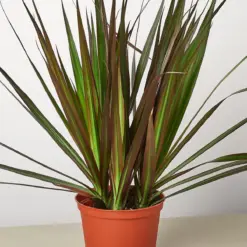
| D. marginata | Dragon Tree | Narrow sword leaves with red edges on slender canes; often braided | 🟢 Beginner |
| D. fragrans ‘Massangeana’ | Mass Cane / Corn Plant | Wide green-and-yellow striped leaves on thick tree-like canes | 🟢 Beginner |
| D. reflexa ‘Song of India’ | Song of India | Cream-and-green variegated leaves on twisted stems | 🟢 Beginner |
| D. surculosa | Gold Dust Dracaena | Small oval leaves with bright yellow speckles | 🟢 Beginner |
| D. sanderiana | Lucky Bamboo | Sold in water vases; not actually bamboo; tolerates water-only growing | 🟢 Beginner |
| D. marginata ‘Tricolor’ | Tricolor Dragon Tree | Cream-pink-green striped sword leaves; striking variegation | 🟢 Beginner |
| D. fragrans ‘Janet Craig’ | Janet Craig | Solid dark green broad strap leaves; classic office plant | 🟢 Beginner |
Shop Our Dracaena Collection
Every Dracaena we ship is greenhouse-grown, climate-acclimated, and packed with care for transit. Sold-out species? Use the Notify Me button on any product page and we’ll email you the moment it’s restocked.

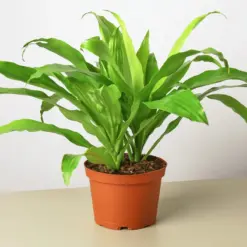
Dracaena Plant ‘Tornado’
Price range: $25.99 through $47.99Dracaena Song of India Plant
Price range: $22.99 through $41.99Dracaena Plant ‘Janet Craig’
Price range: $22.99 through $70.99Dracaena Warneckii ‘White Jewel’
Price range: $25.99 through $39.99Dracaena Plant ‘Marginata Cane’
Price range: $22.99 through $150.99Cordyline Plant ‘Calypso Queen’
Price range: $22.99 through $39.99Dracaena Plant ‘Colorama’
Price range: $22.99 through $46.99Dracaena Plant ‘Lemon Lime’
Price range: $23.99 through $191.99Dracaena Plant ‘Lime Light’
Price range: $30.99 through $50.99Dracaena Plant ‘Marginata Magenta’
Price range: $23.99 through $50.99Lucky Bamboo Heart Shape (Dracaena)
Price range: $28.99 through $249.99

Frequently Asked Questions
Are dracaenas safe for cats and dogs?
No. All Dracaena species are toxic to cats and dogs per ASPCA listings. Contains saponins that cause vomiting (sometimes with blood), depression, lethargy, dilated pupils (especially in cats), and loss of appetite. Symptoms are usually mild but can persist for hours. Keep out of reach of pets that chew on plants. (For pet-safe statement plants, see Spider plant, Calathea, and Peperomia.)
Why does my dracaena have brown tips on every leaf?
Almost always tap water sensitivity. Dracaenas are particularly sensitive to fluoride and chlorine in municipal water, since these chemicals accumulate in the leaf tips and cause crispy brown ends. Switch to filtered, distilled, or rainwater. New leaves emerge clean within a few months. Existing brown tips can be trimmed with scissors at an angle to mimic the natural leaf taper. Salt buildup from over-fertilizing is a less common second cause; flush the soil periodically.
Why is my Mass Cane losing its yellow stripe?
Insufficient light. The yellow-and-green variegation on Mass Cane (D. fragrans ‘Massangeana’) requires bright indirect light to maintain. In low light, the plant produces solid-green leaves. Move to a brighter spot within 3–5 feet of an east or north window, or behind sheer curtains on a south/west window. Cut back any solid-green reverted stems to force colored regrowth from healthy buds.
How fast do dracaenas grow?
Slowly. Most dracaenas produce 4–10 new leaves per year on healthy plants. Mass Cane (D. fragrans) grows slightly faster than Dragon Tree (D. marginata). Snake plants are the slowest of the family. If yours hasn’t grown in over a year, check light (too low) and roots (potbound, possibly rotted) before assuming failure. Dracaenas trade growth speed for long lifespan, and many indoor specimens are 20+ years old.
How do I propagate a dracaena?
Easiest method: top cuttings in water or soil. Cut the top 6–8 inches off the cane with sterilized scissors, strip the lower leaves, and place in water with bare nodes submerged. Roots emerge in 3–6 weeks. Pot up once roots are 1–2 inches long. The original bare stem in the pot also produces 2–3 new shoots within 4–8 weeks, so one plant becomes two. You can also propagate from 3-inch cane segments laid horizontally on damp soil.
Why is my dracaena’s stem soft and rotting at the base?
Severe overwatering and root rot. Dracaenas rot fast in soggy soil. Stop watering immediately. Cut off the healthy top of the cane (above the rot) and propagate it as a new plant; see the propagation section. The rotted base is usually unrecoverable. Going forward: use well-draining soil, a pot with drainage holes, and let the top 1–2 inches dry between waterings.
Is lucky bamboo really a bamboo?
No. "Lucky bamboo" (Dracaena sanderiana) is a dracaena, not a bamboo. It just happens to have bamboo-like stems with leaf nodes that look superficially similar. Lucky bamboo is sold growing in water-filled vases with decorative pebbles. It can grow in water indefinitely as long as you change the water weekly and avoid tap water (use filtered or distilled because dracaenas hate fluoride). Or pot it up in soil for faster growth and longer lifespan.
Related Care Guides
- Snake Plant Care Guide (the most famous dracaena; see dedicated guide)
- Yucca Care Guide
- Ficus Care Guide
- Palm Care Guide
