
Plant Care
Tillandsia (Air Plant) Care Guide: Light, Water & The Plant That Lives Without Soil
Tillandsia — air plants — are the houseplants that broke the soil rule. They grow on trees and rocks in the wild, absorbing water and nutrients entirely through specialized leaf scales (trichomes). Indoors, they need no pot or soil — just air, light, and weekly soaking. The catch most beginners miss: air plants are not actually low-maintenance. They need weekly water (real water, not misting), bright indirect light, and good air circulation. Get those right and they’re fascinating long-lived plants. Treat them as decorative knickknacks and they slowly die in 3–6 months.
Quick Care Card
☀️ Light
Bright indirect (some direct OK)
💧 Water
Weekly 20–30 minute soak (not just mist)
💨 Humidity
50%+ (60% ideal)
🌡️ Temp
60–85°F
🪴 Soil
None — grow on/in anything
🐾 Cat/Dog Safe
✅ Safe for cats & dogs
🎯 Difficulty
🟡 Intermediate (watering routine essential)
📏 Size
1–12 inches across (varies wildly)
🌎 Zone
9–11 outdoors
🏞️ Origin
Forests of the Americas (Mexico to Argentina)
In this guide
About Tillandsia (Air Plant)
Tillandsia is a genus of about 650 species in the bromeliad family (Bromeliaceae), native to the forests and mountains of the Americas — from southern US through Central and South America to northern Argentina. They evolved as epiphytes (plants that grow on other plants) and lithophytes (plants that grow on rocks), absorbing water from rainfall, fog, and humid air through specialized leaf scales called trichomes.
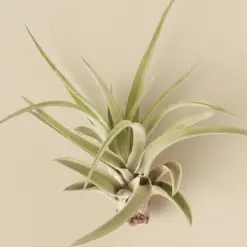
Air plants split into two broad categories: xeric (silver-leaved species from drier climates — T. ionantha, T. xerographica, T. capitata — covered in dense trichomes for water capture) and mesic (greener-leaved species from humid forests — T. cyanea, T. butzii, T. brachycaulos — less trichome coverage, more water needed). Xeric types tolerate brighter sun and drier conditions; mesic types want shade and more frequent watering.
Almost all air plants are monocarpic: they bloom once spectacularly (bracts turn red/pink/purple, then a flower spike emerges), then slowly die over 6–12 months. Before dying, the mother plant produces 1–4 pups (offsets) at her base. Pups grow up over 1–3 years and bloom themselves. One air plant becomes many over years. Don’t mourn the bloomed mother; raise the pups.
Care Guide
Light
Bright indirect light. Xeric (silver) types tolerate more sun; mesic (green) types want more shade.
- Best for most: bright indirect light — within 2–4 feet of an east window or behind sheer curtains on a south/west window.
- Xeric (silver-leaved) types: tolerate some direct morning sun. Examples: T. xerographica, T. tectorum, T. ionantha.
- Mesic (greener-leaved) types: prefer brighter shade or filtered light. Examples: T. cyanea, T. butzii.
- Direct afternoon sun bleaches all but the most desert-adapted species.
- Low light = slow death over months. Air plants need real light to photosynthesize, despite the marketing as "maintenance-free."
- Grow lights work great — full-spectrum LED at 12 inches above for 12 hours daily.
Water
Weekly 20–30 minute soak — misting alone doesn’t work long-term.
- Method 1 — Soaking (most reliable): Once a week, submerge the entire plant in room-temperature water for 20–30 minutes. Shake gently to remove excess water from leaf bases.
- Method 2 — Rinsing (for blooming plants): Hold under running water for 5 minutes if the plant is flowering (don’t fully submerge bloom spikes).
- Method 3 — Misting (supplemental only): Mist 2–3 times per week between soaks in dry conditions. Not a replacement for weekly soaks.
- After watering, place the plant upside-down on a towel for 1–2 hours to drain — water trapped at the base causes rot.
- Use room-temperature filtered, rain, or pond water if possible. Tap water is OK but contains chlorine/fluoride that may dull trichome shine.
- Critical: never let water sit at the base of the plant. Rot kills more air plants than drought.
Humidity
50%+ ambient humidity helps but isn’t critical if you’re soaking weekly.
- Ideal: 50–60% humidity reduces water stress between soaks.
- Tolerable: 40% (typical home humidity). Plant survives with weekly soaking.
- Below 30% requires more frequent misting between soaks.
- Bathrooms with bright windows are great air plant spots — high humidity reduces watering frequency.
- Outdoor summer (in a shaded spot with good air movement) is excellent for air plants.
Temperature
Wide tolerance. Air circulation matters more than exact temperature.
- Ideal: 60–85°F (15–29°C). Tolerates 50–95°F briefly.
- Below 50°F damages most species; below 40°F is potentially fatal.
- Above 95°F + dry air requires more frequent misting between soaks.
- Critical: air circulation is essential for air plants — they’re called "air plants" for a reason. Stagnant air after watering causes rot. Place near a fan or in a spot with good air movement.
Mounting (no soil)
Air plants need no soil and grow on or in many materials.
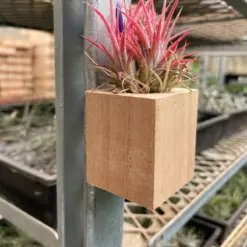
- Displays: mount on driftwood, cork bark, decorative shells, geometric metal stands, glass globes (open ones with airflow), or simply place in shallow bowls.
- Glue option: attach with non-toxic plant adhesive or hot glue (the leaf base only — don’t glue the entire plant); E6000 or waterproof Liquid Nails Fuze*It work well.
- Wire option: wrap soft floral wire gently around the base to secure to mounting surface.
- Don’t use copper — toxic to all bromeliads including air plants.
- Don’t enclose in a sealed terrarium — stagnant humid air causes rot. Open glass containers with ventilation are fine.
Pro tip — fertilize once a month with bromeliad fertilizer
Most air plant guides skip fertilizer, but air plants in nature get nutrients from rainwater carrying tree-canopy debris. Indoors, they need supplementation to grow well and bloom. Once a month during growing season, add 1/4 strength bromeliad fertilizer (or air plant-specific food) to your weekly soaking water. Skip in winter. This single change dramatically improves growth rate and bloom likelihood — the difference between "surviving" and "thriving." Don’t use copper-containing fertilizers (toxic to bromeliads).
Fertilizer
Light feeders. Air plants benefit from bromeliad-specific fertilizer.
- Bromeliad fertilizer (or 1/4 strength balanced) once a month in the soaking water during growing season.
- Skip fertilizing October–March entirely.
- Critical: never use copper-containing fertilizer — toxic to bromeliads.
- Fertilizer significantly improves growth and bloom likelihood; many growers skip and wonder why their plants don’t bloom.
Seasonal Care
🌱 Spring & Summer
- Most growth happens spring through fall on healthy plants
- Mature plants may produce flower spikes — bracts turn red/pink/purple, then flowers appear
- Soak weekly; mist between soaks in dry conditions
- Fertilize monthly in the soaking water
- Pups emerge from the base after blooming
❄️ Fall & Winter
- Reduce watering slightly — soak every 10–14 days
- Stop fertilizing entirely
- Move from cold drafts; below 50°F damages most species
- Growth pauses in winter; that’s normal
Common Problems & Fixes
| Symptom | Likely Cause | Fix |
|---|---|---|
| Plant slowly drying / curling leaves | Underwatered — most common cause of air plant death | Soak 30 minutes; resume weekly soaking routine |
| Brown crispy leaf tips | Underwatered, low humidity, or salt buildup from fertilizer | More frequent soaking; raise humidity; flush plant with plain water after fertilizing |
| Plant falling apart from the base | Rot from water trapped at the base after watering | Always shake out and dry upside-down after soaking; reduce frequency in cool weather |
| Loss of silver / trichome coverage | Healthy growth (new growth has fewer trichomes) OR insufficient light | Some loss is normal; if dramatic, increase light |
| No flowering despite mature plant | Insufficient light or no fertilizer | Move to brighter indirect light; fertilize monthly with bromeliad fertilizer |
| Mother plant slowly dying after bloom | Normal — air plants are monocarpic (bloom once and die) | Continue caring; pups emerge from the base; eventually remove the mother |
| Bleached or sunburned spots | Sudden move to direct sun | Move to shadier spot; affected areas don’t recover |
| Black/mushy base | Severe rot — usually terminal | Cut off any salvageable pups; mother plant lost |
| White cottony spots between leaves | Mealybugs (uncommon on air plants) | Wipe with isopropyl alcohol; insecticidal soap weekly |
Air plants are not maintenance-free. They want weekly soaks, bright light, monthly fertilizer, and good air movement. The "set it and forget it" marketing kills more air plants than any pest.
Propagation
Pups / offsets (the only practical method)
After a mother plant blooms, it produces 1–4 pups at its base over the following 6–12 months.
Wait until pups are at least 1/3 to 1/2 the size of the mother before separating.
Gently twist or cut the pup away from the mother at the base.
Resume normal care for the pup — weekly soaks, bright indirect light, monthly fertilizer.
The pup grows for 1–3 years before producing its own bloom and pups.
Alternatively, leave pups attached to the mother and let them form a "clump" over years — clumps are more spectacular than single plants.
Seed (slow — multi-year project)
- After flowering, some species produce seed pods.
- Collect seeds when pods open; air plant seeds have small parachutes for wind dispersal.
- Attach seeds to damp tree bark or sphagnum moss; place in bright indirect light.
- Germination takes 1–3 months. Tiny air plants grow extremely slowly — expect 3–6 years to reach a mature plant.
- Most growers don’t seed-propagate; pup separation is the practical method.
Featured Tillandsia (Air Plant) Species
| Species | Common Name | Notable Trait | Difficulty |
|---|---|---|---|
| Tillandsia ionantha | Sky Plant | Small clustering air plant; bracts turn red before pink/purple bloom | 🟢 Beginner |
| T. xerographica | King of Air Plants | Large silver curling-leaved species; star-shaped; tolerates dry conditions | 🟢 Beginner |
| T. cyanea | Pink Quill | Mesic species with bright pink paddle-shaped bract and purple flowers; almost grown as a houseplant in soil | 🟢 Beginner |
| T. capitata | Capitata Air Plant | Medium-size cluster; turns crimson before blooming | 🟢 Beginner |
| T. tectorum | Snow Plant | Dense silver trichome coverage; needs more sun and less water than most | 🟡 Intermediate |
| T. brachycaulos | Brachycaulos Air Plant | Green mesic species; turns bright red when blooming | 🟢 Beginner |
| T. caput-medusae | Medusa’s Head | Twisted snake-like leaves emerging from a bulbous base; striking sculptural form | 🟢 Beginner |
| T. usneoides | Spanish Moss | Long hanging silver-grey strands; not actually a moss | 🟡 Intermediate |
Shop Our Tillandsia (Air Plant) Collection
Every Tillandsia (Air Plant) we ship is greenhouse-grown, climate-acclimated, and packed with care for transit. Sold-out species? Use the Notify Me button on any product page — we’ll email you the moment it’s restocked.
Frequently Asked Questions
Are air plants safe for cats and dogs?
Yes — Tillandsia species are non-toxic to cats and dogs per ASPCA listings. They’re a great pet-safe houseplant option. Most pets ignore them since they’re not in soil and don’t smell like food. (For more confirmed pet-safe houseplants, see Spider plant, Calathea, and Peperomia.)
Do air plants really not need any soil?
Correct — Tillandsia absorbs all water and nutrients through specialized leaf scales (trichomes), not through roots. The small roots air plants do produce are for anchoring to bark or rocks, not for water uptake. You can mount air plants on driftwood, cork, shells, or decorative stands, or simply place them in open bowls. Sealed containers (closed terrariums) are bad — they trap humid air that causes rot.
How often should I water my air plant?
Once a week, submerge the plant in room-temperature water for 20–30 minutes. After soaking, shake out excess water and place upside-down on a towel for 1–2 hours to drain — water trapped at the base causes rot. Misting alone (2–3 times per week) is not enough for long-term survival. Soaking is the difference between thriving plants and slowly dying ones.
Why is my air plant dying?
Three most common causes: (1) not enough water — air plants need weekly soaking, not just misting; (2) not enough light — they need bright indirect light, not the dim corners where they’re often displayed; (3) rot from trapped water — after soaking, you must shake out water and let the plant dry upside-down. The "maintenance-free" marketing is wrong — air plants need consistent weekly care.
Why hasn’t my air plant bloomed?
Three usual causes: (1) not mature yet — air plants typically bloom at 2–5 years old; younger plants don’t bloom; (2) insufficient light — most non-blooming air plants need more bright indirect light; (3) no fertilizer — bromeliad fertilizer monthly in soaking water dramatically increases bloom likelihood. The trifecta of mature plant + bright light + regular fertilizer is what triggers blooms.
What do I do when my air plant blooms and then starts dying?
It’s monocarpic — bloom once and die is the natural life cycle. Before dying, the mother plant produces 1–4 pups (offsets) at her base over 6–12 months. Continue caring for the mother during her decline; she’s supporting the pups. When pups reach 1/3 to 1/2 the size of the mother, separate them or leave attached for a "clump." One air plant becomes 2–4 over years. Don’t mourn the mother; raise the pups.
Can I keep my air plant in a closed terrarium?
No — closed terrariums kill air plants. The stagnant humid air prevents proper drying after watering, leading to rot. Air plants need air circulation (hence the name). Open glass containers, geometric metal stands, driftwood mounts, and shallow bowls all work. If you want a glass display, use an open globe with ventilation, not a sealed one. Air plants in sealed terrariums typically die within 2–6 months.
Related Care Guides
- Bromeliad Care Guide — the larger bromeliad family — same monocarpic life cycle
- Orchid Care Guide
- Cryptanthus (Earth Star) Care Guide
- Cactus Care Guide
