
Plant Care
Hoya Care Guide: Light, Water, Blooming & Why Yours Hasn’t Flowered
Hoyas are the patient gardener’s plant. They’re slow, they hold a grudge if you overwater, and they absolutely refuse to bloom until they decide they’re ready. But once they hit their stride, they reward you with clusters of waxy, otherworldly star-shaped flowers that smell like chocolate or honey. The collector community has turned this genus into a cult, but the care fundamentals are simpler than the lore suggests.
Quick Care Card
☀️ Light
Bright indirect to direct (a few hours)
💧 Water
Let soil dry completely
💨 Humidity
40%+
🌡️ Temp
60–85°F
🪴 Soil
Chunky, very well-draining
🐾 Cat/Dog Safe
✅ Safe for cats & dogs
🎯 Difficulty
🟢 Beginner
📏 Size
3–10 ft trailing
🌎 Zone
10–12 outdoors
🏞️ Origin
SE Asia / Australia / Pacific
In this guide
About Hoya
Hoya is a genus of about 500 species in the milkweed family (Apocynaceae), making them only distantly related to other popular houseplants. They’re native to tropical Asia, Australia, and the Pacific, where they grow as epiphytes: clinging to tree bark with shallow roots while drawing moisture from humid air. This origin explains every quirk of their care, since they tolerate dryness, hate soggy soil, and don’t need a lot of root space.
What makes hoyas a collector obsession is the diversity. H. carnosa with its pink star-clusters, H. kerrii heart-shaped leaves sold as Valentine’s gifts, fuzzy H. obovata, splashy variegated H. krimson queen, and rare specimens like H. callistophylla commanding hundreds per cutting. Care is consistent across the genus, and the differences are mostly aesthetic.
And they’re pet-safe: non-toxic to cats and dogs. That alone makes them one of the best statement trailing plants for households with curious animals.
Care Guide
Light
Hoyas want more light than most houseplants, and the brighter the light, the more likely they bloom.
- Bright indirect to dappled direct light is ideal. Place near a south, east, or west-facing window.
- A few hours of direct morning sun (east) or filtered afternoon sun (west) accelerates growth and triggers blooms, far more than indirect light alone.
- In low light, hoyas survive but rarely flower. Growth is slow and leaves stay small.
- Variegated hoyas (H. carnosa ‘Krimson Queen’, H. carnosa ‘Tricolor’) need brighter light to maintain their patterns.
- If you can’t provide enough natural light, a full-spectrum grow light at 12–14 hours/day works well.
Water
The #1 hoya killer is overwatering. They want soil to dry completely between waterings.
- Wait until the entire pot is dry, not just the top inch. Lift the pot; if it feels light, water. If still heavy, wait.
- Water thoroughly when you do water (let water run from the drainage holes), but then ignore it for 2–3 weeks.
- Most plants need watering every 14–21 days in summer, every 21–30 days in winter.
- Yellowing leaves and stem rot at the base = overwatering. Wrinkled, soft leaves = severely underwatered (recoverable).
- Use room-temperature water. Tap water is generally fine for hoyas (they’re less fussy than calatheas).
Humidity
Hoyas tolerate low humidity better than most tropical plants. Bonus humidity helps blooms but isn’t required.
- 40% humidity is the floor. Most homes hit this naturally.
- 60%+ humidity speeds growth and improves bloom rates, especially for thinner-leaved species.
- Skip frequent misting, because droplets sitting on hoya leaves can cause fungal spots. A small humidifier nearby is more effective.
Temperature
Hoyas tolerate a wider temperature range than most houseplants.
- 60–85°F (15–29°C) is fine for most species.
- Below 50°F slows growth and damages leaves. Below 45°F can kill some species.
- Some species (H. carnosa, H. obovata) actually need a brief cool period (55–60°F at night) to trigger blooming. Place near a slightly cool window in fall to help.
Soil
Drainage > everything else. Hoyas come from tree branches, not forest floors.
- DIY recipe: 30% potting mix, 30% perlite, 25% orchid bark, 15% horticultural charcoal. Or 50/50 cactus mix + perlite.
- Or buy: any well-draining cactus or aroid mix.
- Avoid: dense potting soil, peat-only mixes that stay wet for weeks.
- Pot choice: small. Hoyas like to be root-bound; oversized pots hold water and rot roots. Many growers leave hoyas in their nursery pots for years.
- Repot only when the plant is visibly suffering, which is typically every 2–3 years.
Pro tip: never cut off the bloom spurs
Hoyas bloom from the same peduncle (flower spur) year after year. After flowers fade, the dried stub looks dead, but DO NOT cut it off. Next bloom cycle, new flowers emerge from that same spur. Cutting it forces the plant to grow a new spur from scratch, delaying blooming by 1–2+ years. The brown stems sticking out of your hoya are not damage; they’re future flowers.
Fertilizer
Light feeders. Easy to over-fertilize.
- Balanced liquid fertilizer at quarter strength every 4–6 weeks during the growing season (April–September).
- Switch to a higher-phosphorus ‘bloom’ fertilizer (low N, high P, e.g., 5-30-5) for 2–3 feedings before expected bloom season.
- Stop fertilizing entirely October–March.
- Brown leaf tips after fertilizing = salt buildup. Flush soil with plain water until it runs clear.
Seasonal Care
🌱 Spring & Summer
- New growth (vines extending, new leaves) every 2–6 weeks
- Water every 14–21 days when soil is fully dry
- Fertilize every 4–6 weeks at quarter strength
- Flowering season for most species (May–October)
- Don’t repot or move blooming plants (they drop their flowers from stress)
❄️ Fall & Winter
- Reduce watering to every 21–30 days
- Stop fertilizing entirely
- Some species need this cool/dry period to set blooms (don’t fight it)
- Move closer to a bright window since winter sun is weaker
- Don’t repot until spring
Common Problems & Fixes
| Symptom | Likely Cause | Fix |
|---|---|---|
| Yellow leaves (multiple) | Overwatering or root rot | Cut watering frequency drastically; check roots; repot in dry chunky mix |
| Wrinkled, soft leaves | Severely underwatered | Soak the entire pot in water for 30 minutes; leaves rehydrate within days |
| Hoya hasn’t bloomed in 2+ years | Insufficient light or premature spur removal | Move to brightest indirect or dappled-direct light; never cut off old flower spurs |
| Black soft spot at stem base | Stem rot from overwatering | Cut above the rot; root the healthy section as a cutting; discard the rotten parent |
| White cottony spots on stems / leaf joints | Mealybugs (common on hoya) | Wipe with isopropyl alcohol; insecticidal soap weekly until clear |
| Tiny webs under leaves | Spider mites | Increase humidity; spray with water + neem oil; isolate from other plants |
| Sticky residue on leaves below the flowers | Hoya nectar (normal!) | Hoya flowers produce sticky sweet nectar that drips. Wipe with damp cloth or place a tray under blooms. |
| Slow or no growth | Dormancy, low light, or root-bound | Most hoyas slow in winter (normal). Check light if growing season |
| Variegation fading | Insufficient light | Move to brighter indirect or filtered direct light |
Hoyas are pet-safe, drought-tolerant, and reward neglect. The trick is patience: a hoya planted today often blooms 1–3 years from now, and then bloom every year forever after.
Propagation
Stem cuttings (easy, ~95% success)
Identify a vine with at least 2–3 leaves and a node (the joint where a leaf meets the stem).
Sterilize a sharp blade with isopropyl alcohol.
Cut just below a node, leaving 4–6 inches of stem with leaves above.
(Optional) Dip the cut end in rooting hormone, which speeds rooting by 30–50%.
Place the bare nodes in a glass of water OR damp sphagnum moss OR damp perlite. Water-rooting is easiest to monitor.
Set in bright indirect light. Change water weekly to keep it oxygenated.
Roots emerge from nodes in 2–6 weeks (slower than philodendron, so be patient).
When roots are 2+ inches long, transplant to a small pot of chunky hoya mix.
Water in lightly. Hold off on fertilizer for 4–6 weeks while roots adapt.
Leaf-only propagation (FAILS, don’t do it)
- H. kerrii leaves are commonly sold as single rooted Valentine’s gifts.
- These DO root, and the leaf survives for years. But without a node, it never produces a stem or new leaves.
- It’s not a true plant, just a perpetual single leaf.
- If you want a real hoya, propagate from cuttings with at least one node.
Featured Hoya Species
| Species | Common Name | Notable Trait | Difficulty |
|---|---|---|---|
| H. carnosa | Wax Plant | The classic hoya, with pink star-cluster flowers and glossy leaves | 🟢 Beginner |
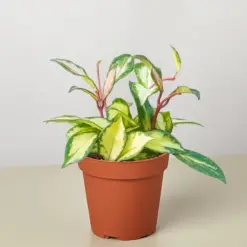
| H. carnosa ‘Krimson Queen’ | Krimson Queen | Variegated cream-and-pink edges; new growth pink-red | 🟢 Beginner |
| H. carnosa ‘Krimson Princess’ | Krimson Princess | Reverse variegation, with cream center and green edges | 🟢 Beginner |
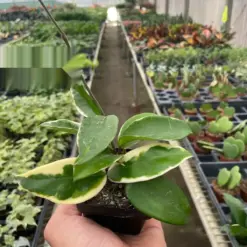
| H. kerrii | Sweetheart Hoya | Heart-shaped leaves; sold as single rooted leaves at Valentine’s | 🟢 Beginner |
| H. obovata | Round-Leaf Hoya | Large round green leaves, prolific bloomer | 🟢 Beginner |
| H. linearis | String Hoya | Cascading thread-like succulent stems | 🟡 Intermediate |
| H. publicalyx | Hoya Pubicalyx | Splashy silver speckled leaves; near-black flowers | 🟢 Beginner |
| H. macrophylla | Macrophylla | Large veined leaves with cream variegation | 🟡 Intermediate |
| H. callistophylla | Callistophylla | Long lance-shaped leaves with bold dark veining; collector favorite | 🟡 Intermediate |
Shop Our Hoya Collection
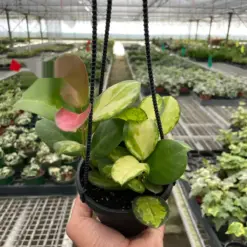
Every Hoya we ship is greenhouse-grown, climate-acclimated, and packed with care for transit. Sold-out species? Use the Notify Me button on any product page and we’ll email you the moment it’s restocked.

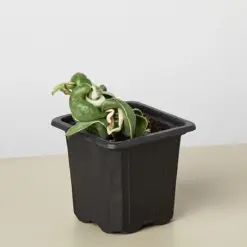
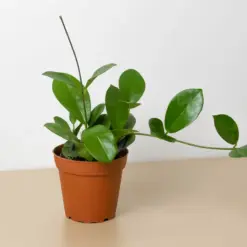
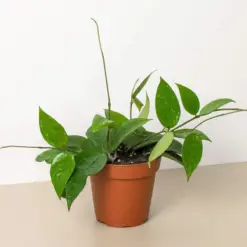
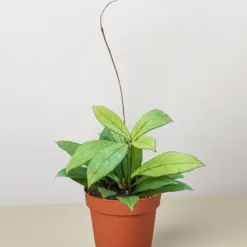
Hoya ‘Rope Plant’ Variegated
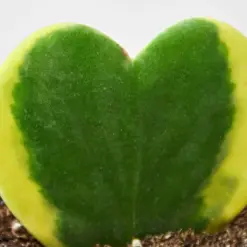
Price range: $25.99 through $130.99Hoya Plant ‘Sweetheart Variegated’
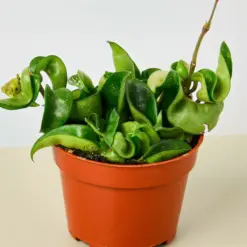
Price range: $23.99 through $215.99Hoya Rope Plant
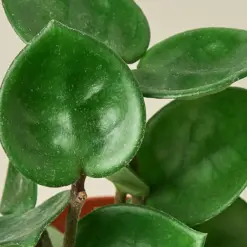
Price range: $22.99 through $109.99Hoya Carnosa ‘Chelsea’
Price range: $34.99 through $57.99Hoya Carnosa ‘Krimson Princess’
Price range: $30.99 through $56.99Hoya Carnosa ‘Tricolor’
Price range: $22.99 through $43.99Hoya Carnosa Plant
Price range: $34.99 through $43.99Hoya Chouke Plant
$57.99Hoya Plant ‘Australis’
Price range: $22.99 through $53.99Hoya Plant ‘Black Margin’
Price range: $40.99 through $42.99Hoya Plant ‘Crassipetiolata’
Price range: $46.99 through $53.99Hoya Plant ‘Lisa’
$70.99
Frequently Asked Questions
Are hoyas safe for cats and dogs?
Yes. Hoyas are non-toxic to cats and dogs, confirmed by the ASPCA. They’re one of the best pet-safe trailing plants you can grow.
Why won’t my hoya bloom?
Three usual culprits. The first is not enough light, since hoyas need bright indirect to dappled direct light to bloom. The second is being too young, because most hoyas need to mature 1–3 years before flowering. The third is when flower spurs were cut off, since hoyas bloom from the same dried-looking spurs year after year. Provide bright light, leave old spurs alone, give the plant a slightly cool dry winter, and patience does the rest.
What are the brown stick-things on my hoya?
Those are peduncles, which are flower spurs that produced blooms in the past and will produce flowers again. They look dead but they’re not. Never cut them off, because doing so destroys future blooms and forces the plant to start over.
Why are my hoya leaves wrinkled?
Severely underwatered. Hoya leaves are succulent-like and store water in their thick tissue, so when the plant is too dry for too long, leaves wrinkle and feel soft. Soak the entire pot in a tub of water for 30 minutes, drain thoroughly, and the leaves rehydrate within a day or two. (If wrinkling persists after watering, the issue is root rot from past overwatering, so check roots.)
Can I keep my hoya pot-bound?
Yes, and you should. Hoyas prefer slightly snug roots and bloom more reliably when pot-bound. Many growers leave hoyas in their original nursery pots for years. Repot only when the plant is clearly suffering or roots are pushing out drainage holes, and only go up 1–2 inches in pot diameter.
Why is my hoya dripping sticky stuff?
Hoya flowers produce nectar, which is a thick sweet sap that drips from the blooms. It’s normal and a sign of a healthy flowering plant. Wipe leaves below the flowers with a damp cloth, or place a tray under the blooms during flowering. The nectar can stain wood floors over time.
How long does it take for a hoya cutting to root?
2–6 weeks for visible roots, depending on species and conditions. Hoyas root slower than philodendrons or pothos, so be patient. Use a node-bearing cutting in water, damp sphagnum, or perlite, and keep in bright indirect light at 70°F+.
Related Care Guides
- Pothos Care Guide (easier-care trailing alternative)
- Peperomia Care Guide (another pet-safe semi-succulent)
- Pet-Safe Plants Guide
- Light Requirements
- Watering Guide
