
Plant Care
Indoor Palm Care Guide: Light, Water & The Forest Palms That Live Inside
Indoor palms come from the shaded forest floor, not the sunny beach. The houseplant trade focuses on a small group of understory palms that evolved in dappled shade beneath taller trees, which is why they tolerate (even prefer) indirect light and react badly to direct sun. Care varies by species: parlor palm is nearly indestructible, areca is forgiving but humidity-sensitive, kentia is the elegant slow-growing classic, ponytail palm isn’t actually a palm, and majesty palm is a lawsuit waiting to happen indoors. Here’s how to grow each.
Quick Care Card
☀️ Light
Bright indirect (no direct sun)
💧 Water
Top inch dry; never soggy
💨 Humidity
40–60% (areca wants higher)
🌡️ Temp
65–80°F
🪴 Soil
Well-draining, peat-rich palm/houseplant mix
🐾 Cat/Dog Safe
✅ Most species safe (verify your specific palm)
🎯 Difficulty
🟡 Intermediate
📏 Size
3–10+ ft (varies by species)
🌎 Zone
10–11 outdoors (most indoor palms)
🏞️ Origin
Tropical & subtropical forests worldwide
In this guide
About Indoor Palm
There are over 2,500 palm species worldwide, but only about a dozen do well indoors. The successful ones share a key trait: they’re understory palms, meaning species that evolved in the shaded layers below the canopy, not the open sun-baked specimens you see in landscaping. Trying to grow a Mexican fan palm (Washingtonia) indoors fails for the same reason trying to grow a Saharan cactus in a New York apartment fails, because the light and conditions are wrong.
The flagship indoor palms include parlor palm (Chamaedorea elegans), a small, tough, beginner-friendly choice; areca / butterfly palm (Dypsis lutescens), a clumping multi-stemmed feathery palm; kentia palm (Howea forsteriana), an elegant slow-growing classic used in hotel lobbies; cat palm (Chamaedorea cataractarum), a bushy multi-stemmed type; lady palm (Rhapis excelsa), with fan-shaped leaves and a very long life; and fishtail palm (Caryota), known for its distinctive jagged leaflets.
Two notable not-palms in this guide: ponytail palm (Beaucarnea recurvata) is actually in the asparagus family and behaves like a succulent; and sago palm (Cycas revoluta) is a cycad, not a true palm, and it’s highly toxic. Real palms are mostly safe; lookalikes vary wildly.
Care Guide
Light
Bright indirect light. Direct sun scorches indoor palms, especially parlor and kentia.
- Best: bright indirect light within 4–8 feet of an east, north, or filtered south/west window.
- Direct afternoon sun bleaches and crisps fronds, especially on parlor, kentia, and lady palm. A few hours of gentle morning sun is fine.
- Medium light is tolerated by parlor palm and lady palm; areca and kentia get sparse and stretched in low light.
- Ponytail palm is the exception, since it’s a desert plant masquerading as a palm and tolerates direct sun.
- Rotate the pot a quarter-turn weekly so the plant grows evenly; palms lean toward light strongly.
Water
Most indoor palms want consistent moisture but never soggy soil.
- Water when the top inch of soil is dry. Stick your finger in, and if it’s dry to the first knuckle, water thoroughly.
- Water until water runs from the drainage holes; empty the saucer after 10 minutes. Palms rot fast in standing water.
- Most plants need water every 7–10 days in summer, every 10–14 days in winter.
- Ponytail palm: opposite habit, so let the soil dry out completely between waterings and treat as a succulent.
- Critical: palms (especially parlor, kentia, areca) are sensitive to fluoride and chlorine in tap water, which is the primary cause of brown frond tips. Switch to filtered, distilled, or rainwater.
- Yellow fronds = overwatering or natural shedding of oldest fronds. Brown crispy tips = tap water sensitivity, low humidity, or salt buildup.
Humidity
Higher is better. Areca is the fussiest; parlor and lady palm are the most tolerant.
- Areca: 50–60% ideal, struggles below 40%. Most demanding of indoor palms.
- Parlor, kentia, lady palm: 40–50% is fine.
- Ponytail palm: doesn’t care about humidity.
- Below 30% (winter heating) all true palms develop crispy tips.
- Pebble trays help slightly. A small humidifier near the plant is the most effective fix.
- Skip aggressive misting, because water sitting on fronds in cool conditions encourages fungal spotting.
Temperature
Standard household temperatures. Hates cold drafts.
- Ideal: 65–80°F (18–27°C) for most indoor palms.
- Below 50°F damages fronds and slows growth dramatically.
- Below 40°F is lethal to most species.
- Avoid AC vents in summer and cold windows in winter, because sudden drops cause leaf drop and frond damage.
Soil
Light, well-draining, peat-rich mix. Palms hate soggy roots.
- Easy mix: 60% standard houseplant potting soil + 30% perlite + 10% orchid bark.
- Better: commercial palm/cactus mix that’s fast-draining and slightly gritty.
- Ponytail palm: use cactus/succulent mix, which is far drier than other palm mixes.
- Avoid: dense potting soil, peat-only mixes that compact, pots without drainage.
- Use a deeper pot for upright single-stem palms (kentia, areca); wider pots for bushy types (parlor, lady).
- Repot every 2–3 years, since palms prefer being slightly pot-bound and don’t like having their roots disturbed. Go up only 1–2 inches in diameter.
Pro tip: never cut the growing tip
Most indoor palms have a single growing point at the top of each stem (called the "crown shaft"). Cut that off (by accident, by aggressive pruning, or by damage) and the entire stem dies. There’s no recovery. Multi-stemmed clumping palms (areca, parlor, lady) lose only one stem if you damage one growing point, but single-trunk palms (kentia, majesty) die entirely. When pruning, only ever remove already-dead or damaged fronds at the base, and never trim healthy fronds to "shape" the plant.
Fertilizer
Light feeders. Easy to over-fertilize palms, since brown tips often blamed on water are actually salt buildup.
- Balanced liquid fertilizer at quarter strength every 6–8 weeks April–September.
- Or use a slow-release palm-specific fertilizer (with magnesium and manganese) once in spring per package directions.
- Skip fertilizing October–March entirely.
- Brown frond tips after fertilizing = salt buildup. Flush soil with plain water until it runs clear; skip feeding for 3–4 months.
- Yellow fronds with green veins (interveinal chlorosis) = magnesium or iron deficiency, which you can fix by supplementing with palm fertilizer or Epsom salts (1 tbsp per gallon).
Seasonal Care
🌱 Spring & Summer
- New fronds emerge from the crown every 6–10 weeks on healthy plants
- New fronds start as a vertical spear and unfurl over 2–4 weeks
- Water every 7–10 days when top inch is dry
- Fertilize every 6–8 weeks at quarter strength
- Best time to repot or take pups (clumping types only)
❄️ Fall & Winter
- Reduce watering to every 10–14 days
- Stop fertilizing entirely
- Move from cold drafts; below 50°F damages fronds
- Don’t repot until spring
- Slower growth (1 frond every 2–3 months is normal in winter)
Common Problems & Fixes
| Symptom | Likely Cause | Fix |
|---|---|---|
| Brown frond tips and edges | Tap water fluoride/chlorine, low humidity, or salt buildup | Switch to filtered water; raise humidity; flush soil with plain water |
| Yellowing fronds | Overwatering, salt buildup, or natural aging of oldest fronds | Reduce watering frequency; flush soil; oldest fronds shedding is normal |
| Yellow fronds with green veins | Magnesium or iron deficiency | Supplement with palm fertilizer or Epsom salts (1 tbsp per gallon water) |
| Crown / center turning black or mushy | Crown rot from water sitting in the crown (terminal for that stem) | Cut off rotted stem; remaining clump survives if multi-stemmed; single-trunk palm is lost |
| Spider mite webbing under fronds | Spider mites (low humidity) | Rinse under shower; raise humidity above 50%; insecticidal soap weekly until clear |
| White cottony spots in frond joints | Mealybugs | Wipe with isopropyl alcohol; insecticidal soap weekly until clear |
| Sticky residue on fronds, surrounding floor | Scale insects | Scrape off with fingernail; insecticidal soap or systemic neem; persistent treatment needed |
| Plant pushing out of pot | Pot-bound (palms tolerate this for years but eventually need repotting) | Repot in spring with fresh palm mix; only go up 1–2 inches in diameter |
| Frond bleached or scorched | Direct sun damage | Move from direct sun; affected fronds don’t recover |
If you cut the growing tip off a single-stem palm, the stem dies. Period. Only ever prune already-dead fronds at the base, and never trim healthy fronds to "shape" a palm.
Propagation
Division (clumping palms: parlor, areca, lady, cat)
In spring, unpot a mature clumping palm with multiple stems.
Gently brush soil from the roots to identify natural divisions, since clumping palms grow from a central rhizome and produce new stems from the base.
Identify clusters of stems with their own root sections.
Use a sterilized sharp knife to cut between clusters, ensuring each division has at least 3–5 stems and a healthy section of root.
Pot each division in fresh well-draining palm mix. Water lightly.
Place in bright indirect light, away from drafts, for 2–4 weeks while establishing.
Resume normal care, with the division established within 6–8 weeks. New fronds may pause briefly during transplant shock.
Pups / offsets (ponytail palm only)
- Wait until pups (small offsets) form at the base of an established ponytail palm, usually once they’re 3+ inches tall.
- Unpot or expose the base, identify where the pup attaches to the parent.
- Cut the pup off with a sterilized sharp knife, including any roots it has formed.
- Let the cut surface callus over for 24–48 hours.
- Pot the pup in dry cactus mix; don’t water for the first week.
- Resume light watering after a week. Roots establish over 2–3 months.
Seed (slow, multi-year project)
- Some palms (parlor, kentia) produce seeds occasionally on mature plants.
- Soak fresh seeds in warm water 24–48 hours.
- Plant 1/2 inch deep in damp seedling mix; cover with plastic for humidity.
- Place in warm spot (75–85°F); germination takes 2–6 months.
- Tiny palms grow extremely slowly, so expect 2–5 years for a sellable-size plant.
- Most growers buy palms instead of seed-starting; division is the practical home method.
Featured Indoor Palm Species
| Species | Common Name | Notable Trait | Difficulty |
|---|---|---|---|
| Chamaedorea elegans | Parlor Palm | Small, beginner-friendly, tolerates lower light; the easiest indoor palm | 🟢 Beginner |
| Dypsis lutescens | Areca / Butterfly Palm | Clumping multi-stemmed feathery palm; humidity-loving | 🟡 Intermediate |
| Howea forsteriana | Kentia Palm | Elegant slow-growing classic; the hotel-lobby palm; long-lived | 🟡 Intermediate |
| Rhapis excelsa | Lady Palm | Fan-shaped leaves; very long-lived and tolerant | 🟢 Beginner |
| Chamaedorea cataractarum | Cat Palm | Bushy multi-stemmed; tolerates wet soil better than most palms | 🟢 Beginner |
| Caryota mitis | Fishtail Palm | Distinctive jagged fishtail-shaped leaflets; needs bright light | 🟡 Intermediate |
| Beaucarnea recurvata | Ponytail Palm | Not a true palm; a succulent in disguise that tolerates direct sun and drought | 🟢 Beginner |
| Ravenea rivularis | Majesty Palm | Common at big-box stores but notoriously hard indoors, needing bright light + high humidity + constant moisture | 🔴 Advanced |
Shop Our Indoor Palm Collection
Every Indoor Palm we ship is greenhouse-grown, climate-acclimated, and packed with care for transit. Sold-out species? Use the Notify Me button on any product page and we’ll email you the moment it’s restocked.

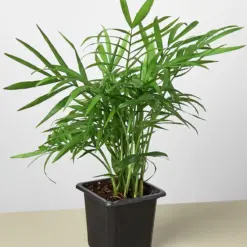
Parlor Palm – Palm Parlor
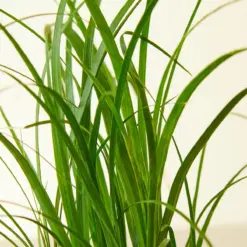
Price range: $22.99 through $152.99Palm Ponytail
Price range: $22.99 through $158.99
Frequently Asked Questions
Are indoor palms safe for cats and dogs?
Most true palms (parlor, areca, kentia, lady, cat, fishtail, ponytail) are non-toxic to cats and dogs per ASPCA listings. Critical exception: sago palm (Cycas revoluta) is NOT a true palm; it’s a cycad, and it’s severely toxic, potentially fatal if ingested by pets. Always verify the botanical name of your specific plant. (For more confirmed pet-safe houseplants, see Spider plant, Calathea, and Peperomia.)
Why does my palm have brown tips on every frond?
Two top causes: (1) tap water fluoride/chlorine, since palms are sensitive (switch to filtered, distilled, or rainwater); (2) low humidity, especially in winter heating (raise to 40%+ with a humidifier). Salt buildup from over-fertilizing is the third cause; flush the soil with plain water periodically. Existing brown tips can be trimmed with scissors at an angle to mimic the natural taper, and new fronds emerge clean once you fix the cause.
Why is my majesty palm dying?
Majesty palms (Ravenea rivularis) are one of the worst houseplants for the price. They’re sold cheap at big-box stores but need bright light, 60%+ humidity, and constantly moist soil to survive indoors. Most homes can’t provide all three. If yours is struggling, accept that this species is genuinely hard and consider replacing it with a parlor or kentia palm, which offers the same general look with far easier care.
Can I cut the brown leaflets off my palm?
Yes, but never cut the growing tip (the central spear at the top of the stem) and never trim a still-green frond. Use sharp scissors to trim brown crispy leaflet tips at an angle, mimicking the natural leaf taper. Remove fully brown fronds by cutting them at the base where they attach to the stem. Healthy fronds should stay even if they look slightly imperfect, since they’re still photosynthesizing.
How fast do indoor palms grow?
Slowly. Most indoor palms produce 4–8 new fronds per year on healthy plants, with each frond taking 4–8 weeks to fully unfurl. Kentia palms grow especially slowly, and under a foot per year is typical. Areca and parlor are the fastest of the indoor palms. Ponytail palm grows about an inch of caudex (trunk) per year. Patience required, because palms are decade-long pets, not quick decoration.
Why are the lower fronds on my palm yellowing and dying?
Usually normal. Palms continuously shed their oldest lower fronds as they grow new ones from the top, which is how they reach for light over time. Slow gradual yellowing of the lowest fronds is part of the plant’s life cycle. Not normal: if multiple fronds yellow rapidly, suspect overwatering (check soil moisture), salt buildup (flush with plain water), or magnesium deficiency (yellow with green veins, which you supplement with Epsom salts).
How often should I water my palm?
Most true palms need water every 7–10 days in summer and every 10–14 days in winter, when the top inch of soil is dry. Use filtered or distilled water if your tap water is heavily treated. Ponytail palm is the exception, so water it like a succulent (soil completely dry between waterings, every 14–21 days). Always empty the saucer; palms rot fast in standing water.
Related Care Guides
