
Plant Care
Fern Care Guide: Light, Water, Humidity & The Family That Lives On Moisture
Ferns are the oldest group of plants you’ll grow indoors, since they were around 360 million years before flowering plants existed. The houseplant trade focuses on a handful of tropical and temperate forest ferns, all of which share one core need: humidity. Boston ferns, maidenhair ferns, bird’s nest ferns, staghorn ferns, and rabbit’s foot ferns all hate dry indoor air and tell you about it by going crispy at the edges within days. Master humidity and consistent moisture and ferns become some of the most rewarding houseplants you’ll grow.
Quick Care Card
☀️ Light
Medium to bright indirect (no direct sun)
💧 Water
Keep evenly moist; never bone dry
💨 Humidity
60%+ (higher = better)
🌡️ Temp
60–75°F
🪴 Soil
Light, peat-rich, moisture-retentive mix
🐾 Cat/Dog Safe
✅ Most species safe (verify your specific fern)
🎯 Difficulty
🟡 Intermediate (humidity-sensitive)
📏 Size
12–48 inches (varies)
🌎 Zone
9–11 outdoors (most tropical ferns)
🏞️ Origin
Tropical & temperate forests worldwide
In this guide
About Fern
Ferns are an ancient lineage of vascular plants that reproduce via spores rather than seeds. The houseplant trade focuses on a small subset of forest-floor and epiphytic ferns from tropical and subtropical regions, all of which evolved in the dappled humid shade of a forest understory. That habitat is almost the opposite of a heated indoor home in winter, which is why ferns get a (deserved) reputation for being fussy.
The most popular indoor ferns: Boston fern (Nephrolepis exaltata), the classic frilly fountain fern; maidenhair (Adiantum), with delicate fan-shaped fronds and the most humidity-demanding of the bunch; bird’s nest (Asplenium nidus), with wide flat strap leaves in a rosette and the toughest indoor fern; staghorn (Platycerium), antler-shaped epiphytic mounted on wood; rabbit’s foot (Davallia), with fuzzy creeping rhizomes that climb out of the pot; and kimberly queen (Nephrolepis obliterata), Boston’s tougher cousin.
What unites them: humidity. Without 50%+ ambient humidity, most indoor ferns develop crispy brown fronds and look terrible. With proper humidity and steady moisture, they’re long-lived and one of the most lush textures you can grow indoors.
Care Guide
Light
Medium to bright indirect, never direct sun. Ferns are forest-floor plants.
- Best: medium to bright indirect light within 4–8 feet of an east or north window, or behind sheer curtains on a south/west window.
- Direct sun for more than an hour scorches and crisps fronds, especially maidenhair and Boston types.
- Low light is tolerated by bird’s nest and rabbit’s foot. Maidenhair and Boston fade and shed in low light.
- Bathrooms with a window are great for ferns because they’re bright, humid, and rarely too hot.
- Under grow lights works well, since most ferns thrive 12–18 inches below a standard plant grow light at 12 hours/day.
Water
Keep evenly moist, never bone dry and never soggy. Ferns are unforgiving when the soil dries out.
- Water when the top half-inch of soil starts to dry. Don’t let the entire rootball dry out, since most ferns drop fronds permanently if they go fully dry, especially maidenhair.
- Water thoroughly until it runs from the drainage holes; empty the saucer after 10 minutes.
- Most plants need water every 3–5 days in summer, every 5–7 days in winter.
- Maidenhair fern is the most extreme, since even one missed watering can kill it. Keep evenly moist always.
- Use room-temperature water. Tap water is generally fine; switch to filtered if you see leaf spotting.
- Yellow fronds = overwatering or stress. Crispy brown fronds = underwatered or low humidity (often both).
Humidity
Humidity is the single biggest factor in fern success indoors. 60%+ ideal; 40% absolute minimum for most.
- Ideal: 60–80% humidity. A small humidifier nearby is the easiest fix.
- Tolerable: 50–60%, where most ferns survive but look less lush.
- Below 40%: rapid frond browning, especially in winter heating season.
- Pebble trays help slightly but don’t replace a humidifier.
- Group ferns together, since they create their own humid microclimate.
- Bathrooms with a window are perfect. Kitchens are second-best.
- Misting helps temporarily but doesn’t replace true ambient humidity.
Temperature
Cool to warm household temperatures.
- Ideal: 60–75°F (15–24°C). Most ferns prefer slightly cooler than tropical foliage plants.
- Below 50°F damages fronds and slows growth.
- Above 80°F dries the air and stresses the plant, so avoid hot windows in summer.
- Avoid AC vents in summer and heating vents in winter because drafts cause rapid frond drop and crispy edges.
Soil
Light, moisture-retentive mix high in organic matter.
- Easy mix: 50% standard houseplant potting soil + 30% peat moss or coco coir + 20% perlite.
- Better: 40% peat-based mix + 30% coco coir + 20% perlite + 10% orchid bark, which mimics forest-floor substrate.
- Bird’s nest fern: use orchid mix or chunky aroid mix because they’re epiphytic and rot in dense soil.
- Staghorn fern: mounted on wood with sphagnum moss, not in pots at all.
- Avoid: dense potting soil, anything cactus-mix-based, pots without drainage holes.
- Use a wide pot for spreading types like Boston; deeper pots for upright types like Kimberly Queen.
Pro tip: bottom-water and pebble-tray combo
The two best techniques for fern survival in average homes: (1) bottom-watering, where you set the pot in a saucer of water for 20–30 minutes weekly so the soil draws water up and stays evenly moist; (2) pebble tray underneath, where a wide tray of pebbles with water below the pot creates localized humidity. Combined, these two tricks keep fronds lush in homes that would normally be too dry. A small humidifier is even better, but the pebble tray plus bottom-watering combo is a budget-friendly second.
Fertilizer
Light feeders. Easy to over-fertilize.
- Balanced liquid fertilizer at quarter to half strength every 4–6 weeks April–September.
- Skip fertilizing October–March entirely.
- Brown frond tips after fertilizing = salt buildup. Flush soil with plain water until it runs clear; skip feeding for 2 months.
- Many growers don’t fertilize ferns at all and replace soil yearly, which works fine.
Seasonal Care
🌱 Spring & Summer
- New fronds ("fiddleheads") emerge from the crown every 1–3 weeks on healthy plants
- Watch for spore patches (sori) on the undersides of mature fronds; these are normal, not pests
- Water every 3–5 days; keep evenly moist
- Fertilize every 4–6 weeks at quarter strength
- Best time to repot, divide, or take spore cuttings
❄️ Fall & Winter
- Reduce watering to every 5–7 days
- Stop fertilizing entirely
- Move from cold drafts; below 50°F damages fronds
- Don’t repot until spring
- Some shedding of older fronds is normal, so trim brown ones at the base
Common Problems & Fixes
| Symptom | Likely Cause | Fix |
|---|---|---|
| Crispy brown frond tips and edges | Low humidity (most common) or dry soil | Raise humidity to 50%+; check soil moisture; trim crispy edges |
| Yellowing fronds | Overwatering or natural shedding of oldest fronds | Reduce watering frequency; oldest fronds shedding is normal |
| Whole fern collapsing / fronds dying back | Severe underwatering (soil bone dry) | Soak the entire pot in water for 30 minutes; if the rhizome is still alive, new fronds emerge in 2–4 weeks |
| Fronds yellowing then dropping in winter | Cold draft or low humidity from heating | Move from drafts; raise humidity; this is the main reason ferns die in winter |
| Brown spore patches on frond undersides | Sori (fern reproductive structures, not pests) | Leave alone, since they’re completely normal and harmless |
| Tiny webs and stippled leaves | Spider mites (low humidity) | Rinse under shower; raise humidity; insecticidal soap weekly until clear |
| White cottony spots in frond joints | Mealybugs | Wipe with isopropyl alcohol; insecticidal soap weekly until clear |
| Bleached patches on fronds | Direct sun scorch | Move from direct sun; affected areas don’t recover |
| Maidenhair fern dropped all leaves overnight | Single missed watering or sudden temperature change, common with maidenhair | Cut back to soil line, water thoroughly, raise humidity, hope for new growth (50/50 chance) |
Ferns will tell you exactly when you’ve failed: brown crispy fronds within 48 hours of dry air or dry soil. The fix is always the same, which is humidity and consistent moisture.
Propagation
Division (easiest, most reliable)
In spring, unpot a mature fern when the rhizome has clearly filled the pot.
Gently brush soil from the rhizome to see the structure, since most ferns grow from creeping or clumping rhizomes.
Identify natural breaks where the rhizome can be separated.
Cut between sections with a sterilized sharp knife. Each division should have at least 4–5 fronds and a healthy section of rhizome with roots.
Pot each division in a small pot of fresh moist mix. Water lightly.
Place in bright indirect light, in a humid spot or covered loosely with a clear bag for 1–2 weeks while establishing.
Resume normal care, and the plant will be established within 2–4 weeks.
Spore propagation (slowest, satisfying for the patient)
- Wait for mature fronds to develop dark brown spore patches (sori) on the underside.
- Cut a fertile frond and place it on a sheet of paper, sori-side down. Leave 24 hours; spores fall onto the paper as fine brown dust.
- Sprinkle spores onto the surface of damp sterile peat-perlite mix in a covered container.
- Place in bright indirect light. Mist the surface daily; never let dry out.
- A green moss-like layer (the prothallus stage, also called the gametophyte) appears in 4–8 weeks.
- Tiny ferns emerge from the prothallus stage in another 8–16 weeks.
- Once tiny ferns have 3–4 fronds, transplant carefully into individual pots. The whole process takes 6–12 months, which is slow but rewarding.
Plantlets / runners (Boston fern, etc.)
- Boston fern produces stoloniferous runners, which are small plantlets at the end of furry creeping stems.
- Pin a runner to the soil of a small pot next to the parent (with a hairpin or wire).
- Water normally until the plantlet roots into the new pot, usually 3–4 weeks.
- Cut the runner connecting parent and plantlet once well-rooted.
- Resume normal care for the new plant.
Featured Fern Species
| Species | Common Name | Notable Trait | Difficulty |
|---|---|---|---|
| Nephrolepis exaltata ‘Bostoniensis’ | Boston Fern | The classic, with frilly arching fronds; tolerates lower humidity than most | 🟡 Intermediate |
| Adiantum raddianum | Maidenhair Fern | Delicate fan-shaped fronds on black wiry stems; demands constant humidity | 🔴 Advanced |
| Asplenium nidus | Bird’s Nest Fern | Wide flat strap fronds in a rosette; toughest of indoor ferns | 🟢 Beginner |
| Platycerium bifurcatum | Staghorn Fern | Antler-shaped epiphytic; mounted on wood with sphagnum moss | 🟡 Intermediate |
| Davallia fejeensis | Rabbit’s Foot Fern | Fuzzy creeping rhizomes climb out of the pot; lacy fronds | 🟡 Intermediate |
| Nephrolepis obliterata | Kimberly Queen Fern | Upright Boston-like form; tougher and more drought-tolerant | 🟢 Beginner |
| Pteris cretica | Cretan Brake Fern | Variegated narrow strap fronds; tolerates lower light | 🟡 Intermediate |
| Cyrtomium falcatum | Holly Fern | Glossy holly-shaped leaflets; tougher than most ferns | 🟢 Beginner |
Shop Our Fern Collection
Every Fern we ship is greenhouse-grown, climate-acclimated, and packed with care for transit. Sold-out species? Use the Notify Me button on any product page and we’ll email you the moment it’s restocked.

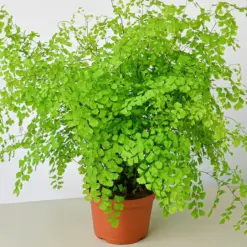
Fern ‘Maidenhair’ Plant
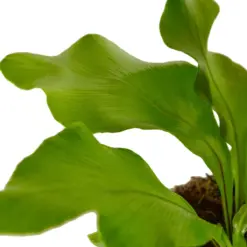
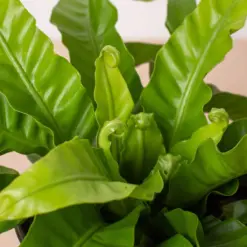
Price range: $22.99 through $42.99Fern Bird’s Nest ‘Nidus’ Plant
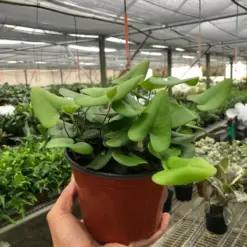
Price range: $22.99 through $41.99Fern ‘Heart’ Plant
Price range: $22.99 through $44.99Fern ‘Jester’s Crown’ Plant
Price range: $22.99 through $80.99Fern ‘Kangaroo Paw’ Plant
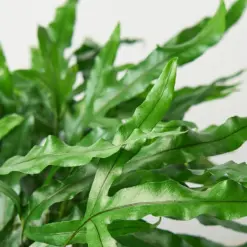
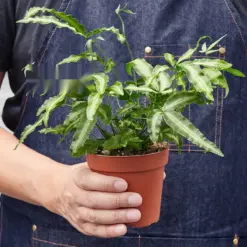
Price range: $22.99 through $39.99Fern ‘Albo’ (Pteris Cretica)
Price range: $22.99 through $46.99Fern ‘Austral Gem’ Plant
Price range: $23.99 through $43.99Fern ‘Autumn’ Plant
Price range: $23.99 through $39.99Fern ‘Bird’s Nest Hurricane’ Plant
Price range: $23.99 through $59.99Fern ‘Blue Star’ Plant
Price range: $22.99 through $43.99Fern ‘Crocodile’ Plant
Price range: $26.99 through $50.99Fern ‘Green Flame’ Plant
$22.99
Frequently Asked Questions
Are ferns safe for cats and dogs?
Most true ferns (Boston, maidenhair, bird’s nest, staghorn, rabbit’s foot, holly) are non-toxic to cats and dogs per ASPCA listings. Important exception: "asparagus fern" (Asparagus densiflorus) is NOT a true fern (it’s in the lily family) and IS toxic to pets. Always verify the botanical name of your specific fern before assuming it’s safe. (For more confirmed pet-safe houseplants, see Calathea, Peperomia, and Spider plant.)
Why does my fern have brown crispy edges?
Almost always low humidity, which is the single biggest cause of fern problems indoors. Dry indoor air (especially in winter heating) crisps fronds within days. Fix: raise humidity to 50%+ with a humidifier, pebble tray, or by moving the fern to a bathroom. Underwatering is the second cause, so keep soil evenly moist and never bone dry. Existing crispy edges don’t recover; trim them and focus on new growth.
Why did my maidenhair fern die overnight?
Maidenhair is the most demanding indoor fern, since it can drop all its fronds in 24 hours from a single missed watering, a sudden temperature change, or low humidity. The good news: the rhizome usually survives. Cut all dead fronds back to the soil line, water thoroughly, place in 60%+ humidity, and wait 2–4 weeks for new fiddleheads to emerge. Maidenhair fern recovers from total frond loss as long as the rhizome is alive.
What are the brown dots on the underside of my fern’s fronds?
Spore patches (sori) are fern reproductive structures, completely normal and harmless. They look like rows of brown or black dots arranged geometrically on the underside of mature fronds. Don’t mistake them for pests or scale insects (which would be irregular and easy to scrape off). Sori are part of healthy fern biology; you can collect spores from them to propagate.
Can ferns live in low light?
Bird’s nest fern and rabbit’s foot fern tolerate medium to lower light. Boston fern, maidenhair, and Kimberly Queen want medium to bright indirect, since they shed fronds in low light. Staghorn fern needs the brightest light of the indoor ferns since it’s mounted and gets only what it can intercept. None of them want direct sun. Match the species to your light conditions.
Why is my Boston fern dropping leaves everywhere?
Boston fern sheds fronds from low humidity, dry soil, drafts, or any sudden environmental change. The endless cleanup is part of owning a Boston fern, since they shed lower leaflets continuously. To minimize: keep humidity above 50%, water consistently (never let it dry out), avoid AC/heating drafts, and don’t move it around frequently. A weekly shake outside or in a tub catches most loose leaflets at once.
How often should I water my fern?
Every 3–5 days in summer and every 5–7 days in winter, but always check the soil first. Water when the top half-inch starts to dry. Most ferns are unforgiving when soil dries out completely (especially maidenhair). Use room-temperature filtered or rainwater if you can; tap water is fine for most species. Bottom-watering (placing pot in a saucer of water for 20–30 minutes) works particularly well for ferns.
Related Care Guides
- Calathea Care Guide (another humidity-loving statement plant)
- Maranta Care Guide
- Orchid Care Guide
- Humidity Guide for Houseplants
