
Plant Care
Peperomia Care Guide: Light, Water & The Easy Pet-Safe Family
Peperomia is the houseplant family that quietly produces over 1,500 species, and almost every one of them is forgiving, pet-safe, and easy to grow. The catch: people treat them like generic tropicals when they’re actually semi-succulent. They store water in thick fleshy leaves, hate soggy soil, and need bright indirect light to keep their famously varied colors and patterns. Get those two right and Peperomia is one of the lowest-effort plants you’ll own.
Quick Care Card
☀️ Light
Bright indirect (no direct sun)
💧 Water
Top half of soil dry, then water
💨 Humidity
40–60% (average home)
🌡️ Temp
65–75°F
🪴 Soil
Well-draining, semi-succulent mix
🐾 Cat/Dog Safe
✅ Safe for cats & dogs
🎯 Difficulty
🟢 Beginner
📏 Size
6–18 inches (varies by species)
🌎 Zone
10–12 outdoors
🏞️ Origin
Central & South America
In this guide
About Peperomia
Peperomia is one of the largest genera in the pepper family (Piperaceae), with over 1,500 documented species, most growing as epiphytes or on rotting wood in the understory of Central and South American rainforests. That epiphytic habit explains the care: short, shallow root systems and thick succulent leaves designed to store water between rainfalls. They don’t want a deep pot, they don’t want soggy soil, and they don’t want to be drowned in love.
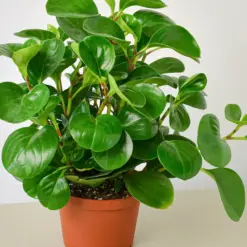
The houseplant trade has settled on roughly 30–40 species and cultivars. The most common are P. obtusifolia (Baby Rubber Plant), P. argyreia (Watermelon Peperomia), P. polybotrya (Raindrop Peperomia), P. caperata (Ripple Peperomia), P. rotundifolia (Trailing Jade), and P. tetraphylla ‘Hope’ (a popular semi-trailing hybrid). Leaf shapes range from round and silver-striped to teardrop and quilted to tiny string-of-buttons types.
What makes Peperomia stand out for anyone with pets: every species in the houseplant trade is non-toxic per ASPCA. Combined with their tolerance for missed waterings and average humidity, they’re one of the most forgiving plant families you can buy.
Care Guide
Light
Bright indirect light is the sweet spot. Direct sun bleaches leaves; low light kills variegation.
- Best: bright indirect light within 3–5 feet of an east or north window, or behind a sheer curtain on a south/west window.
- Direct sun for more than an hour or two scorches the thick leaves and fades patterns (especially watermelon and ripple types).
- Medium light is tolerated. Growth slows and variegated cultivars lose their stripes/silver markings. Solid green types adapt better to lower light.
- Under-grow lights work great, since Peperomia is small and easy to fit under any light setup. Place 8–12 inches below a standard plant grow light.
- If your Peperomia stops producing new leaves and the existing ones get smaller, it needs more light.
Water
Treat them like semi-succulents. Wait for the top half of soil to dry before watering.
- Water when the top half of soil is dry, not just the surface. Press your finger 2 inches in; if dry, water.
- Water thoroughly until it runs from the drainage holes. Empty the saucer after 10 minutes.
- Most plants need water every 10–14 days in summer, every 14–21 days in winter.
- Wrinkled, soft leaves = thirsty (recoverable). Yellow, mushy leaves with a stem rotting at the base = overwatered (often terminal).
- Use room-temperature water. Tap water is fine for most species; if leaves spot or yellow, switch to filtered.
- When in doubt, wait another 3–4 days. Peperomia tolerates dry roots far better than wet roots.
Humidity
Average household humidity is fine. Don’t fuss.
- 40–60% humidity (typical home year-round) is plenty.
- Below 30% (winter heating) you may see crispy edges on thin-leaved species like watermelon. A small humidifier or pebble tray helps.
- Skip misting. Water sitting in the rosettes of ripple and caperata types causes crown rot.
- Bathrooms and kitchens (slightly higher humidity) are great spots for Peperomia.
Temperature
Standard household temperatures.
- Ideal: 65–75°F (18–24°C). Tolerates 55–80°F without complaint.
- Below 50°F damages leaves; below 40°F is fatal to most species.
- Avoid cold drafts and heating/AC vents, because sudden temperature swings cause leaf drop.
- If multiple leaves drop at once with no other symptoms, suspect a draft.
Soil
Light, fast-draining mix. Treat them more like succulents than tropicals.
- Easy mix: 50% standard houseplant potting soil + 50% perlite or pumice.
- Better: 40% potting soil + 30% perlite + 30% orchid bark, which mimics their epiphytic natural habitat.
- Avoid: dense peat-heavy mixes, anything that stays wet for more than a few days, and pots without drainage holes.
- Use a shallow pot. Peperomia has a small, shallow root system and rots in oversized deep pots that hold too much water.
- Repot every 2–3 years, since Peperomia doesn’t mind being slightly pot-bound. Go up only 1 inch in diameter.
Pro tip: match the soil to the leaf
The thicker and more succulent the leaves, the more drainage Peperomia needs. Thick-leaved varieties (obtusifolia, watermelon, raindrop) want a 50/50 soil/perlite mix and longer dry-downs between waterings. Thinner-leaved varieties (caperata, hope, prostrata) prefer the 70/30 mix and slightly more frequent watering. Look at the leaves before you water.
Fertilizer
Light feeders. Peperomia doesn’t need much fertilizer to thrive.
- Balanced liquid fertilizer at quarter to half strength every 4–6 weeks April–September.
- Skip fertilizing October–March entirely.
- Fresh soil at repotting provides enough nutrients for most of the year, and many growers skip fertilizer altogether.
- Yellowing leaves with brown tips after fertilizing = salt buildup. Flush soil with plain water; skip feeding for 2–3 months.
Seasonal Care
🌱 Spring & Summer
- New leaves emerge every 3–6 weeks on healthy plants
- Flower spikes (long thin tails) may appear; they’re purely cosmetic and can be removed
- Water every 10–14 days when top half of soil is dry
- Optional fertilizing every 4–6 weeks at quarter strength
- Best time to repot, divide, or take cuttings
❄️ Fall & Winter
- Reduce watering to every 14–21 days
- Stop fertilizing entirely
- Move from cold windows; Peperomia drops leaves below 55°F
- Don’t repot until spring
- Slower growth (1 new leaf per month is normal)
Common Problems & Fixes
| Symptom | Likely Cause | Fix |
|---|---|---|
| Wrinkled, soft leaves | Underwatered (semi-succulent leaves losing stored water) | Water thoroughly; leaves rehydrate within 1–3 days |
| Yellow leaves at the base, mushy stem | Overwatering / stem rot | Cut watering immediately; check stem for soft spots; if rot has reached the stem, cut healthy top and root as cutting |
| Brown crispy leaf edges | Low humidity or fertilizer salt buildup | Raise humidity to 40%+; flush soil with plain water if recently fertilized |
| Loss of variegation / silver markings | Insufficient light | Move to brighter indirect light; cut back any solid-green reverted leaves |
| Bleached or pale spots on leaves | Direct sun scorch | Move from direct sun; affected leaves don’t recover but new growth is normal |
| Long thin spikes growing from the plant | Flower spikes (normal cosmetic feature) | Leave for novelty or cut off if you don’t like the look (doesn’t harm the plant either way) |
| Leaves dropping suddenly | Cold draft, sudden temperature change, or recent move | Stabilize location; check for AC/heat vent nearby; usually self-corrects within 2 weeks |
| Tiny webs under leaves | Spider mites (rare on Peperomia, more common in dry winter air) | Rinse under shower; insecticidal soap weekly until clear |
| Sticky residue on leaves | Mealybugs or scale | Wipe with isopropyl alcohol; insecticidal soap weekly until clear |
Peperomia is the houseplant version of a low-maintenance roommate: thrives on neglect, doesn’t ask for much, and never causes drama. Stop worrying.
Propagation
Stem cuttings (easiest, most species)
Cut a 3–5 inch stem with at least 2–3 leaves and one node (where leaves meet the stem).
Strip the bottom 1–2 leaves so the lower node is bare.
Place stem in a glass of water with the bare node submerged. Leaves stay above water.
Change water every 3–5 days. Place in bright indirect light.
Roots emerge from the node in 3–5 weeks.
Once roots are 1 inch long, pot up in a small pot of well-draining soil. Keep moist for the first 2 weeks.
Leaf cuttings (works for many species, especially watermelon, raindrop, obtusifolia)
- Cut a healthy leaf with a small piece of stem (1/2 inch petiole attached).
- Insert the petiole into damp perlite or a 50/50 soil/perlite mix at a 45-degree angle, leaf flat above the surface.
- Cover loosely with a clear bag or cover for humidity. Bright indirect light.
- Keep medium lightly moist (not wet). Tiny new plantlets emerge from the base of the leaf in 4–8 weeks.
- Once new leaves have 2–3 of their own, pot up. The original leaf often dies back, which is normal.
- Note: caperata (ripple) and similar rosette types don’t propagate well from leaf cuttings, so use division instead.
Division (rosette types: caperata, ripple, hope)
- Wait until the plant has multiple distinct crowns at the soil line.
- Unpot and gently brush soil from the roots.
- Tease the crowns apart by hand or cut between them with a sterilized knife, ensuring each division has its own roots.
- Pot each division in a small pot of well-draining mix.
- Resume normal care; water lightly for the first week.
Featured Peperomia Species
| Species | Common Name | Notable Trait | Difficulty |
|---|---|---|---|
| P. obtusifolia | Baby Rubber Plant | Thick glossy oval leaves; the most common; often variegated | 🟢 Beginner |
| P. argyreia | Watermelon Peperomia | Silver-and-green striped teardrop leaves resembling watermelon rind | 🟢 Beginner |
| P. polybotrya | Raindrop Peperomia | Heart-shaped glossy green leaves on tall stems | 🟢 Beginner |
| P. caperata | Ripple Peperomia | Deeply quilted/wrinkled leaves; comes in green, red, silver | 🟢 Beginner |
| P. tetraphylla ‘Hope’ | Hope Peperomia | Small round leaves in whorls; trailing habit | 🟢 Beginner |
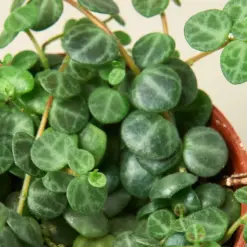
| P. prostrata | String of Turtles | Tiny patterned round leaves on long trailing strands | 🟡 Intermediate |
| P. rotundifolia | Trailing Jade | Tiny round green coin-leaves on trailing stems | 🟢 Beginner |
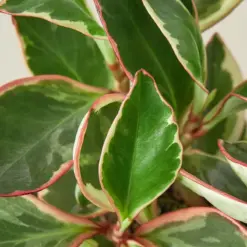
| P. clusiifolia ‘Rainbow’ | Rainbow Peperomia | Cream-and-pink variegated thick leaves | 🟢 Beginner |
| P. graveolens | Ruby Glow | Boat-shaped succulent leaves with deep red undersides | 🟡 Intermediate |
Shop Our Peperomia Collection
Every Peperomia we ship is greenhouse-grown, climate-acclimated, and packed with care for transit. Sold-out species? Use the Notify Me button on any product page and we’ll email you the moment it’s restocked.

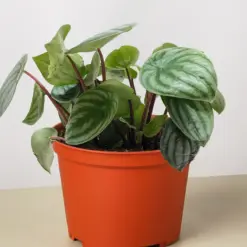
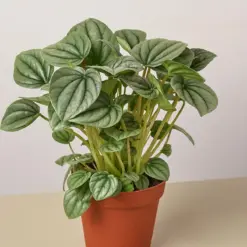
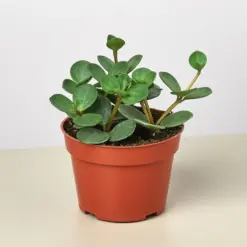
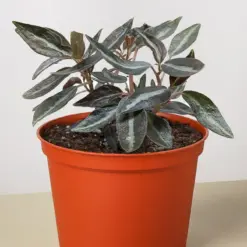
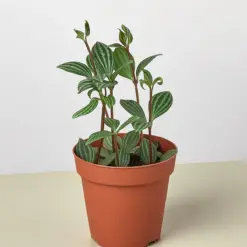
Peperomia Plant ‘Watermelon’
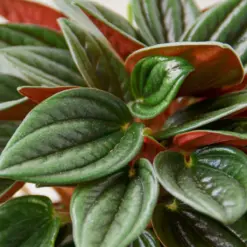
Price range: $22.99 through $82.99Peperomia Plant ‘Rosso’
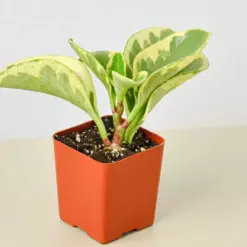
Price range: $22.99 through $39.99Peperomia Plant ‘Marble’
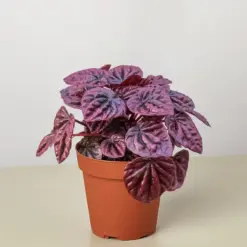
Price range: $22.99 through $39.99Peperomia Plant ‘Ripple Red’
Price range: $22.99 through $39.99Peperomia Plant ‘Thailand’
Price range: $22.99 through $39.99Peperomia Prostrata ‘String of Turtles’
Price range: $14.99 through $59.99Peperomia Plant ‘Ginny’
Price range: $22.99 through $44.99Peperomia Plant ‘Green Bean’
Price range: $22.99 through $52.99Peperomia ‘Frost
Price range: $26.99 through $46.99Peperomia Plant ‘Hope’
Price range: $22.99 through $106.99Peperomia Plant ‘Metallica’
Price range: $27.99 through $43.99Peperomia Plant ‘Parallel’
Price range: $22.99 through $43.99
Frequently Asked Questions
Are Peperomias safe for cats and dogs?
Yes. Every Peperomia species in the houseplant trade is non-toxic to cats and dogs per ASPCA listings. They’re one of the most pet-safe houseplant families you can buy. (See also Spider plant, Calathea, and Pilea for more pet-safe options.)
Why are my Peperomia leaves wrinkled and soft?
Almost always thirst. Peperomia leaves are semi-succulent and store water, so when the plant runs out of moisture, leaves go soft and wrinkly. Water thoroughly and the leaves rehydrate within 1–3 days. If watering doesn’t fix it, check for root rot, because soggy soil means the roots can’t take up water even though the soil is wet.
Why is my Peperomia stem rotting at the base?
Overwatering. Peperomia stores water in thick leaves and stems, so it rots fast in soggy soil. The good news: cut off the healthy top portion of the plant, let the cut callus over for 24 hours, and root it as a stem cutting in water or moist perlite. The mother plant is usually too far gone, but the cutting saves the genetics.
What are the long thin spikes growing out of my Peperomia?
Those are flower spikes, and they look like rat tails or skinny green pipe cleaners. They’re cosmetic and don’t harm the plant. Leave them for novelty or snip them off at the base; both options are fine. They’re a sign your plant is healthy enough to bloom.
Why is my watermelon Peperomia losing its silver stripes?
Insufficient light. Variegated and patterned Peperomia (watermelon, rainbow, frost) need bright indirect light to maintain their patterns. Move to a spot with more light, within 3–5 feet of a north or east window, and new leaves will emerge with their proper coloration. Existing faded leaves don’t recolor.
Can I propagate Peperomia from a single leaf?
Yes. Most thick-leaved species (watermelon, raindrop, obtusifolia) propagate from leaf cuttings. Cut a leaf with a half-inch piece of stem (petiole) attached, insert at a 45-degree angle into moist perlite, cover loosely for humidity, and wait 4–8 weeks for tiny plantlets to emerge from the base. Rosette types (caperata, ripple) don’t work from leaf cuttings, so use division instead.
How often should I water my Peperomia?
Every 10–14 days in summer and every 14–21 days in winter, but always check the soil first. Wait until the top half of soil is dry (push your finger 2 inches in) before watering. Peperomia stores water in its thick leaves and tolerates dry roots far better than wet roots. When in doubt, wait another few days.
Related Care Guides
- Pilea Care Guide (Pilea peperomioides literally means ‘looks like Peperomia’ and has the same easy care)
- Calathea Care Guide
- Hoya Care Guide
- Propagation Guide
