
Plant Care
Apoballis Care Guide: Light, Water & The Rare Aroid Cousin of Schismatoglottis
Apoballis is the genus most plant collectors haven’t heard of. Formerly classified as Schismatoglottis, the genus was split in 2008 — Apoballis now contains about 16 species of Southeast Asian aroids with patterned heart-shaped leaves. The houseplant trade mostly sells A. acuminatissima (formerly Schismatoglottis prietoi) — a small humidity-loving terrarium aroid with silver-and-green patterning. Care is similar to other patterned aroids: bright indirect light, evenly moist soil, high humidity, warm temps.
Quick Care Card
☀️ Light
Medium to bright indirect (no direct sun)
💧 Water
Keep evenly moist; never dry out
💨 Humidity
60%+ (terrarium-friendly)
🌡️ Temp
65–80°F
🪴 Soil
Chunky aroid mix
🐾 Cat/Dog Safe
❌ Toxic to cats & dogs
🎯 Difficulty
🟡 Intermediate
📏 Size
6–18 inches tall
🌎 Zone
11–12 outdoors
🏞️ Origin
Southeast Asian rainforests
In this guide
About Apoballis
Apoballis is a small genus of about 16 species of terrestrial aroids native to Southeast Asia — primarily Malaysia, Indonesia, Thailand, and the Philippines. They grow on the forest floor in deeply shaded humid conditions, often near streams or in seepage areas. The genus was separated from Schismatoglottis in 2008 based on flower structure and DNA evidence.
The most common houseplant species is Apoballis acuminatissima (sold under various trade names including "Schismatoglottis prietoi" — the old name is still common in the trade). It’s a small clumping aroid with heart-shaped or arrow-shaped leaves featuring silver-grey patterns on dark green. Other Apoballis species occasionally enter the houseplant trade through rare-plant specialty growers.
Apoballis is in the same family (Araceae) as Monstera, Philodendron, Anthurium, Calathea — but it’s a much more obscure and collector-focused genus. Most growers encounter it through specialty nurseries or rare-plant trades. Care is straightforward for someone who already grows Calathea or other humidity-loving aroids.
Care Guide
Light
Medium to bright indirect light. Direct sun bleaches the silver patterns.
- Best: medium to bright indirect light — within 3–6 feet of an east or north window, or behind sheer curtains on a south/west window.
- Direct sun bleaches the dramatic silver patterns within days.
- Low light is tolerated but variegation fades and the plant grows more slowly.
- Under grow lights works great — full-spectrum LED at 12 inches above for 12 hours daily.
- Apoballis is a great terrarium plant if you have one — humidity and light from above work well.
Water
Keep evenly moist. Apoballis doesn’t tolerate drying out completely.
- Water when the top half-inch of soil is dry. Don’t let the rootball dry completely.
- Water thoroughly until water runs from drainage holes; empty saucer after 10 minutes.
- Most plants need water every 3–5 days in average homes; daily in dry winter conditions.
- Critical: Apoballis is sensitive to fluoride and chlorine in tap water. Use filtered, distilled, or rainwater for best leaf appearance.
- Yellow leaves with mushy stems = overwatering. Crispy curled leaves = severely underwatered or low humidity.
- Use room-temperature water.
Humidity
60%+ humidity strongly preferred. Apoballis is a terrarium plant at heart.
- Ideal: 60–80% humidity. Terrariums and humid bathrooms are perfect.
- Tolerable: 50%. Plant survives but may have crispy edges.
- Below 40% causes rapid leaf damage.
- Pebble trays and humidifiers help; closed terrariums work even better.
- Group with other humidity-loving aroids to create a humid microclimate.
Temperature
Stable warm temperatures.
- Ideal: 65–80°F (18–27°C).
- Below 55°F damages leaves and slows growth.
- Below 50°F is potentially fatal.
- Avoid AC vents in summer and cold windows in winter.
Soil
Chunky aroid mix.
- Best: commercial aroid mix — high in orchid bark, perlite, and charcoal for drainage and air.
- DIY aroid mix: 40% standard potting soil + 30% orchid bark + 20% perlite + 10% sphagnum moss or coco coir.
- Avoid: dense potting soil that compacts, peat-only mixes, pots without drainage.
- Use a wider shallow pot — Apoballis has shallow roots and a spreading habit.
- Repot every 1–2 years in spring.
Pro tip — keep Apoballis in a terrarium or humid bathroom
Apoballis is one of the easiest aroids to fail with in dry indoor air — but it’s one of the easiest to succeed with in the right conditions. A closed glass terrarium (1+ gallon size) creates the 70%+ humidity Apoballis naturally wants, and the sealed environment requires almost no maintenance. Alternatively, a bright bathroom with a window provides similar high humidity from shower steam. If you keep one outside a terrarium, accept that you’ll need a humidifier running near the plant year-round to keep it happy.
Fertilizer
Light feeders.
- Balanced liquid fertilizer at quarter strength every 4–6 weeks April–September.
- Skip fertilizing October–March entirely.
- Brown leaf edges after fertilizing = salt buildup. Flush soil with plain water; reduce fertilizer.
- Apoballis doesn’t need much fertilizer to thrive.
Seasonal Care
🌱 Spring & Summer
- New leaves emerge from the rhizome every 3–6 weeks on healthy plants
- Apoballis occasionally produces small spadix-and-spathe flowers (uncommon indoors)
- Water every 3–5 days when top 1/2 inch is dry
- Best time to repot or divide
❄️ Fall & Winter
- Reduce watering slightly
- Stop fertilizing entirely
- Move from cold drafts; below 55°F damages leaves
- Slower growth — 1 new leaf every 6–8 weeks is normal
Common Problems & Fixes
| Symptom | Likely Cause | Fix |
|---|---|---|
| Crispy brown leaf edges | Low humidity or tap water sensitivity | Raise humidity to 60%+; switch to filtered water |
| Yellow leaves | Overwatering or natural shedding | Reduce watering frequency |
| Loss of silver pattern | Insufficient light | Move to brighter indirect light |
| Drooping leaves | Underwatered, root rot, or cold draft | Check soil — water if dry; if soggy, let dry; eliminate drafts |
| Bleached patches on leaves | Direct sun scorch | Move from direct sun |
| Stems rotting at base | Severe overwatering | Cut healthy crowns for division; rotted base unrecoverable |
| White cottony spots in leaf joints | Mealybugs | Wipe with isopropyl alcohol; insecticidal soap weekly |
| Tiny webs on leaves | Spider mites (low humidity) | Rinse under shower; raise humidity |
| Plant slowly declining despite all care | Indoor environment too dry — Apoballis really wants high humidity | Move into a terrarium or set up a dedicated humidifier |
Apoballis is what Calathea wishes it could be — same easy aroid appearance, slightly fussier humidity needs, far more terrarium-friendly.
Propagation
Division (only practical method)
In spring, when the plant has multiple crowns or stems emerging from the rhizome, unpot the entire plant.
Gently brush soil from the rhizome to see the structure.
Identify natural divisions where individual crowns can be separated with their own roots.
Use a sterilized sharp knife to cut between crowns — each division should have at least 2–3 leaves and a healthy section of rhizome with roots.
Pot each division in fresh chunky aroid mix. Water lightly.
Place in high humidity (terrarium or under a clear bag) for 2–4 weeks while establishing.
Resume normal care.
Rhizome cuttings (when divisions aren’t possible)
- Cut a 2–3 inch piece of rhizome with at least one growing eye (a bud) and some roots.
- Let cut surfaces callus over for 24 hours.
- Pot in damp chunky aroid mix; cover with a clear bag for humidity.
- Place in bright indirect light at 70–80°F.
- New growth emerges from the buds in 4–8 weeks.
Featured Apoballis Species
| Species | Common Name | Notable Trait | Difficulty |
|---|---|---|---|
| Apoballis acuminatissima | Apoballis / Schismatoglottis prietoi (old name) | Heart-shaped silver-patterned leaves; the most common species in trade | 🟡 Intermediate |
| A. okadae | Okada’s Apoballis | Rarer species with elongated patterned leaves | 🟡 Intermediate |
| A. brevipes | Short-Stalked Apoballis | Compact form with smaller leaves | 🟡 Intermediate |
Shop Our Apoballis Collection
Every Apoballis we ship is greenhouse-grown, climate-acclimated, and packed with care for transit. Sold-out species? Use the Notify Me button on any product page — we’ll email you the moment it’s restocked.

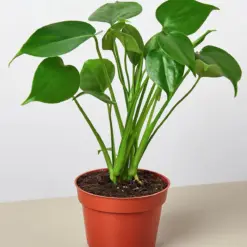
Monstera Deliciosa (Split-Leaf)
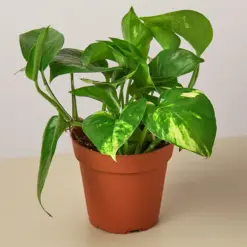
Price range: $10.99 through $177.99Pothos Plant ‘Golden’
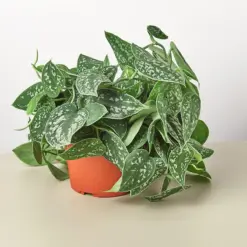
Price range: $22.99 through $89.99Pothos Plant ‘Satin’
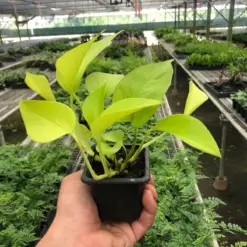
Price range: $22.99 through $73.99Pothos Plant ‘Neon’
Price range: $22.99 through $247.99Philodendron Plant ‘Velvet’
Price range: $22.99 through $81.99Philodendron Plant ‘Pink Princess’
Price range: $51.99 through $235.99Chinese Evergreen ‘Lady Valentine’
Price range: $28.99 through $41.99Philodendron Cordatum (Heartleaf)
Price range: $22.99 through $54.99Peace Lily (Spathiphyllum)
Price range: $22.99 through $54.99Philodendron Plant ‘Brasil’
Price range: $22.99 through $66.99Philodendron Plant ‘Birkin’
Price range: $22.99 through $44.99Syngonium Plant ‘Strawberry’
Price range: $23.99 through $47.99
Frequently Asked Questions
Are Apoballis plants safe for cats and dogs?
No — Apoballis is in the aroid family (Araceae) and contains insoluble calcium oxalate crystals like other aroids. Toxic to cats, dogs, and humans if ingested. Causes oral irritation, drooling, vomiting, and difficulty swallowing. Keep out of reach. (For pet-safe small foliage plants, see Calathea, Peperomia, and Fittonia.)
Is Apoballis the same as Schismatoglottis?
Not quite — Apoballis was split off from Schismatoglottis in 2008 as a separate genus based on DNA and flower structure. The most common houseplant species was previously called Schismatoglottis prietoi and is now Apoballis acuminatissima. The old name is still widely used in the nursery trade. They’re closely related but botanically distinct.
Why are my Apoballis leaves crispy?
Almost always low humidity. Apoballis really wants 60%+ humidity and crisps below 50%. Add a humidifier or move into a terrarium. Tap water sensitivity is the second cause; switch to filtered or distilled water. Apoballis is one of the more humidity-demanding aroids and struggles in typical dry indoor air.
Can I grow Apoballis in a terrarium?
Yes — Apoballis is one of the best aroids for terrarium culture. The high humidity inside a closed glass container provides ideal conditions. Pot in a 1-gallon+ glass jar with drainage layer (gravel + activated charcoal) and chunky aroid mix. Water once when setting up, close the lid, place in bright indirect light. The plant grows lushly for years with minimal intervention.
How do I propagate Apoballis?
Division is the only practical method. In spring, unpot a mature plant and separate the rhizome into sections, each with at least 2–3 leaves and roots. Pot each division separately in chunky aroid mix and place in high humidity (terrarium or under a clear bag) for 2–4 weeks while establishing. Apoballis doesn’t propagate from stem cuttings — it grows from a rhizome rather than vining stems.
Where do I find Apoballis plants?
Apoballis is a collector’s plant — rarely sold at big-box stores or even most local nurseries. Specialty rare-plant nurseries, online plant retailers focused on aroids, and plant collector communities (Etsy, Reddit’s r/houseplants, plant-specific Facebook groups) are the typical sources. Expect to pay more than common aroids; mature plants and rare species can be expensive.
Related Care Guides
