
Plant Care
Homalomena Care Guide: Light, Water & The Easygoing Heart-Leaved Aroid
Homalomena is the easy aroid no one talks about. Heart-shaped leaves on slender stems, glossy or matte, in colors from deep green to burgundy. Care is similar to Philodendron but slightly easier, since Homalomena handles slightly drier soil and moderate humidity better. The most popular cultivars are H. rubescens ‘Maggie’ and ‘Emerald Gem’ (compact green forms), and H. wallisii (Selby Homalomena, with speckled silvery patterns).
Quick Care Card
☀️ Light
Medium to bright indirect (no direct sun)
💧 Water
Top inch dry; consistent moisture
💨 Humidity
50%+ (60% ideal)
🌡️ Temp
65–80°F
🪴 Soil
Chunky aroid mix
🐾 Cat/Dog Safe
❌ Toxic to cats & dogs
🎯 Difficulty
🟢 Beginner
📏 Size
12–24 inches tall
🌎 Zone
10–12 outdoors
🏞️ Origin
Southeast Asia & tropical Americas
In this guide
About Homalomena
Homalomena is a genus of about 130 species of tropical aroids native to Southeast Asia and Central/South America. They grow on the forest floor in shaded humid conditions, with thick rhizomes producing clumps of heart-shaped or arrow-shaped leaves.
Houseplant favorites: H. rubescens ‘Maggie’ and ‘Emerald Gem’ (compact green forms with glossy heart-shaped leaves), H. wallisii ‘Selby’ (silvery-speckled patterns), H. wallisii ‘Camouflage’ (camo-pattern), H. ‘Pewter’ (silvery-grey leaves), H. rubescens ‘Maroon’ (red-tinged stems and leaves).
Homalomena is an underrated aroid for beginners who want easy care plus interesting foliage. Less dramatic than Calathea, easier than Anthurium, and more forgiving than most aroids. The plants stay compact (12–24 inches), produce moderate growth, and work well in mid-light indoor spaces.
Care Guide
Light
Medium to bright indirect light.
- Best: medium to bright indirect light.
- Direct sun bleaches the leaves.
- Tolerates lower light than most aroids.
- Variegated cultivars need brighter light for patterns.
Water
Top inch dry; consistent watering.
- Water when top inch of soil is dry.
- Most plants need water every 7–10 days in summer, every 10–14 days in winter.
- Use filtered water if you see tip browning.
- Yellow leaves with mushy stems = overwatering. Crispy edges = underwatered or low humidity.
Humidity
50%+ ideal.
- Ideal: 50–60%.
- Tolerable: 40%.
- Pebble trays or humidifier in dry rooms.
Temperature
Warm tropical temperatures.
- Ideal: 65–80°F.
- Below 55°F damages leaves.
- Avoid AC vents.
Soil
Chunky aroid mix.
- Easy mix: 50% potting soil + 30% perlite + 20% orchid bark.
- Use moderately deep pot.
- Repot every 1–2 years.
Pro tip: gives you Anthurium aesthetic with Philodendron care
If you love the look of Anthurium but find them too fussy, Homalomena is the answer. Same heart-shaped lush foliage, similar dramatic colors in some cultivars, but care is dramatically easier, with no central cup to manage, more forgiving watering, and better tolerance of household humidity. A perfect step-up plant for growers who can keep Philodendron alive and want something a little more refined.
Fertilizer
Light feeders.
- Balanced liquid fertilizer at half strength every 4 weeks April–September.
- Skip fertilizing October–March.
- Brown leaf tips = salt buildup. Flush soil.
Seasonal Care
🌱 Spring & Summer
- New leaves emerge from rhizome every 3–5 weeks
- Mature plants may produce small spadix-and-spathe flowers
- Water every 7–10 days
- Fertilize every 4 weeks
❄️ Fall & Winter
- Reduce watering
- Stop fertilizing
- Move from drafts
Common Problems & Fixes
| Symptom | Likely Cause | Fix |
|---|---|---|
| Yellow leaves | Overwatering or natural shedding | Reduce watering frequency |
| Crispy brown edges | Low humidity or tap water sensitivity | Raise humidity; switch to filtered water |
| Fading variegation | Insufficient light | Move to brighter indirect light |
| Drooping leaves | Underwatered or root rot | Check soil moisture |
| Bleached spots | Direct sun | Move from direct sun |
| Stems rotting at base | Overwatering | Cut healthy crowns for division |
| Mealybugs | Pest issue | Wipe with alcohol; insecticidal soap |
| Spider mites | Low humidity | Rinse; raise humidity |
| No new growth in months | Insufficient light or winter dormancy | Move to brighter spot |
Homalomena is the easy aroid no one talks about. Anthurium aesthetic with Philodendron care, so why isn’t this everywhere?
Propagation
Division (only practical method)
In spring, unpot mature plant with multiple crowns.
Gently separate rhizome into sections with roots and 2–3 leaves each.
Pot each division in fresh aroid mix.
Water lightly; place in bright indirect light.
Resume normal care.
Featured Homalomena Species
| Species | Common Name | Notable Trait | Difficulty |
|---|---|---|---|
| Homalomena rubescens ‘Maggie’ | Maggie Homalomena | Compact green form with red-tinged stems | 🟢 Beginner |
| H. rubescens ‘Emerald Gem’ | Emerald Gem | Glossy heart-shaped green leaves | 🟢 Beginner |
| H. wallisii ‘Selby’ | Selby Homalomena | Silvery-speckled patterns | 🟢 Beginner |
| H. wallisii ‘Camouflage’ | Camouflage Homalomena | Camo-pattern variegation | 🟢 Beginner |
| H. ‘Pewter’ | Pewter Homalomena | Silvery-grey leaves | 🟢 Beginner |
| H. rubescens ‘Maroon’ | Maroon Homalomena | Red-tinged stems and leaves | 🟢 Beginner |
Shop Our Homalomena Collection
Every Homalomena we ship is greenhouse-grown, climate-acclimated, and packed with care for transit. Sold-out species? Use the Notify Me button on any product page and we’ll email you the moment it’s restocked.

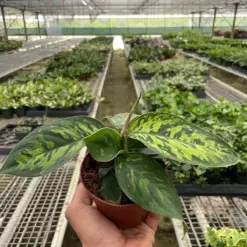
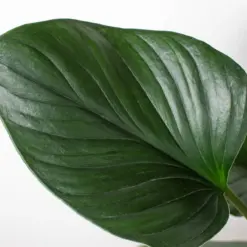
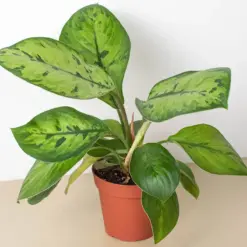
Homalomena Plant ‘Emerald Gem’
Price range: $30.99 through $54.99Homalomena Plant ‘Selby’
Price range: $34.99 through $59.99
Frequently Asked Questions
Are Homalomena plants safe for cats and dogs?
No. Homalomena (like all aroids) is toxic to cats and dogs. Contains calcium oxalate crystals causing oral irritation. Keep out of reach. (For pet-safe alternatives, see Spider plant, Calathea.)
What’s the difference between Homalomena and Philodendron?
Both are aroids with heart-shaped leaves. Homalomena grows from a clumping rhizome with leaves on slender stems (no vining). Philodendron includes both vining (heartleaf, brasil) and non-vining (selloum) species. Homalomena is more compact and clumping; many philodendrons trail or climb.
Why is my Homalomena turning yellow?
Two normal, two not. Normal: oldest leaves shedding. Not normal: overwatering (multiple leaves yellowing fast) or cold draft. Check soil moisture and stabilize location.
How do I propagate Homalomena?
Division is the only practical method. Unpot mature plant in spring, separate rhizome into sections each with roots and 2–3 leaves. Pot each section separately. Stem cuttings don’t work because Homalomena grows from rhizomes, not vines.
Can Homalomena tolerate low light?
Tolerates lower light better than most aroids. Survives in medium-low light, though variegated cultivars fade. Bright indirect light produces the best growth and patterns.
Related Care Guides
