
Plant Care
Indoor Herb Care Guide: Light, Water & Growing Basil, Mint, Rosemary Inside
Indoor herbs are the houseplants people start because they want to cook with them, and most fail within weeks because herbs need more light than houses provide. The truth: basil, rosemary, thyme, oregano, and most popular culinary herbs are sun-loving Mediterranean plants that want 6+ hours of direct sun daily. Indoors, that means a south-facing window or a grow light, and anything less means your herbs limp along then die. Done right, an indoor herb garden gives you fresh flavor year-round.
Quick Care Card
☀️ Light
Bright direct sun (6+ hours daily essential)
💧 Water
Depends on herb (varies significantly)
💨 Humidity
30–50% (lower is fine for most)
🌡️ Temp
60–80°F
🪴 Soil
Well-draining herb/vegetable mix
🐾 Cat/Dog Safe
Most safe, some toxic (verify specific herb)
🎯 Difficulty
🟡 Intermediate (light-dependent)
📏 Size
6–24 inches (varies)
🌎 Zone
Annual/perennial varies by herb
🏞️ Origin
Mostly Mediterranean & subtropical regions
In this guide
About Indoor Herb
The houseplant trade sells "indoor herb kits" promising fresh basil and mint year-round on your kitchen counter. Reality: most popular culinary herbs are sun-loving Mediterranean or subtropical plants that struggle in typical indoor conditions. Success requires matching the herb to your indoor light.
Sun-loving herbs (need direct sun): basil, rosemary, thyme, oregano, sage, lavender, marjoram. These genuinely need 6+ hours of direct light daily. South-facing window or grow light.
Tolerates lower light: mint, parsley, chives, chervil. Still want bright light but more forgiving in east windows.
Annuals indoors: basil, cilantro, and dill all eventually bolt and die. Replace every 2–3 months.
Perennials indoors: rosemary, thyme, oregano, sage, mint, and chives can live for years with proper care.
Care Guide
Light
Direct sun. As much as possible. This is the most important factor.
- Sun-lovers (basil, rosemary, etc.): 6+ hours direct sun from a south or west window.
- Tolerant herbs (parsley, mint): bright indirect to direct light from an east window.
- Insufficient light = leggy growth, weak flavor, eventual death.
- Grow lights are the most reliable indoor herb solution, with full-spectrum LED at 6 inches above for 12–16 hours daily.
- Outdoor summer break is excellent; gradually acclimate to outdoor sun.
Water
Varies dramatically by herb type.
- Mediterranean herbs (rosemary, thyme, oregano, sage, lavender): let dry between waterings. Drought-tolerant.
- Moisture-loving herbs (basil, parsley, mint, cilantro): keep evenly moist; don’t dry out.
- Water at soil level, not on leaves.
- All herbs hate soggy soil, so use well-draining mix and pots with drainage.
- Use room-temperature water.
Humidity
Most herbs prefer dry air.
- 30–50% humidity is fine for most herbs.
- Mediterranean herbs prefer drier conditions.
- High humidity encourages fungal issues; ensure good air circulation.
Temperature
Standard household temperatures.
- Ideal: 60–80°F.
- Most herbs tolerate 50–85°F.
- Basil hates below 50°F, since it’s the first to drop in cold.
- Mediterranean herbs (lavender, rosemary) tolerate cool winter (50–60°F).
Soil
Well-draining herb or vegetable mix.
- Easy mix: 60% potting soil + 30% perlite + 10% compost.
- Mediterranean herbs prefer slightly sandy mix.
- Always use pots with drainage holes.
- Replace soil annually for indoor perennial herbs.
Pro tip: pinch growing tips for better flavor and bushier plants
Most indoor herbs taste better and produce more leaves when regularly harvested. Pinch the top 2–3 leaves off each stem every 1–2 weeks. This forces the plant to branch from lower nodes (bushier plant) and concentrates aromatic oils in new growth (better flavor). Basil especially benefits, so pinch the top leaves before flower buds form, and never let basil flower (it triggers the plant to die back). Harvest is care for herbs.
Fertilizer
Light feeders. Don’t over-fertilize because it reduces flavor.
- Balanced liquid fertilizer at quarter to half strength every 4–6 weeks during growing season.
- Reduce fertilizer for Mediterranean herbs because they’re adapted to poor soils.
- Over-fertilizing produces lush leaves with weak flavor, the opposite of what you want.
Seasonal Care
🌱 Spring & Summer
- Active growth and harvesting through spring/summer
- Pinch growing tips weekly
- Water per herb type
- Replace basil and cilantro every 2–3 months (annuals)
❄️ Fall & Winter
- Growth slows in winter (less light)
- Reduce watering
- Stop fertilizing
- Some herbs (basil) may need replacement; perennials (rosemary) survive
Common Problems & Fixes
| Symptom | Likely Cause | Fix |
|---|---|---|
| Leggy growth, sparse leaves | Insufficient light | Move to brighter window or add grow light |
| Bolting (sudden flowering, tough leaves) | Annual herbs reaching maturity (basil and cilantro most common) | Pinch flower buds; eventually replace plant |
| Yellowing leaves | Overwatering or over-fertilizing | Reduce watering and fertilizer |
| Wilting plant | Underwatered (moisture-loving herbs) or root rot | Check soil moisture and drainage |
| Weak flavor | Over-fertilizing or insufficient light | Reduce fertilizer; provide more sun |
| Aphids on stems | Common pest | Spray with water; insecticidal soap |
| Powdery mildew on leaves | Poor air circulation, wet leaves | Improve airflow; water at soil only |
| Spider mites (dry indoor air) | Low humidity | Rinse plant; insecticidal soap |
| Slow growth in winter | Insufficient light during short days | Add grow light; reduce expectations until spring |
Indoor herbs fail for one reason: not enough sun. A south window or grow light is the entire secret. Without it, replace fresh basil every 6 weeks and accept it.
Propagation
Stem cuttings (most herbs)
Cut 4–6 inch stem; strip lower leaves.
Place in water or stick directly in moist soil.
Roots form in 2–4 weeks for most herbs.
Basil, mint, rosemary all root easily.
Pot up and resume normal care.
Seed (annuals especially)
- Sow seeds in seedling mix.
- Bright light, 65–75°F.
- Germination 1–3 weeks for most herbs.
- Transplant once true leaves appear.
Division (mint, chives)
- Unpot mature clumping herbs.
- Separate into sections with roots.
- Pot each separately.
Featured Indoor Herb Species
| Species | Common Name | Notable Trait | Difficulty |
|---|---|---|---|
| Ocimum basilicum | Basil | Annual; high light; warm conditions; pinch frequently | 🟡 Intermediate |
| Rosmarinus officinalis | Rosemary | Perennial; full sun; drought-tolerant | 🟡 Intermediate |
| Mentha spp. | Mint | Perennial; tolerates lower light; moisture-loving | 🟢 Beginner |
| Thymus vulgaris | Thyme | Perennial; full sun; drought-tolerant | 🟡 Intermediate |
| Origanum vulgare | Oregano | Perennial; full sun; Mediterranean | 🟡 Intermediate |
| Petroselinum crispum | Parsley | Biennial; tolerates lower light; moisture-loving | 🟢 Beginner |
| Salvia officinalis | Sage | Perennial; full sun; drought-tolerant | 🟡 Intermediate |
| Allium schoenoprasum | Chives | Perennial; bright light; cool-tolerant | 🟢 Beginner |
| Coriandrum sativum | Cilantro | Annual; bolts in heat; replace every 2 months | 🟡 Intermediate |
Shop Our Indoor Herb Collection
Every Indoor Herb we ship is greenhouse-grown, climate-acclimated, and packed with care for transit. Sold-out species? Use the Notify Me button on any product page and we’ll email you the moment it’s restocked.

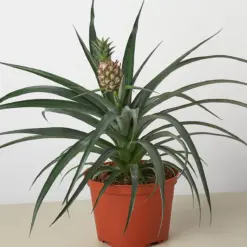
Bromeliad ‘Yellow Pineapple’ Plant
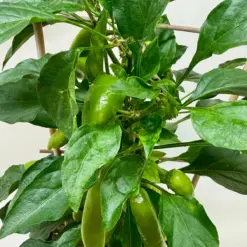
Price range: $46.99 through $66.99Edible Plant ‘Sweet Pepper’
$56.99
Frequently Asked Questions
Are common indoor herbs safe for cats and dogs?
Most popular culinary herbs are safe. Basil, rosemary, thyme, mint, parsley, sage, and oregano are non-toxic to cats and dogs per ASPCA listings. Exceptions: chives and other Allium species (chives, garlic, onion) are TOXIC to cats and dogs. Always verify the specific herb. Mint can cause mild GI upset in large quantities.
Why does my indoor basil keep dying?
Almost always insufficient light. Basil needs 6+ hours of direct sun daily, since typical kitchen window light is far too dim. Move to south-facing window with no obstructions or set up a grow light. Also: basil hates cold (below 50°F kills it), wet feet (use well-draining soil), and flowering (pinch buds immediately).
Can I grow basil and rosemary together in the same pot?
Not really, because they have opposite watering needs. Basil wants consistently moist soil. Rosemary wants to dry out between waterings. Combined, one always suffers. Grow them in separate pots or use a herb planter with individual cells.
Why is my mint taking over?
Mint is aggressive and spreads via runners. Indoors in a pot it stays contained; outdoors it’ll invade your garden. Keep indoor mint in its own pot. If you must grow outdoors, use a buried barrier or large container to prevent spreading. Don’t be alarmed indoors, since mint just naturally grows densely.
How do I keep my herbs from getting leggy?
Two things: (1) sufficient light, since most legginess is light-related; (2) regular pinching, where you harvest the top leaves of each stem every 1–2 weeks. This forces bushy growth from lower nodes. Don’t wait until you need the herb for cooking, since you should harvest preemptively to maintain the plant.
Should I let my basil flower?
No. Basil flowering signals the plant to die back. As soon as you see flower buds forming, pinch them off. Letting basil flower triggers a hormonal cascade that reduces leaf production and aromatic oils. Most basils naturally bolt and decline after 3–4 months of indoor life; pinching flowers extends productive life by weeks.
Do I need a grow light for indoor herbs?
If you don’t have a south-facing window with 6+ hours of direct sun, yes. Grow lights are the most reliable indoor herb solution. A basic full-spectrum LED at 6 inches above the plants for 12–16 hours daily produces excellent results. Cost is $30–80 and pays for itself in herb harvests within months.
Related Care Guides
- Olive Care Guide (another Mediterranean sun-lover)
- Coffee Plant Care Guide
- Coleus Care Guide
- Propagation Guide
