
Plant Care
Ctenanthe Care Guide: Light, Water & The Calathea Cousin (Never Stops Growing)
Ctenanthe (pronounced "ten-ANTH-ee") is the underrated prayer plant cousin. Same Marantaceae family as Calathea, Maranta, and Stromanthe; same leaf-folding behavior; similar patterned foliage. But Ctenanthe is faster-growing, tougher with humidity, and more vigorous. The flagship species (C. burle-marxii, the Never Never Plant, and C. lubbersiana, the Bamburanta) bring dramatic silvery, striped, or fishbone-patterned leaves to indoor spaces.
Quick Care Card
☀️ Light
Medium to bright indirect (no direct sun)
💧 Water
Keep evenly moist; never dry out
💨 Humidity
50%+ (60% ideal)
🌡️ Temp
65–80°F
🪴 Soil
Rich, well-draining, peat-based mix
🐾 Cat/Dog Safe
✅ Safe for cats & dogs
🎯 Difficulty
🟡 Intermediate
📏 Size
1–3 ft tall, spreading
🌎 Zone
10–11 outdoors
🏞️ Origin
Brazilian rainforest
In this guide
About Ctenanthe
Ctenanthe is a genus of about 15 species in the Marantaceae family, the same family as Calathea, Maranta, and Stromanthe. All members share the famous "prayer plant" leaf-folding behavior: leaves spread flat in daylight and fold upward at night. Most species are native to Brazilian and Costa Rican rainforests.
Houseplant favorites: C. burle-marxii (Never Never Plant, with pale grey-green leaves with dark green fishbone patterns), C. lubbersiana (Bamburanta, yellow-and-green variegated), C. oppenheimiana ‘Tricolor’ (Stromanthe-like pink-purple-green), C. setosa (Grey Star, with silver-grey leaves).
What makes Ctenanthe a better choice than Calathea for some growers: it tolerates 40–50% humidity reasonably well (Calathea wants 60%+), grows faster, and is less dramatic about tap water sensitivity. Same beautiful patterned foliage, less fussiness. The catch: it spreads vigorously and may outgrow its pot quickly.
Care Guide
Light
Medium to bright indirect. No direct sun.
- Best: medium to bright indirect light.
- Direct sun bleaches patterns within days.
- Tolerates lower light better than Calathea.
- Low light leads to faded patterns and slow growth.
Water
Keep evenly moist. Don’t let dry out completely.
- Water when the top half-inch is dry.
- Use filtered or rainwater, since Ctenanthe is less fluoride-sensitive than Calathea but still benefits.
- Water every 4–6 days in summer, every 6–8 days in winter.
- Yellow leaves with mushy stems = overwatering. Crispy brown edges = underwatered or tap water sensitivity.
Humidity
50%+ ideal. Tolerates lower than Calathea.
- Ideal: 50–60%.
- Tolerable: 40%.
- Pebble trays or humidifier in dry rooms.
Temperature
Warm tropical temperatures.
- Ideal: 65–80°F.
- Below 55°F damages leaves.
- Avoid drafts.
Soil
Rich, well-draining, peat-based.
- Easy mix: 60% potting soil + 30% perlite + 10% peat moss.
- Avoid dense soil and copper-containing mixes.
- Repot annually in spring because Ctenanthe grows fast.
Pro tip: switch your fussy Calathea for a Ctenanthe
If you’ve struggled with Calathea (crispy edges, dropped leaves, constant complaints), Ctenanthe is the upgrade. Same prayer-plant fold, similar dramatic patterns, but tolerates household humidity better and is less dramatic about tap water. You get the Calathea aesthetic without the Calathea drama. The most common houseplant species, C. burle-marxii (Never Never Plant), is a particular favorite for this reason.
Fertilizer
Light feeders.
- Balanced liquid fertilizer at half strength every 4 weeks April–September.
- Skip fertilizing October–March.
- Brown leaf tips after fertilizing = salt buildup. Flush soil.
Seasonal Care
🌱 Spring & Summer
- New leaves emerge every 2–4 weeks on healthy plants
- Aggressive spreader that may need division
- Water every 4–6 days
- Fertilize every 4 weeks at half strength
- Best time to repot or divide
❄️ Fall & Winter
- Reduce watering slightly
- Stop fertilizing
- Don’t repot until spring
Common Problems & Fixes
| Symptom | Likely Cause | Fix |
|---|---|---|
| Crispy brown edges | Low humidity or tap water sensitivity | Switch to filtered water; raise humidity |
| Yellow leaves | Overwatering or natural shedding | Reduce watering |
| Fading patterns | Insufficient light | Move to brighter indirect light |
| Leaves curling inward | Underwatered or low humidity | Water; raise humidity |
| Bleached patches | Direct sun scorch | Move from direct sun |
| Spider mites | Low humidity | Rinse; humidifier; insecticidal soap |
| Stems rotting at base | Overwatering | Cut healthy crowns for division |
| Massive sprawling growth | Vigorous spreader | Divide annually; use wider pot |
| Leaves staying folded all day | Cold draft or stress | Stabilize location |
Ctenanthe is Calathea without the drama. Same patterned beauty, same prayer-plant fold, far less fussiness.
Propagation
Division (easiest)
In spring, unpot mature plant.
Separate rhizome into sections with 3+ leaves each.
Pot each division in fresh well-draining mix.
Water lightly; place in bright indirect light.
Resume normal care.
Featured Ctenanthe Species
| Species | Common Name | Notable Trait | Difficulty |
|---|---|---|---|
| Ctenanthe burle-marxii | Never Never Plant | Pale grey-green with dark fishbone patterns; named after Brazilian landscape architect | 🟡 Intermediate |
| C. lubbersiana | Bamburanta | Yellow-and-green variegated leaves | 🟡 Intermediate |
| C. oppenheimiana ‘Tricolor’ | Tricolor Ctenanthe | Pink-purple-green; similar to Stromanthe | 🟡 Intermediate |
| C. setosa ‘Grey Star’ | Grey Star | Silver-grey leaves with dark veining | 🟡 Intermediate |
| C. amabilis | Friendly Ctenanthe | Compact form with silver markings | 🟡 Intermediate |
Shop Our Ctenanthe Collection
Every Ctenanthe we ship is greenhouse-grown, climate-acclimated, and packed with care for transit. Sold-out species? Use the Notify Me button on any product page and we’ll email you the moment it’s restocked.

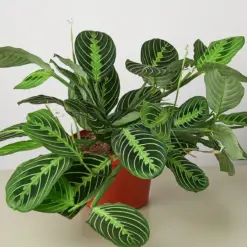
Maranta Plant ‘Lemon Lime’
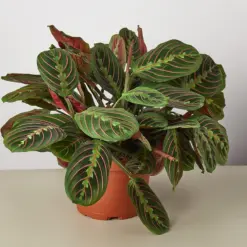
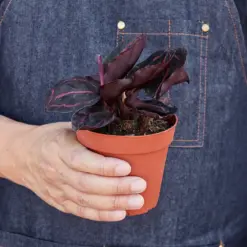
Price range: $24.99 through $39.99Maranta Plant ‘Red Prayer’
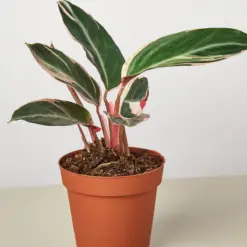
Price range: $22.99 through $60.99Stromanthe Plant ‘Triostar’
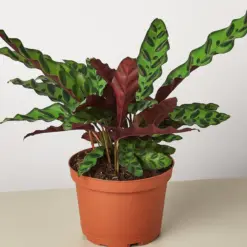
Price range: $25.99 through $54.99Calathea Lancifolia ‘Rattlesnake’ – Rattlesnake
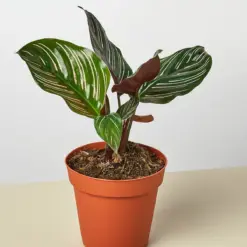
Price range: $19.99 through $41.99Calathea Plant ‘Ornata’
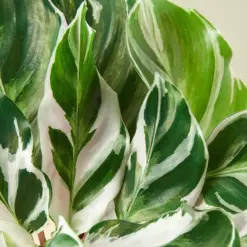
Price range: $29.99 through $41.99Calathea Plant ‘White Fusion’
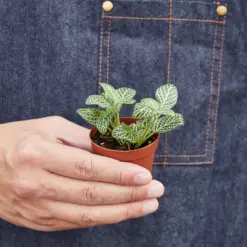
Price range: $27.99 through $59.99Fittonia Plant ‘White’
Price range: $22.99 through $88.99Calathea Plant ‘Dottie’
Price range: $33.99 through $39.99Calathea Concinna ‘Freddie’
Price range: $34.99 through $46.99Calathea Plant ‘Beauty Star’
Price range: $34.99 through $46.99Calathea Plant ‘Green Goddess’
Price range: $33.99 through $53.99Calathea Plant ‘Makoyana’
Price range: $22.99 through $50.99
Frequently Asked Questions
Are Ctenanthe plants safe for cats and dogs?
Yes. Ctenanthe (like other Marantaceae family members such as Calathea, Maranta, and Stromanthe) is non-toxic to cats and dogs per ASPCA listings. Great pet-safe pick. (See also Calathea and Maranta.)
What’s the difference between Ctenanthe and Calathea?
Both are prayer plants in the same family. Ctenanthe is faster-growing, more vigorous, and more tolerant of average humidity (40–50%). Calathea is fussier and wants 60%+ humidity, is more dramatic about tap water sensitivity, and is often labeled as a "diva." If you’ve struggled with Calathea, try Ctenanthe for easier care and a similar look.
Why is my Ctenanthe getting crispy edges?
Two usual causes: (1) low humidity, which you fix by raising to 50%+; (2) tap water sensitivity, which you fix by switching to filtered or distilled. Ctenanthe is less sensitive than Calathea but still benefits from filtered water.
How do I propagate Ctenanthe?
Division is the easiest method. In spring, unpot a mature plant and separate the rhizome into sections (each with 3+ leaves and roots). Pot each section in fresh mix. Resume normal care. Stem cuttings don’t work well because Ctenanthe grows from rhizomes.
Why is my Ctenanthe spreading out of its pot?
Ctenanthe is a vigorous spreader. Divide annually to control size, or repot into a larger wider pot. This is a feature, not a problem, since one plant can become several within a year through division. If you want to limit spread, keep in a moderate-sized pot.
Related Care Guides
