
Plant Care
Cryptanthus (Earth Star) Care Guide: Light, Water & The Small Bromeliad That Grows in Soil
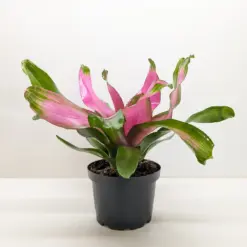
Cryptanthus (also known as Earth Stars) are the bromeliads that broke the rule. Unlike Tillandsia (air plants) and most tropical bromeliads (epiphytes), Cryptanthus grows on the ground in soil. The flat star-shaped rosette form, dramatic colors (pink, red, silver, copper), and small size make them perfect for terrariums, dish gardens, and small containers. They’re easier than most bromeliads because they have no central cup to refill, are more forgiving with watering, and tolerate household humidity better.
Quick Care Card
☀️ Light
Bright indirect (medium tolerated)
💧 Water
Top inch dry; never soggy
💨 Humidity
50%+ (60% ideal)
🌡️ Temp
65–80°F
🪴 Soil
Well-draining, slightly acidic mix
🐾 Cat/Dog Safe
✅ Safe for cats & dogs
🎯 Difficulty
🟢 Beginner
📏 Size
4–12 inches across
🌎 Zone
10–11 outdoors
🏞️ Origin
Brazilian rainforest floor
In this guide
About Cryptanthus (Earth Star)
Cryptanthus is a genus of about 80 species of terrestrial bromeliads native to Brazil, specifically the Atlantic Forest along the eastern coast. Unlike most bromeliads (which grow on trees as epiphytes), Cryptanthus grows on the forest floor in shaded humid conditions. The Greek name translates to "hidden flower," referring to the small white flowers buried in the center of the rosette.
Popular varieties: C. bivittatus (Earth Star, with green and pink stripes), C. ‘Pink Starlite’ (intense pink coloration), C. ‘Black Mystic’ (deep purple-black), C. ‘Frosty’ (silver-frosted), C. ‘Elaine’ (red-centered), C. fosterianus (zebra-striped). All share the flat star-shaped rosette form and similar care.
What makes Cryptanthus distinctive: it’s the only major bromeliad genus grown like a typical houseplant, with soil, regular watering, and no central cup to manage. This makes it accessible for beginners who find air plants or rosette bromeliads intimidating. Like other bromeliads, Cryptanthus is monocarpic (it blooms once then slowly dies), but it produces pups (offsets) that continue the cycle.
Care Guide
Light
Bright indirect light. Direct sun bleaches the colors.
- Best: bright indirect light from an east or north window.
- Direct sun bleaches the dramatic pink and red colors.
- Medium light is tolerated; colors fade slightly.
- Low light leads to muted colors and slow growth.
- Under grow lights works well for collections.
Water
Top inch dry between waterings. Cryptanthus likes consistent but moderate watering.
- Water when the top inch of soil is dry.
- Water at the soil, not in the center (unlike epiphytic bromeliads, Cryptanthus has no functional cup).
- Water thoroughly; empty saucer after 10 minutes.
- Most plants need water every 5–7 days in summer, every 7–10 days in winter.
- Use filtered or rainwater if possible, since Cryptanthus is mildly sensitive to tap water minerals.
- Yellow leaves with mushy base = overwatering. Crispy curling leaves = severely underwatered.
Humidity
Higher is better. 50%+ ideal.
- Ideal: 50–70% humidity.
- Terrariums are great Cryptanthus habitats because they thrive in 60–80% humidity.
- Tolerable: 40–50%.
- Below 30% causes crispy edges.
Temperature
Warm tropical temperatures.
- Ideal: 65–80°F.
- Below 55°F damages leaves.
- Below 50°F is fatal.
- Avoid AC and heating vents.
Soil
Well-draining, slightly acidic.
- Easy mix: 50% potting soil + 30% perlite + 20% orchid bark or peat.
- Alternative: commercial bromeliad mix.
- Avoid: dense potting soil, alkaline mixes, pots without drainage.
- Use a shallow wide pot because Cryptanthus has shallow roots.
Pro tip: terrarium-friendly bromeliad
Cryptanthus is one of the best bromeliads for indoor terrariums and dish gardens. The flat star-shaped rosette fits gracefully in small containers, the colors stay vivid in bright indirect light, and the soil-growing habit means you don’t need to manage a central water cup. Pair with mosses, small ferns, and Fittonia for a tropical terrarium that thrives with minimal maintenance.
Fertilizer
Light feeders.
- Diluted balanced fertilizer at quarter strength every 6–8 weeks April–September.
- Skip fertilizing October–March.
- Never use copper-containing fertilizer because it’s toxic to bromeliads.
- Brown leaf tips after fertilizing = salt buildup. Flush soil.
Seasonal Care
🌱 Spring & Summer
- New leaves emerge from the center every 4–6 weeks on healthy plants
- Mature plants produce small white flowers in the center (often hidden)
- After blooming, pups emerge from the base, so separate them when they reach 1/3–1/2 mother size
- Water every 5–7 days when top inch is dry
❄️ Fall & Winter
- Reduce watering to every 7–10 days
- Stop fertilizing
- Move from cold drafts
- Slower growth, with minimal new leaves being normal
Common Problems & Fixes
| Symptom | Likely Cause | Fix |
|---|---|---|
| Mother plant slowly browning after bloom | Normal (Cryptanthus is monocarpic) | Continue caring; pups emerge from base; eventually remove mother |
| Color fading | Insufficient light | Move to brighter indirect light |
| Crispy brown leaf edges | Low humidity, dry soil, or tap water sensitivity | Raise humidity; check soil; switch to filtered water |
| Yellow leaves with mushy base | Overwatering | Reduce watering; check for crown rot |
| Bleached patches | Direct sun scorch | Move from direct sun |
| Mealybugs in leaf folds | Common bromeliad pest | Wipe with isopropyl alcohol; insecticidal soap weekly |
| Tiny webs | Spider mites (low humidity) | Rinse; raise humidity |
| Plant won’t bloom | Plant too young (under 1–2 years) or insufficient light | Wait for maturity; provide bright indirect light |
| No pups after bloom | Insufficient light or stress | Maintain consistent bright indirect light |
Cryptanthus is the easy bromeliad, with no central cup to manage and no air plant ritual, just regular care in soil. The colorful starter pick before you commit to fussier bromeliads.
Propagation
Pup separation (only practical method)
After mother blooms, pups emerge at base over 6–12 months.
Wait until pups are 1/3 to 1/2 the size of the mother.
Cut pup away with sterilized knife, ensuring it has roots.
Pot in fresh well-draining mix.
Water lightly; place in bright indirect light.
Pup grows for 1–2 years before producing its own bloom.
Featured Cryptanthus (Earth Star) Species
| Species | Common Name | Notable Trait | Difficulty |
|---|---|---|---|
| Cryptanthus bivittatus | Earth Star | Green-and-pink striped leaves; the most common | 🟢 Beginner |
| C. ‘Pink Starlite’ | Pink Starlite | Intense pink coloration; vibrant in bright light | 🟢 Beginner |
| C. ‘Black Mystic’ | Black Mystic | Deep purple-black leaves; dramatic contrast | 🟢 Beginner |
| C. ‘Frosty’ | Frosty Earth Star | Silver-frosted appearance | 🟢 Beginner |
| C. ‘Elaine’ | Elaine Earth Star | Red-centered with green edges | 🟢 Beginner |
| C. fosterianus | Foster’s Earth Star | Zebra-striped horizontal banding | 🟢 Beginner |
| C. ‘Cascade’ | Cascade Earth Star | Trailing form with cascading leaves | 🟢 Beginner |
Shop Our Cryptanthus (Earth Star) Collection
Every Cryptanthus (Earth Star) we ship is greenhouse-grown, climate-acclimated, and packed with care for transit. Sold-out species? Use the Notify Me button on any product page and we’ll email you the moment it’s restocked.
Frequently Asked Questions
Are Cryptanthus plants safe for cats and dogs?
Yes. Cryptanthus species (like other bromeliads) are non-toxic to cats and dogs per ASPCA listings. They’re a great pet-safe small houseplant for terrariums and dish gardens. (For more pet-safe small plants, see Fittonia and Peperomia.)
Do Cryptanthus need to be watered in the center like other bromeliads?
No. Cryptanthus is the exception among bromeliads. It grows in soil and has no functional water-holding cup. Water at the soil level only, like a typical houseplant. The flat star shape doesn’t catch water effectively anyway. This is what makes Cryptanthus easier than air plants or rosette bromeliads, since no special watering technique is required.
Why is my Cryptanthus dying after it bloomed?
Like all bromeliads, Cryptanthus is monocarpic (blooms once spectacularly and then slowly dies over 6–12 months). The flowers themselves are small and often hidden in the center, but the parent plant’s decline is natural. Before dying, it produces pups (offsets) at the base. Separate and pot the pups; one plant becomes 2–4 over time.
Why is my Cryptanthus losing color?
Insufficient light. The vibrant pinks, reds, and silvers in Cryptanthus need bright indirect light to maintain. Move to a brighter spot within 3–5 feet of an east window or behind sheer curtains on south/west window.
Can I grow Cryptanthus in a terrarium?
Yes. Cryptanthus is one of the best bromeliads for terrariums. The flat star shape, vibrant colors, and small size make them perfect for closed glass containers. They thrive in the high humidity and stable conditions of terrariums. Pair with mosses and small ferns for a complete miniature tropical.
How do I propagate Cryptanthus?
Pup separation is the only practical method. After the mother plant blooms and starts declining, wait for pups to grow to 1/3–1/2 the mother’s size. Cut each pup away with a sterilized knife (they should have their own roots), pot in fresh bromeliad mix, and resume normal care. Pups bloom themselves in 1–2 years.
What’s the difference between Cryptanthus and Tillandsia?
Both are bromeliads but with opposite habits: Cryptanthus is terrestrial, grows in soil with roots, and is watered like a typical houseplant. Tillandsia is epiphytic, grows in air without soil, and is watered by soaking. Cryptanthus is the easier of the two for beginners; Tillandsia requires the unique weekly soaking ritual.
Related Care Guides
